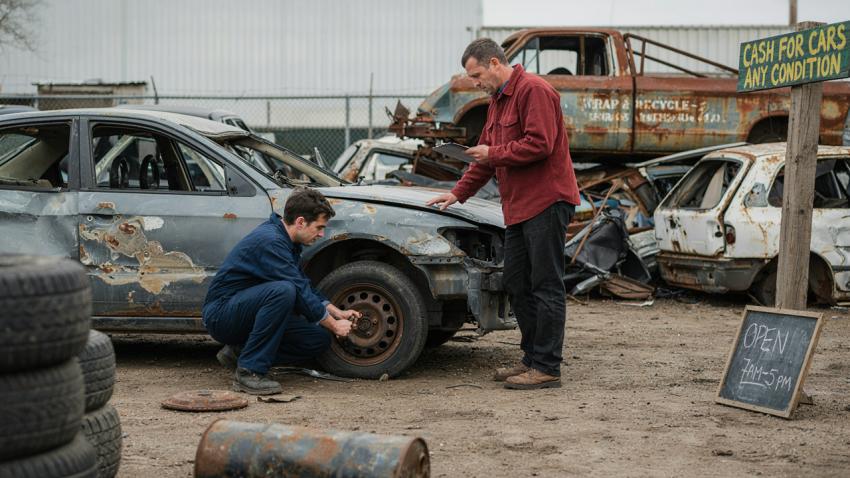
A dead car in the driveway is easy to ignore until it costs you something. It blocks a parking spot, collects snow, and draws a letter from the condo board. Booking Calgary scrap auto removal solves the problem in a day or two, but only if you know what a fair deal looks like. Buyers in the city differ on price, towing fees, paperwork and payment. A few questions up front keep those differences from becoming surprises at the curb.
This guide takes the questions in the order most owners meet them. Each section opens with the answer, then explains it. The facts come from what Calgary buyers publish about their own terms, so treat them as a checklist to confirm by phone, not as a promise from any one company.
Does the car have to run?
No. Scrap buyers exist for cars that no longer run. A vehicle that is past the point of economical repair is the standard customer. Many buyers also take salvage vehicles, cars with frame damage, and cars with a missing catalytic converter.
Condition still affects the number. A running car with good parts is worth more than a seized engine on four flat tires. A missing converter lowers the offer, but it does not always end the conversation. Ask directly, so you know whether the buyer treats a missing part as a deduction or a dealbreaker.
One more point matters here. Most scrap buyers take the whole vehicle. If you plan to strip the stereo, the battery or the wheels first, say so on the call. A car with parts missing is a different car from the one described in the quote.
What decides the offer?
Five factors move the price. Buyers who publish their method tend to list the same ones:
Vehicle weight, since scrap is sold by the tonne
Current scrap metal prices, which change over time
Demand for parts from that year, make and model
Overall condition, including damage and missing pieces
Catalytic converter status, present or missing
Weight and metal prices explain why a pickup truck usually draws a bigger offer than a compact car. Parts demand explains why a ten-year-old popular sedan can beat a rarer car of the same weight. You cannot change the first two. You can control the last two by being honest about condition and leaving the converter in place.
A phone quote usually takes about five minutes. Have the year, make, model and general condition ready. Expect the buyer to say how long the number holds. One Calgary buyer states that its quotes stay valid for about seven days, which gives you time to compare without rushing.
Is towing really free?
Often yes, but read the fine print. Several Calgary buyers advertise free towing. The useful follow-up is whether any distance fee applies and whether the free tow depends on accepting the offer. A tow truck that costs you money turns a fair offer into a poor one.
Ask for the answer in plain words: free on every accepted offer, with no distance fee, or free only inside certain areas. Calgary is large, and a buyer based in the northeast may price a far southwest address differently from a nearby one. Some buyers also serve towns outside the city, such as Airdrie, Cochrane, Okotoks and High River, so ask where your car sits on their map.
Ask about access as well. A tow driver needs room to hook up the car. A vehicle wedged in a tight back lane or buried in a snowbank can slow a pickup. Clearing a path before the driver arrives saves time for both sides.
What does the paperwork look like in Alberta?
Expect a Bill of Sale and proof that the car is yours. Alberta uses a standard Bill of Sale form, and buyers that follow the rules bring a copy and fill it out at pickup. Keep your registration and photo ID within reach. If the car belongs to a relative or an estate, tell the buyer on the first call, because that can change what documents you need.
Do not hand over a car without a signed record of the sale. The Bill of Sale shows the date, the vehicle and the price. It protects you if a parking ticket or an abandoned-vehicle notice shows up later. Take a photo of the signed form and keep it with your records.
Two jobs fall to you after the car leaves. Remove your licence plates, and cancel the insurance on the vehicle once the pickup is complete. Do not cancel insurance before the car is gone, since a car still in your driveway is still your responsibility.
How do you get paid, and when?
The best answer is on the spot. The usual standard in this market is cash at pickup, handed over before the truck leaves. Some buyers also offer an e-transfer or a cheque if you ask. Settle the method on the phone so you are not scrambling at the door.
Be wary of any buyer who wants to pay later, charge a fee to release your cash, or send the money only after the car has been scrapped. The sale is simple. You sign, they pay, they tow. If the order changes, ask why.
The quote can change at pickup. If the car differs from your description, a driver may revise the number once they see it. A fair buyer lets you decline the revised offer without a charge. Ask whether that is the rule. It costs nothing to ask, and the answer tells you a lot about how the buyer works.
What does a clear buyer's page look like?
A good buyer publishes its terms where you can read them before you call. Eagle Cash For Cars sets out its process on a page about scrap car removal in Calgary, covering the factors behind its offers, how towing works and what happens at pickup. Reading a page like that is a quick way to see what to compare against when you phone around for Calgary scrap auto removal.
Look for specifics rather than slogans. A page that names its pricing factors, its payment methods and its paperwork form is easier to trust than one that says only "top dollar" and "fast service." Vague promises are hard to hold anyone to.
Also look at the schedule. The same page lists seven-day service with long daily hours, and says same-day pickup is often possible in Calgary and nearby communities. Those are claims to confirm when you call, since availability depends on the day and the driver. They still show the kind of detail worth asking any buyer for.
What happens to the car after pickup?
The car does not go straight into a crusher. In Alberta, end-of-life vehicles move through recycling and salvage channels. Some buyers resell vehicles whole, with documentation, and the dismantling and processing are handled by separately certified operators. That is a different job from towing and buying.
Why does this matter to you? Because it affects what you should ask. A buyer that resells whole vehicles wants the car intact, which is one reason many do not buy catalytic converters on their own. If you removed parts, expect a lower offer or a revised one.
Fluids, batteries and tires are handled further down that chain. You do not need to drain anything before the tow. Ask the buyer to confirm that, so you do not spend a weekend on work nobody needed.
Seven questions to ask every buyer
Put these on a sheet of paper next to the phone. Ask each buyer the same questions in the same order, and write the answers down.
What is the quote for my year, make, model and condition?
How long does the quote stay valid?
Is towing free on every accepted offer, with no distance fee?
What happens if the car looks different from my description?
Which Alberta Bill of Sale form do you use, and who fills it out?
How do I get paid, and is it before the truck leaves?
What do I need to do with the plates and the insurance?
Calls take about five minutes each. Two or three calls give you enough to compare. Look past the top number. A slightly lower offer with free towing, cash at the curb and a clear revision rule beats a higher number with fees and a vague payment plan.
A hypothetical comparison
Picture two quotes for the same worn-out sedan. This is a made-up example, not real pricing. Buyer A gives a higher number but charges for the tow and pays by cheque in a week. Buyer B gives a smaller number, tows for free and pays cash at the curb. After the tow fee, Buyer B can come out ahead, and the cash arrives the same day. Write the full cost of each deal, not only the headline figure.
Getting your Calgary scrap auto removal booked with confidence
Good Calgary scrap auto removal comes down to a short list of facts you can check. Know why the offer is what it is. Know who pays for the tow. Know which form gets signed and when the money changes hands. Then take the plates off, cancel the insurance after the car is gone, and keep a photo of the Bill of Sale.
Start with the sheet of seven questions and call two or three buyers. Compare the answers, not only the prices. Buyers such as Eagle Cash For Cars publish their terms online, which makes the first round of comparison faster. The buyer that answers clearly, puts the terms in writing and does not push you to decide on the first call is usually the one worth booking.
A car that no longer runs does not have to stay in the driveway for another month. With the right questions asked, the pickup takes less time than the worrying did.