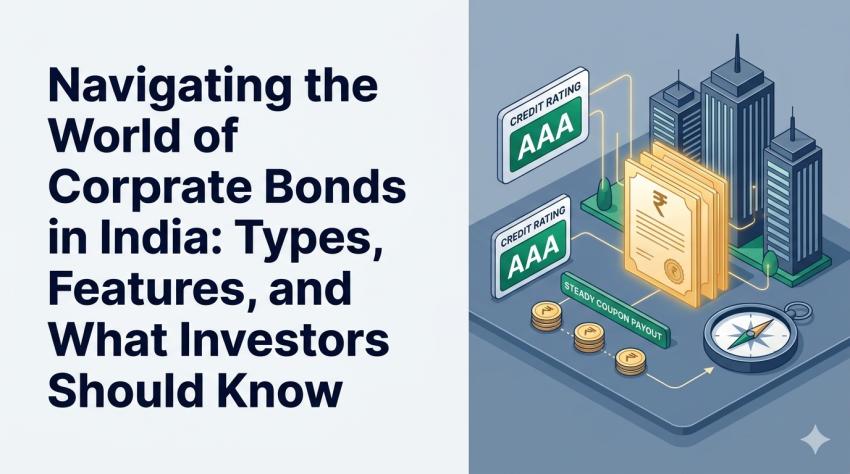
When you think of investments, stocks and mutual funds often steal the limelight. However, there's a powerhouse in the background that can offer great stability and attractive returns – corporate bonds in India. If you’re scratching your head asking, “What’s a corporate bond?”, don’t worry! By the end of this article, you’ll be equipped with the knowledge to better understand these financial instruments, decide if they're right for you, and join the growing community of investors in India.
What Are Corporate Bonds?
At its core, a bond is simply a loan. When you buy a corporate bond, you’re lending your money to a company, and in return, they promise to pay you back your principal along with interest (or coupon payments) at regular intervals. Think of it like giving your buddy some cash and he promises to pay you back on a certain date, but in this case, your buddy is a company.
Now, if we dive deeper, corporate bonds in India are issued by companies to raise funds for various purposes. This can include business expansion, paying off debt, or other operational needs. The beauty lies in their diversity; there’s a corporate bond for nearly every risk appetite and investment goal.
Types of Corporate Bonds in India
1. Secured and Unsecured Bonds
Corporate bonds in India can broadly be classified into secured and unsecured bonds. Secured bonds are backed by collateral. Think of it as a safety net for investors. If the company defaults, you can claim the collateral. On the other hand, unsecured bonds come with higher risk since they aren’t backed by any assets. While they may offer higher returns, they also come with the dreaded default risk.
2. Convertible Bonds
Ever wished you could convert your investment into something even sweeter? That’s exactly what convertible bonds offer. These are corporate bonds that can be transformed into a predetermined number of a company’s equity shares at specific times. If the company performs well and its stock price increases, you can convert your bonds into shares, essentially becoming a part-owner of the company.
3. Non-Convertible Bonds
In the opposite corner, we have non-convertible bonds (NCBs). These are straightforward and cannot be converted into equity shares. They generally come with a higher interest rate than convertible bonds since they lack the added perk of conversion. If you’re someone who prefers consistent income and isn’t interested in equity, NCBs can be a good fit.
4. Redeemable and Irredeemable Bonds
Corporate bonds in India can also be redeemable or irredeemable. Redeemable bonds are those that you can cash in after a specific period. Irredeemable bonds, as the name implies, are not redeemable during the life of the bond; they continue to pay interest until maturity.
Features of Corporate Bonds
1. Interest Rate (Coupon Rate)
The coupon rate is how much interest you’ll earn on your corporate bonds. Higher risks usually mean higher interest rates. It’s essential to consider this factor because it determines your earnings. Don’t just go for the highest rate; evaluate the company’s creditworthiness.
2. Maturity Period
Bonds come with maturity periods, typically ranging from a few months to several years. A shorter maturity means your money is locked up for a shorter time, providing liquidity, while longer maturities may offer better returns but also come with heightened risk.
3. Credit Ratings
Always check the credit ratings of a bond before investing. The rating indicates the creditworthiness of the issuing company. Ratings can range from high-quality AAA to junk levels. If you see a rating of AA or lower, tread carefully and do your homework.
4. Yield to Maturity (YTM)
YTM is a term you'll often come across when talking about corporate bonds in India. It represents the total return you can expect if you hold the bond until maturity. Higher YTM often indicates higher risk, so it’s a crucial factor to consider in your decision-making.
Investor Factors to Consider
1. Risk Appetite
Before diving into corporate bonds, evaluate your risk appetite. Are you conservative, moderate, or aggressive in your investment strategy? This will guide you in selecting the right bonds for your portfolio. Remember, with higher returns comes higher risk.
2. Investment Goals
What are you aiming for with your investments? Is it income, capital appreciation, or a mix of both? Understanding your investment goals will influence the types of corporate bonds you choose. For instance, if you need regular income, NCBs or higher-rated secure bonds may be your best bet.
3. Company Analysis
Conducting due diligence on the issuing company is crucial. Look into fundamentals, financial health, management quality, and industry conditions. The stronger the company, the safer your investment. Use credit ratings as a starting point but dig deeper for a comprehensive understanding.
4. Market Conditions
Interest rates in the market can significantly impact bond prices. When interest rates rise, existing bond prices fall, and vice versa. Keeping an eye on macroeconomic factors like inflation and interest rates can help you gauge the right time to invest.
Conclusion
Investing in corporate bonds in India can be a rewarding experience if you equip yourself with the right knowledge and tools. Whether you’re eyeing a convertible bond for a taste of equity or a higher-yielding non-convertible bond for fixed income, there’s something for everyone.
Remember, every investment decision you make should be informed and aligned with your personal financial goals. Take your time, do your research, and don’t let flashy returns blind you to potential risks. Like any journey, understanding corporate bonds is about taking one step at a time. So gear up, explore the options, and perhaps, find your next great investment!