The first serious cold spell often reveals heating problems that were invisible during autumn. A building with recurring symptoms may need heating repair New Jersey before a minor performance problem becomes a major outage. A system may start normally, produce warm air or hot water for several hours, and then struggle when outdoor temperatures remain low overnight. Occupants may notice colder rooms, unfamiliar noises, or a thermostat that never seems satisfied. None of these observations identifies a specific failed component. Together, however, they suggest that the heating equipment deserves attention before the next prolonged freeze.
The most significant winter failures seldom have a single dramatic cause. Heating equipment operates through a chain of electrical controls, mechanical components, fuel or power delivery, and heat distribution. A weakness in one link can reduce the performance of the entire system. In North Jersey, where heating is essential for long stretches of the year, professional heating assessment may be relevant when symptoms point beyond routine filter replacement or thermostat settings.
Understanding how these failures develop helps distinguish an uncomfortable room from a condition that may threaten property or personal safety. It also explains why maintenance visits performed before winter can uncover defects that are harder and more expensive to address during extreme weather.
Cold weather changes the operating conditions
A furnace or boiler that handles mild autumn conditions may run for much longer periods during a cold snap. Longer cycles are not necessarily evidence of a defect; heating demand naturally rises as the difference between indoor and outdoor temperatures increases. Nevertheless, sustained operation exposes weak electrical connections, dirty heat-transfer surfaces, marginal pumps, and control faults that might remain hidden during shorter cycles.
A building with substantial air leakage or inadequate insulation may place additional demand on otherwise functional equipment. Drafty windows, unsealed penetrations, poorly insulated attics, and unconditioned duct runs can all contribute to uneven temperatures. Contractors providing Heating & Air Conditioning Repair may therefore need to consider the building envelope and distribution system rather than treating the heating unit as the only possible source of discomfort.
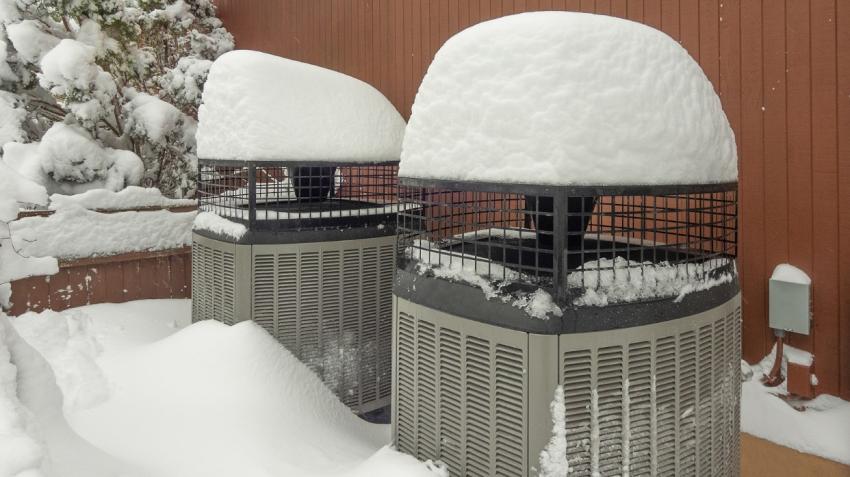
Weather also affects exterior components. Heat pumps can accumulate frost on outdoor coils and require defrost cycles. Venting terminations can become obstructed by snow or ice. Condensate lines may freeze in vulnerable locations. These are different problems with different solutions, which is why a symptom-based diagnosis matters.
A failure may begin with restricted airflow
Forced-air systems rely on sufficient airflow across heating components and through the duct network. A severely clogged filter can restrict that movement. Closed or blocked supply registers, obstructed returns, or damaged ducts may create related problems. Depending on the equipment, limited airflow can cause overheating and protective shutdowns.
A repeatedly tripping high-limit safety is not an invitation to bypass the switch. Such protections exist to prevent dangerous operating conditions. Replacing a filter may help when it is clearly overdue, but a system that continues shutting down needs a qualified technician to determine whether the cause involves airflow, controls, or the heat exchanger.
A useful observation is whether the blower runs without producing adequate heat, whether the burner cycles off unusually quickly, or whether a particular area remains cold while the rest of the building is comfortable. Those differences help narrow the investigation.
Boilers fail differently from furnaces
A hydronic boiler transfers heat through water circulating to radiators, baseboards, or other emitters. A steam boiler uses a different method, relying on properly controlled steam production and return of condensate. Consequently, a noisy radiator, cold baseboard loop, and furnace supply-air problem should not be placed in the same diagnostic category.
Circulator failures, trapped air in a hot-water loop, zone-valve issues, low-water conditions, and faulty controls can interrupt hydronic heating. Steam systems require careful attention to water level, pressure control, piping condition, and return lines. Some visible symptoms are misleading: a radiator that heats unevenly does not automatically mean the boiler itself is defective.
Equipment type should be established before parts are ordered. A contractor also needs to know whether the system is serving one dwelling, several tenant spaces, or a commercial building with different operating requirements.
Control problems can mimic major equipment failures
Thermostats, sensors, relays, circuit boards, and electrical connections determine when the system starts and stops. A thermostat set to the wrong mode may be a simple explanation; a failing control board is more involved. Low-voltage wiring faults or an intermittent safety switch can produce inconsistent behavior that disappears during a brief inspection.
The diagnostic sequence should verify settings and power supply before assuming expensive components have failed. Records of when the equipment stopped, the displayed error code, and any recent electrical work can save time. Repeatedly resetting a fault without understanding its origin can obscure useful information and allow an unsafe condition to recur.
Battery replacement is appropriate for some user-serviceable thermostats. Opening energized electrical compartments or bypassing safety devices is not an appropriate do-it-yourself response.
Fuel and combustion faults require a higher level of caution
Gas-fired heating systems depend on controlled combustion and effective venting. Ignition failures, blocked combustion-air passages, damaged vent connectors, and deteriorating components may affect safe operation. Carbon monoxide is odorless and can be dangerous even when occupants do not notice smoke or a gas smell.
A carbon monoxide alarm, suspected exhaust leakage, or symptoms such as headache and dizziness associated with a combustion appliance should be treated as a safety issue. Occupants should move to fresh air, contact emergency services or the appropriate utility, and seek medical evaluation as warranted. A gas odor likewise requires leaving the area and contacting the gas utility or emergency responders from a safe location; switches and appliances should not be operated in the affected space.
Routine inspections, appropriate alarms, and unobstructed venting are important safeguards, but alarms do not replace equipment maintenance. No article can safely diagnose a combustion problem from a description alone.
Deferred maintenance raises uncertainty, not just repair costs
Heating maintenance is valuable partly because it creates a baseline. When a technician documents normal operating conditions, later changes become easier to interpret. A seasonal inspection may include checks of accessible electrical components, safety controls, airflow, venting, leaks, and manufacturer-specified service items.
That does not mean servicing eliminates breakdowns. Mechanical systems can fail unexpectedly despite responsible care. Nor does every unusual sound require immediate replacement. The useful distinction is between a system with known condition and one that has operated for years without meaningful examination.
Maintenance history also matters when multiple repairs occur in a short period. Replacing one failed part may be sensible; repeatedly repairing different major components on old equipment may justify a broader cost and reliability assessment.
The distribution system can be the hidden problem
A warm furnace and a cold bedroom can coexist when ductwork is poorly balanced. Similarly, a hot boiler can serve cool rooms if circulation or emitter performance is inadequate. Interior doors, furniture placement, remodeling, and changes in building occupancy may alter how heat reaches spaces.
In commercial buildings, altered floor plans can create new heating zones without corresponding control changes. Temperature complaints may cluster at perimeter offices, loading areas, or rooms farthest from mechanical equipment. Those patterns can reveal design limitations rather than an isolated breakdown.
Effective diagnosis therefore considers supply temperatures, return conditions, airflow or water movement, and control-zone behavior. Replacing the main heating unit without evaluating these factors risks leaving the underlying complaint unresolved.
Repair decisions should account for the entire system
A winter repair estimate should identify what failed, why the failure is believed to have occurred, and which work will restore safe operation. It should distinguish confirmed findings from additional concerns that require further testing. When repairs are substantial, age, parts availability, equipment condition, energy use, and expected remaining service life become relevant.
The least expensive initial repair is not always the least expensive long-term choice. Conversely, replacing a functioning unit solely because it is older can waste money when the actual problem lies in ductwork, insulation, or controls.
For a commercial property, the assessment may also involve tenant disruption, required access, maintenance scheduling, and the cost of temporary heating arrangements. Clear documentation helps property managers compare options without turning uncertainty into guesswork.
Winter preparedness is a building-management practice
Heating readiness includes much more than adjusting a thermostat. Building managers can verify that service access remains unobstructed, record filter-change dates, keep exterior vents clear, and ensure responsible personnel know how to report abnormal operation. Residents can document uneven room temperatures and unusual sounds without attempting hazardous repairs.
During a severe cold period, protecting exposed plumbing becomes another concern. Loss of space heating may allow vulnerable pipes to freeze, creating a separate risk of water damage. Contingency planning should account for vulnerable areas and provide a safe way to obtain professional assistance if heat is lost.
Conclusion
Winter heating failures are best understood as system problems with multiple possible causes. Weather increases demand, but the actual failure may involve airflow, circulation, controls, combustion, venting, or the condition of the building itself. A methodical assessment can prevent unnecessary parts replacement and distinguish normal cold-weather operation from urgent safety concerns. Reliable heating depends on equipment condition, thoughtful maintenance, and informed decisions about repair or replacement—not on a single emergency fix.