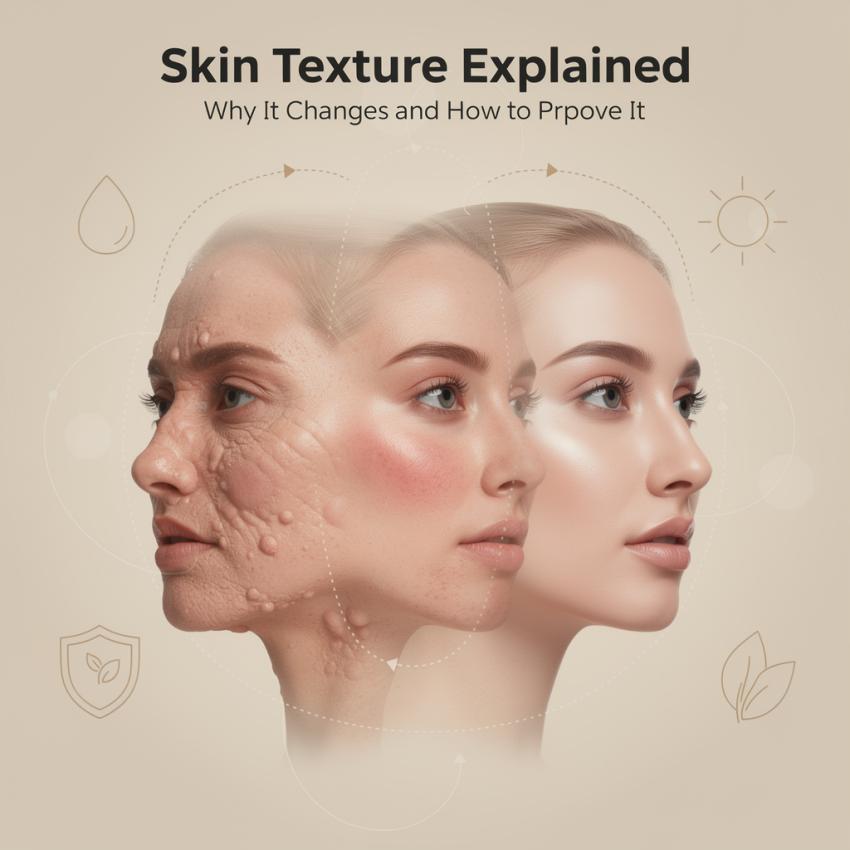
Have you ever noticed your skin looking fine in the mirror but feeling rough or uneven the moment you touch it? That disconnect between how skin looks and how it feels is what people mean when they talk about texture. Understanding why texture changes in the first place makes it a lot easier to actually improve it, rather than randomly trying products hoping something sticks.
What Skin Texture Actually Means
Texture refers to how smooth or rough your skin feels, separate from colour or tone. Even if your complexion looks fairly even, your skin can still feel bumpy, dry, or inconsistent due to a buildup of dead skin cells, dehydration, or lingering marks from old breakouts. This is different from uneven skin tone, which is more about colour variation, though the two often show up together and can make each other more noticeable.
Why Texture Changes in the First Place
Several everyday factors affect your skin's texture over time. Dead skin cells that do not shed properly can build up on the surface, creating a rough feeling. Dehydration makes skin feel tight and flaky, while a damaged skin barrier struggles to retain moisture properly, leaving your skin more vulnerable to roughness and irritation. Weather changes, harsh products, and inconsistent skincare habits can all contribute to this shift, sometimes without you even realising it until your skin starts feeling noticeably different.
The Role of a Damaged Skin Barrier
Your skin barrier plays a bigger role in texture than most people realize. When your barrier is compromised, whether from over cleansing, over exfoliating, or frequent use of strong actives, your skin struggles to retain moisture and repair itself properly. This often shows up as rough patches, increased sensitivity, or skin that just feels off, even without any specific breakout or visible issue causing it.
Supporting your barrier is often the first real step toward improving texture, since even the best products will not do much if your skin cannot properly absorb or benefit from them.
Cleansing Plays a Bigger Role Than You Think
How you cleanse your skin daily has a direct impact on texture. Harsh cleansers strip natural oils and disrupt your skin's balance, which can make roughness and unevenness worse over time. A gentle face wash to get an even skin tone works well here, since it clears away buildup and daily grime without stripping your skin, allowing your natural texture to gradually improve rather than deteriorate from irritation.
If your skin feels tight or uncomfortable right after washing, that tightness is often a sign your cleanser is too harsh for what your skin actually needs.
Gentle Exfoliation Supports Smoother Skin
Removing built-up dead skin cells is important, but this should be done gently rather than aggressively. Physical scrubs often create small irritations that make texture worse instead of better. A mild chemical exfoliant used two to three times a week tends to work far more effectively, helping smooth texture without overwhelming your skin barrier.
Overdoing exfoliation, even with gentle products, can backfire, leaving your skin more sensitive and, ironically, rougher than before.
Hydration Is Essential for Texture Improvement
Well-hydrated skin naturally feels smoother and more comfortable. When your skin lacks moisture, it often becomes flaky, tight, or uneven, which directly affects how your texture feels day to day. A consistent, lightweight moisturizer supports your skin's natural ability to shed dead cells properly, which plays a real role in gradually smoothing things out.
Building a Skincare Routine for Uneven Skin Tone and Texture
Since texture and tone often overlap, a proper skincare routine for uneven skin tone tends to support texture improvement as well. Gentle cleansing, regular but mild exfoliation, consistent hydration, and calming ingredients work together to address both concerns at once, rather than treating them as two entirely separate issues.
This combined approach tends to work better than focusing on just one concern, since irritation or dehydration affecting your texture often shows up as uneven tone too.
Why Consistency Matters More Than Intensity
Improving skin texture takes time and steady care, not aggressive treatments used occasionally. Your skin needs several weeks of consistent habits to properly shed old skin cells, repair its barrier, and rebuild a smoother surface. Switching products too frequently or expecting instant results often disrupts this process rather than speeding it up.
The Bottom Line
Skin texture changes for real, understandable reasons, usually tied to buildup, dehydration, or a compromised barrier. Improving it comes down to gentle cleansing, mild exfoliation, proper hydration, and giving your skin the consistency it needs to actually heal. With patience and the right approach, smoother, more even-feeling skin is genuinely achievable over time.