A cancer diagnosis pulls everything toward treatment and recovery, and rightly so. But for a younger patient there is a quieter worry underneath it, what the treatment might mean for the chance of having children later on. A lot of cancer treatment, the chemotherapy and the radiation and some of the surgeries, can affect fertility for good. That is a conversation to have before treatment starts, not once it is already underway.
How Cancer Treatment Affects Fertility
Chemotherapy drugs, the alkylating agents in particular, can damage eggs and sperm both, right down at the cellular level. Radiation aimed at or near the pelvis can do harm to the uterus and the ovaries in a woman, and it can cut sperm production in a man. How much damage there is comes down to the type and the dose of the treatment, the age of the patient, and the reproductive health they started with. Which is the whole reason a fertility specialist ought to be brought in the moment a treatment plan is on the table.
Options for Women
The two methods with the firmest footing are egg freezing and embryo freezing.
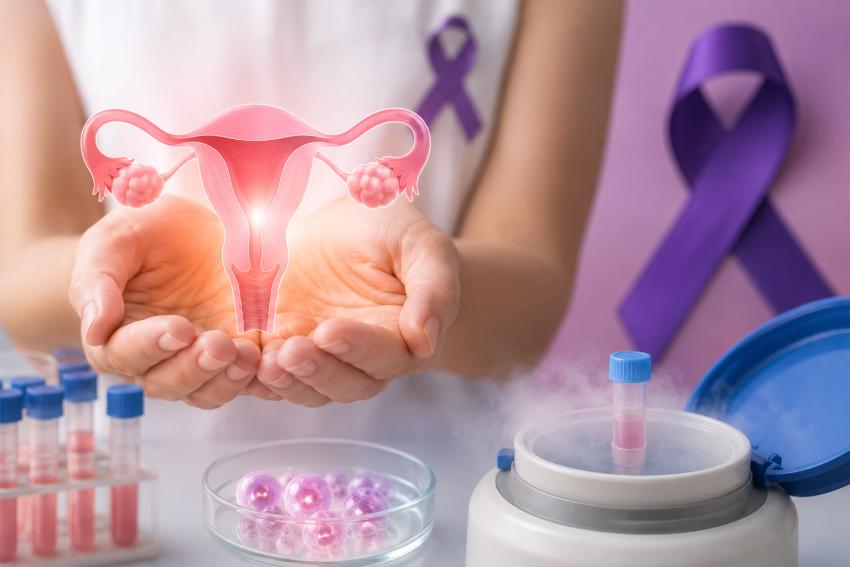
Egg freezing (oocyte cryopreservation) runs hormonal stimulation to bring on several eggs, then retrieves and cryopreserves them. Eggs come through the freeze-thaw well, with success rates reaching as high as 85% by Mayo Clinic's figures, and it tends to be the option for a woman without a partner, or one who would rather not use donor sperm.
Embryo freezing goes through the same retrieval, only the eggs are fertilised first, with a partner's sperm or a donor's, before anything is frozen. It has the longest clinical track record of the two and embryo survival rates as high as 95%. Either procedure usually takes two to three weeks, and it can generally be done without holding up the cancer treatment in any real way.
For a woman who cannot spare even those weeks, there is ovarian tissue cryopreservation, where a portion of ovarian tissue is surgically removed and frozen to be reimplanted later. Specialist centres offer it, though in some clinical settings it is still counted as experimental.
A Note on Hormone-Sensitive Cancers
Women diagnosed with hormone-sensitive cancers, breast cancer in particular, sometimes worry that the oestrogen rise from ovarian stimulation could make their cancer worse. Current evidence and clinical guidelines suggest that modified stimulation protocols using letrozole — which keeps oestrogen levels significantly lower than standard stimulation — are considered safe for most women with hormone-receptor-positive breast cancer. The decision is made jointly between the oncologist and the fertility specialist on a case-by-case basis, but a hormone-sensitive diagnosis does not automatically rule out egg or embryo freezing as an option.
Options for Men
For men, sperm banking is the established and effective one. It is quick, it is non-invasive, and its success rate sits at close to 95%, going by the ASCO Post. Samples can be given on consecutive days, which makes it a straightforward thing to finish before chemotherapy gets going.
What Does It Cost in India?
Around Delhi and the NCR, egg freezing usually runs ₹1.5 lakh to ₹2.5 lakh a cycle, and that takes in the consultation, the medication, the retrieval, and the first year of storage. Storage after that first year comes to somewhere around ₹15,000 to ₹30,000 a year. Sperm banking sits at ₹15,000 to ₹30,000 for the procedure and the first year of storage together. Most of the standard health insurance policies in India will not cover fertility preservation, although a few plans do put partial support toward it when the preservation is medically indicated ahead of cancer treatment.
When to Act
Fertility preservation has to happen before the chemotherapy or the radiation begins. The sooner a specialist is seen after the diagnosis, the more of the options are still on the table. Reproductive specialists and oncologists can work their care together so the preservation does not end up delaying the treatment.
At Sehgal Nursing Home, specialist fertility consultations are open to patients working through a cancer diagnosis, with the guidance shaped around each person's own treatment timeline and what they want for their reproductive future. To book a consultation, visit www.sehgalnursinghome.com or call +91-9354546835.