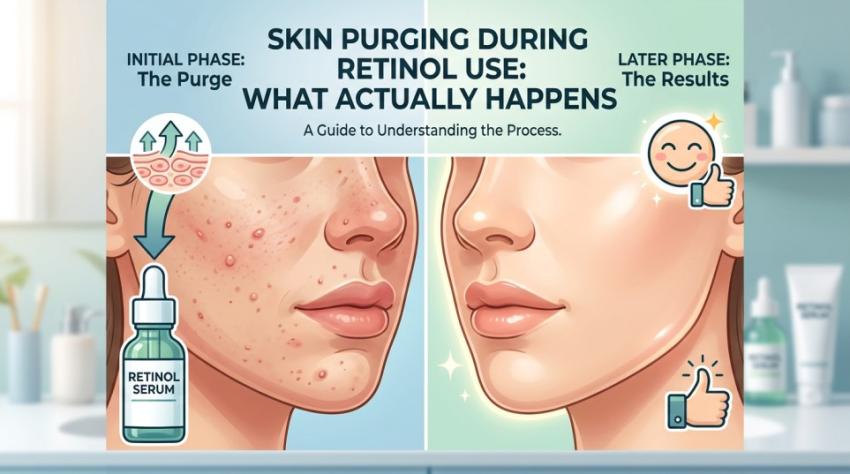
If you have just started using retinol and your skin suddenly broke out worse than before, do not panic and toss the product just yet. This is one of the most common experiences people have with retinol, and it actually has a name, purging. Understanding what is really going on can save you from giving up on a product that might genuinely be working.
What Purging Actually Means
Retinol works by speeding up your skin's natural cell turnover process. This means your skin sheds old, dead cells faster than usual, while also pushing new cells to the surface more quickly. Sounds great in theory, but there is a catch. As this process speeds up, any congestion sitting underneath your skin, oil, dead skin, or buildup that was already there, gets pushed to the surface faster than it normally would.
This is why a lot of people notice small breakouts in the first few weeks of using retinol, even though the product is technically doing exactly what it is supposed to do. It is not creating new problems, it is bringing existing ones to the surface sooner than they would have appeared on their own.
Why This Confuses So Many People
The tricky part is that purging looks a lot like a regular breakout, which makes people assume the product is not working for them. But there is an important difference. Purging usually happens in areas where you already tend to break out, since that is where the congestion was sitting in the first place.
If pimples start showing up in a completely new area you have never dealt with before, that is more likely a sign of irritation rather than purging. Retinol reactions like burning, peeling, or intense redness alongside breakouts can also point to your skin needing a gentler introduction rather than a full purge happening.
How Long Purging Usually Lasts
Purging is temporary, and it typically settles down within four to six weeks as your skin adjusts to the increased turnover retinol brings. This timeline depends on how your skin naturally cycles, so it is worth giving it a fair chance before deciding retinol does not suit you.
If breakouts continue well beyond this window, or seem to be getting worse rather than improving, it might not be purging anymore. At that point, it is worth reconsidering how often you are using the product or whether your skin needs a break entirely.
Supporting Your Skin While It Purges
Since your skin is already going through an adjustment period, this is not the time to add more active ingredients or try new products out of frustration. Keeping your routine simple and calming gives your skin the best chance to get through this phase without extra stress.
Sticking to gentle skincare essentials during this time really helps. A mild, non stripping cleanser paired with a hydrating moisturizer supports your skin while retinol does its job in the background, rather than adding more variables that could confuse what is actually happening to your skin.
A Gotu Kola Cleanser & Face Moisturizer combo works especially well here, since Gotu Kola is known for calming irritation and supporting the skin barrier, both of which matter a lot when your skin is dealing with the extra turnover retinol brings. Keeping things soothing rather than stripping helps your skin handle this transition more comfortably.
How to Introduce Retinol the Right Way
If you are just starting out, using retinol every other night rather than daily gives your skin time to adjust gradually, which can reduce the intensity of purging. Applying a light moisturizer before or after retinol can also help buffer some of the initial dryness or sensitivity that often comes with it.
Patience really is key here. Jumping straight into daily use because you are eager for results often leads to more irritation and a longer, harder adjustment period than starting slow and gradually increasing frequency over several weeks.
When to Actually Stop Using It
If your skin shows signs of a genuine reaction rather than purging, ongoing burning, peeling that does not improve, or breakouts in new areas that keep getting worse, it is worth pausing retinol and speaking to a dermatologist. Not every skin type tolerates retinol at the same pace, and there is no shame in slowing down if your skin needs it.
Final Thoughts
Purging during retinol use is a normal part of the process for a lot of people, and it usually means the product is working exactly as intended, even if it does not feel that way in the moment. Sticking to gentle basics, being patient through the adjustment period, and paying attention to whether breakouts are actually settling down over time can help you get through this phase and eventually see the glow retinol is known for.