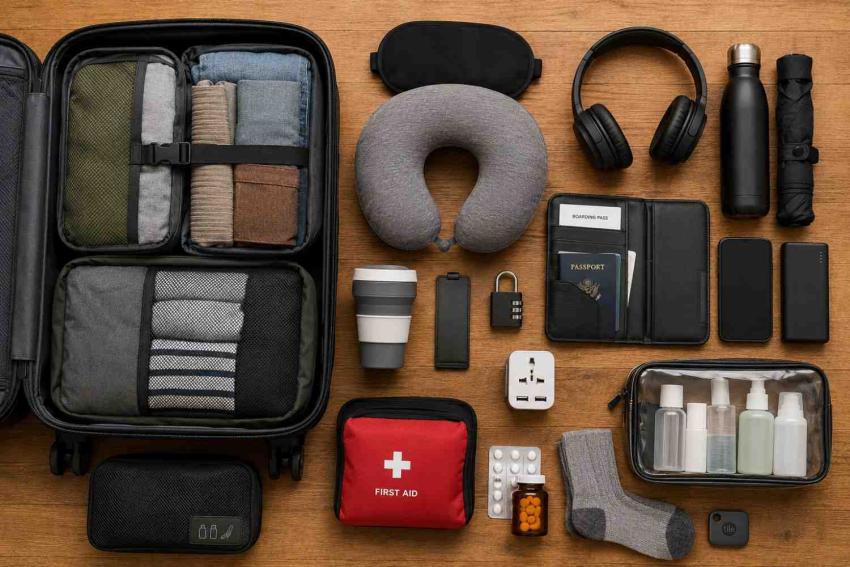
If you fly more than a couple of times a year, you already know that packing isn't about cramming in everything you own — it's about carrying exactly what you'll actually use. After years of missed connections, overweight bags, and dead phone batteries in unfamiliar airports, most seasoned travelers eventually land on a short list of gear they refuse to leave home without. This guide breaks down the best travel essentials that consistently earn their spot in a carry-on, based on what frequent flyers, road warriors, and long-haul backpackers reach for again and again.
Whether you're headed out for a weekend work trip or a month abroad, the goal is the same: travel lighter, stay organized, and avoid the small headaches that turn a good trip into a stressful one.
Why the Right Travel Gear Actually Matters
Although it's easy to assume that packing is only a logistical issue, the equipment you choose affects your overall trip experience. By day two, a poorly fitting backpack can cause shoulder pain. You can find yourself fumbling in an airport store at midnight because a large charger doesn't fit international outlets. While none of these factors alone can spoil a trip, they do increase friction, and friction builds up.
Instead of purchasing cheap versions of everything, frequent travelers typically invest a little more up front in a smaller number of dependable things. Every suggestion below is based on the idea that this change in perspective is what truly makes a trip go smoothly or chaotically.
Best Travel Essentials for Packing and Organization
Good organization starts before you even reach the airport. These are the items that keep your bag functional instead of a jumbled mess.
Packing Cubes
One of those things that seems unnecessary until you use them is packing cubes. They make it simple to locate a specific item without unloading your entire luggage onto a hotel bed, compress items, and separate categories (e.g., workout gear from business apparel). Cubes are practically a must for anyone who travels with a carry-on and seldom checks their suitcase.
A Sturdy Weekend or Carry-On Bag
In addition to meeting airline size requirements and being comfortable enough to dash through a terminal, your suitcase must withstand rigorous handling. Look for a laptop sleeve made of sturdy fabric and designed to easily slide under most airplane seats. Because it better protects goods while maintaining an overall weight low enough to avoid overweight penalties, lightweight hardside baggage has become particularly popular for foreign travel.
A Small Toiletry Bag
According to TSA guidelines, liquids in containers of 3.4 ounces (100 milliliters) or less must still be packed in a single quart-sized transparent bag for airport security. When you arrive, a hanging toiletry organizer with clear sections keeps your bathroom counter organized and speeds up the security queue.
Best Travel Essentials for Tech and Connectivity
Modern travel runs on devices, and running out of battery or being unable to plug in anywhere is one of the most common (and avoidable) travel frustrations.
A Universal Travel Adapter
Electrical outlets vary significantly by country — voltage, plug shape, and frequency are not standardized globally. A universal adapter with built-in USB and USB-C ports solves this in one device, rather than forcing you to carry separate adapters for every region you visit.
A Portable High-Capacity Charger
A phone can be quickly depleted by long flights, unreliable airport stores, and a full day of navigation apps. Although passengers should be aware that the U.S. Federal Aviation Administration requires power banks to be kept in cabin bags rather than checked luggage due to lithium battery requirements, a portable charger in the 10,000–20,000mAh range is usually sufficient to fully charge a smartphone many times.
Noise-Cancelling Headphones
For anyone spending hours on planes or trains, noise-canceling headphones do more than block engine hum — they reduce overall travel fatigue by cutting down on constant background noise, which makes it easier to rest, focus, or simply arrive less frazzled.
Best Travel Essentials for Comfort and Health on the Road
Comfort items are easy to dismiss until you're the person stiff-necked and dehydrated after an eight-hour flight.
Compression Socks With A Travel Pillow
On long flights, good posture is more important than most people realize. A well-designed neck pillow helps with this. However, several health groups advise wearing compression socks during long-haul flights to promote circulation, especially on trips longer than 4 hours.
A Water Bottle That Is Reusable and Leak-Proof
One of the easiest ways to lessen jet lag symptoms is to stay hydrated, as cabin air is notoriously dry. A collapsible or lightweight reusable bottle is far more practical than constantly purchasing bottled water, since most airports now allow refilling empty bottles after security.
Simple Travel-Sized Medical Kit
A simple kit containing bandages, painkillers, motion sickness medication, and any personal medicines (kept in their original labeled containers, as required by most countries) might save a minor problem from ruining your trip.
Top Travel Essentials for Security and Documents
A Compact RFID-Blocking Passport Holder or Wallet
Even though digital pickpocketing is rather uncommon, many tourists choose RFID-blocking wallets for peace of mind, particularly when using contactless payment cards abroad. It also saves time at each checkpoint to keep your ID, boarding card, and passport in a single, thin, specialized holder.
Trackers for luggage
Apple AirTags and other Bluetooth-based monitors are now a truly helpful addition to checked luggage. Compared with relying solely on the airline's monitoring system, having real-time position data can greatly expedite recovery if a bag is delayed or misrouted.
How to Choose the Right Travel Essentials for Your Trip
Not every traveler needs every item on this list. A business traveler doing quick two-day trips has very different priorities than someone backpacking for a month. Before purchasing something new, it is helpful to ask three questions:
Will I use this on more than half of my trips?
Does it solve a problem I've actually run into before?
Does it save meaningful space or weight compared to what I currently pack?
If the honest answer to all three is yes, it earns a permanent spot in your bag. If you're still narrowing down specific products — comparing luggage brands, adapter types, or packing organizers side by side — the travel guides on Angkart go deeper into individual product comparisons, including detailed picks like their roundup of lightweight luggage for international travel, which is worth a look if you want more options before you buy.
In conclusion
It takes time to assemble the ideal travel package, and purchasing everything at once is not necessary. The finest travel essentials are those that address real, frequent issues, such as a dead battery, a messy suitcase, or a sore neck after a red-eye flight. Invest in a few dependable pieces instead of a stack of inexpensive ones, start with the categories that correspond to your actual travel style, and modify your kit after each trip based on what you actually reached for. The goal of having the best travel necessities in the first place is to eventually have a system that makes packing nearly automatic.