There is a graveyard for every gardener. I had three tomato plants. In my first summer, I watered them every day because I thought more water would lead to more growth, and I drowned in love. It doesn't. Before July was even over, they were rotting from the ground up.
That's the thing nobody tells you when you start out: home gardening for beginners isn't really about having a green thumb. It's about avoiding a short list of predictable errors that trip up almost everyone in their first season. Get past those, and the plants mostly take care of themselves.
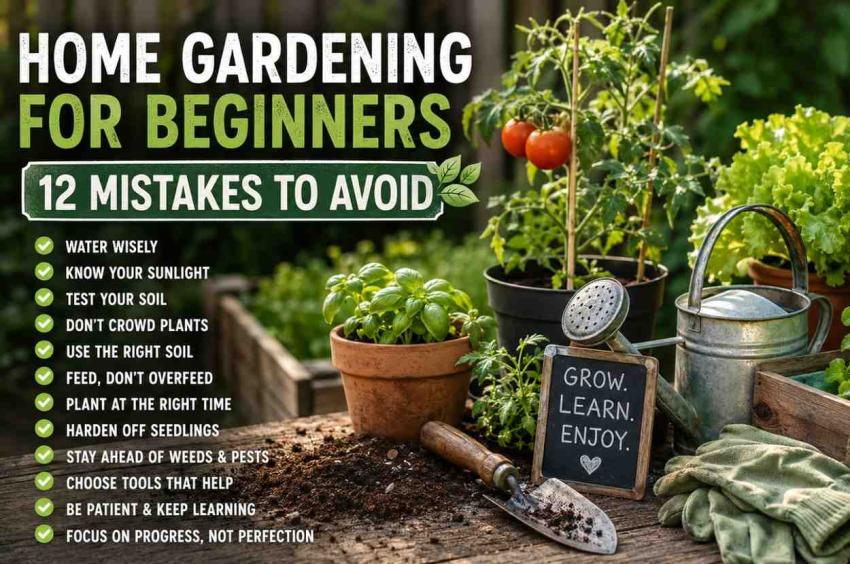
Below are the twelve mistakes that do the most damage, based on what actually kills beginner gardens — not the rare disasters, but the everyday habits that quietly work against you.
Why New Gardeners Struggle More Than They Should
The majority of gardening advice for beginners concentrates on planting. Seldom does it describe what goes wrong after the seeds are planted. Gardening is one of those skills where faults are not noticeable until weeks later; therefore, that gap is important. When a houseplant is overwatered, it may appear healthy for several days before the roots fail. If you plant in the incorrect location, you won't realize it until the crop never arrives.
So the goal here isn't a plant-by-plant manual. It's a filter — the habits worth breaking before you sink another season into a garden bed that isn't working for you.
12 Beginner Gardening Mistakes and How to Avoid Them
1. Making a big start. Although it sounds ambitious, a 200-square-foot area is only partially weeded by August. Start with a few containers or one raised bed. Once you understand your soil, sun, and schedule, you can always grow.
2. Ignoring your sunlight hours. Most vegetables — tomatoes, peppers, squash — need six to eight hours of direct sun. Leafy greens and herbs like mint or cilantro tolerate more shade. Track the light in your chosen spot for a full day before planting anything there.
3. Skipping a soil test. Plants fail in bad soil no matter how well you water or fertilize. A basic home soil test kit, or one sent to your local agricultural extension office, tells you pH and nutrient levels before you waste a season guessing.
4. Planting too near to one another. There's a reason seed packets indicate spacing: crowded plants compete with one another for light, water, and airflow, which can encourage fungal disease. Thin seedlings, despite the fact that it seems wasteful.
5. Using the wrong soil for containers. Garden soil compacts hard in a pot and drains poorly. Container plants need a lighter potting mix designed for airflow around the roots.
6. Fertilizing on autopilot. More fertilizer isn't more growth — it's often burned roots and weak, leggy plants. Feed according to what the plant and soil actually need, not a fixed weekly habit.
7. Ignoring your hardiness zone. Planting a heat-loving crop too early, or a cold-sensitive one too late, sets it up to fail before it has a chance. Check your USDA Plant Hardiness Zone (or the equivalent climate zone system in your country) and plant on schedule, not on impulse.
8. Forgetting to harden off seedlings. Seedlings started indoors or bought from a nursery need a gradual introduction to outdoor sun and wind over several days. Skip this, and transplant shock can stunt or kill them within 48 hours.
9. Letting weeds get ahead of you. Weeds aren't just unsightly — they steal water and nutrients from the plants you actually want. A weekly ten-minute pass is far less work than a rescue mission once they've taken over.
10. Reacting to pests instead of watching for them. By the time damage is visible, the infestation is often already established. Regularly inspect the undersides of leaves and address minor pest issues before they worsen.
Overwatering Is the Single Biggest Killer
If there's one mistake that ends more beginner gardens than any other, it's this. New gardeners tend to associate care with water, so they water daily out of anxiety rather than need. Most vegetable gardens do better with deep, infrequent watering — enough to soak the root zone, then a break until the top inch or two of soil dries out. Constantly wet soil starves roots of oxygen and invites root rot, which looks like wilting and gets misread as not enough water, leading to even more overwatering. Sticking a finger into the soil before you reach for the hose solves this almost every time.
Poor Drainage Undoes Everything Else
Even good soil and correct watering won't save a bed or container that can't drain. Waterlogged roots suffocate regardless of how carefully you've measured your watering schedule. Raised beds should sit on soil that isn't already compacted or clay-heavy, and containers need real drainage holes — not decorative ones that get blocked by potting mix. If water pools on the surface more than a few minutes after watering, that's your sign to fix drainage before you fix anything else.
11. Buying tools you don't need yet. A trowel, hand pruners, a decent watering can, and gloves cover almost everything a first-season garden requires. Specialty tools can wait until you know what your garden actually demands.
12. Giving up after one bad season. Plenty of "black thumbs" simply quit after their first tomato plant died, without realizing that a failed first attempt is closer to the rule than the exception. Every mistake above is a lesson, not a verdict on your ability to grow things.
Choosing the Right Tools Makes the Learning Curve Shorter
A lot of these mistakes get worse when the tools themselves are working against you — a watering can with no rose head that blasts seedlings flat, gloves stiff enough to make weeding a chore, or a trowel that bends in compacted soil. If you're still building out your starter kit, ANGKART's gardening guides are worth a look — they cover beginner tool essentials, balcony and small-space setups, and organic growing methods in more depth than a single article can, with straightforward, tested recommendations rather than a wall of options to sort through yourself.
Final Thoughts
Home gardening for beginners rewards patience far more than natural talent. Most failed first gardens don't fail because of bad luck — they fail because of a handful of repeatable, fixable habits: too much water, too little sunlight awareness, crowded beds, and tools or timing that work against the plant instead of with it.
Fix these twelve mistakes, and you'll skip most of the frustration that sends new gardeners back to buying produce at the store. The plants were never really the hard part. The habits were.