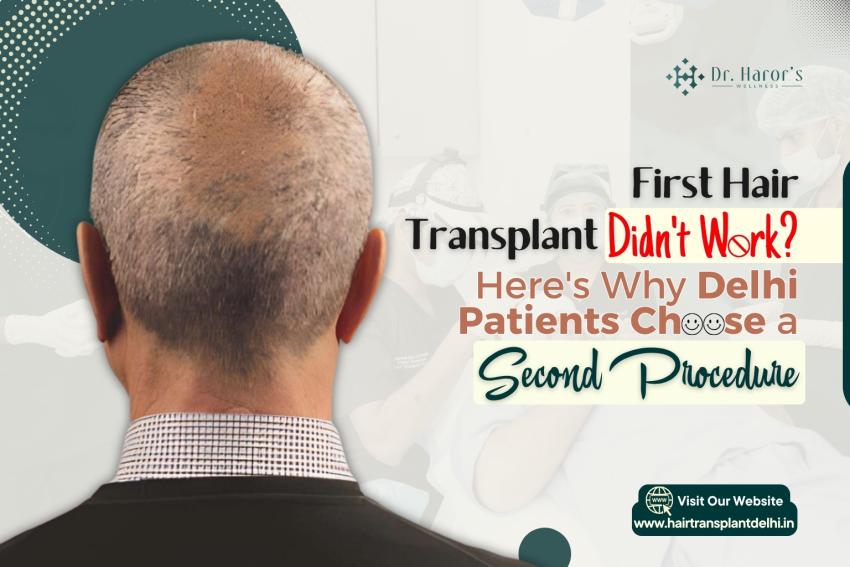
A hair transplant can genuinely change how someone feels about themselves. But here's the thing nobody really talks about: not every first surgery turns out the way patients hoped. Thin patches, an odd-looking hairline, scarring — these are more common than you'd think, and they're exactly why so many people end up looking into a second hair transplant in Delhi.
If your first procedure left you disappointed, you're not stuck with the outcome. With the right surgeon, better planning, and a corrective approach tailored to your scalp, a second surgery can genuinely fix what went wrong the first time. Let's get into why transplants fail, when it's worth trying again, and what actually goes into getting it right this time.
Why Do Hair Transplants Fail in the First Place?
Hair transplants have a good success rate overall, but "good" doesn't mean guaranteed. Sometimes grafts just don't take. Sometimes the result looks patchy or unnatural instead of blending in. A few of the usual culprits behind these disappointing outcomes:
A surgeon who simply didn't have enough experience
Too much hair taken from the donor area (overharvesting)
Grafts that weren't handled carefully during the procedure
Weak aftercare once the surgery was done
None of these are things a patient can control much after the fact — which is exactly why choosing the right clinic the second time around matters so much.
So What Exactly Is a Second Hair Transplant?
Think of it as a corrective procedure. Its whole purpose is to fix the shortcomings of the earlier surgery — filling in low-density areas, softening an unnatural hairline, or covering up visible scarring from the first round. It's more involved than a first-time transplant too, because the surgeon now has to factor in the condition of your scalp, how much healthy donor hair you actually have left, and how well your grafts recovered previously.
Signs You Might Need a Second Procedure
You might be a good candidate for a second hair transplant in Delhi if you're dealing with any of the following:
A hairline that just doesn't look natural
Density that's noticeably thinner than expected
Bald patches that are still fairly large
Scarring that's visible
Grafts that turned out low quality
New hair loss happening around the transplanted area
You simply want a better cosmetic result overall
A good surgeon won't jump straight into surgery, though. They'll first look closely at your scalp, check how much donor hair you realistically have to work with, and try to understand what went wrong the first time before recommending anything.
How Long Should You Wait?
Most surgeons suggest giving it 9 to 12 months after your first transplant before even considering a second one. That waiting period matters — it lets the full results of the original surgery show themselves, so both you and your surgeon can see exactly what needs improvement rather than guessing too early.
Are You Actually a Good Candidate?
Before booking a second surgery, it helps to check a few boxes:
You still have enough healthy donor hair available
You've fully recovered from the first procedure
Your hair loss is still active or ongoing
You're going in with realistic expectations about what's achievable
What Does a Second Hair Transplant Cost?
In India, hair transplant cost in Delhi generally falls somewhere between ₹50,000 and ₹1,80,000, though the final number depends heavily on how many grafts are needed and how complex the case is. A few things that tend to push the price up or down:
How severe the baldness is — more extensive pattern baldness means more grafts, which naturally increases the cost.
The surgeon's experience — consulting someone with a strong track record specifically in fixing failed or complicated transplants often comes at a premium, but it's usually worth it.
The technique chosen — FUE (Follicular Unit Extraction) involves removing individual follicles one at a time, which takes more time and precision but leaves minimal scarring and looks more natural. FUT (Follicular Unit Transplantation), on the other hand, removes a strip of scalp for grafts and tends to be less expensive. That precision is exactly why FUE usually costs more than FUT.
The clinic's equipment and standards — clinics investing in newer technology and stricter safety protocols will typically charge more for their services.
Conclusion
A disappointing first transplant isn't the end of the road. With the right approach, a second hair transplant in Delhi can genuinely improve density, restore a natural-looking hairline, and give you the confidence your first surgery didn't. The key is finding a surgeon who actually specializes in corrective work — not just anyone who does transplants.
If you're exploring your options, Dr. Haror's Wellness is worth a look. The clinic combines advanced technology with an experienced surgical team that takes a patient-first approach, starting with a thorough scalp assessment before recommending any corrective procedure.