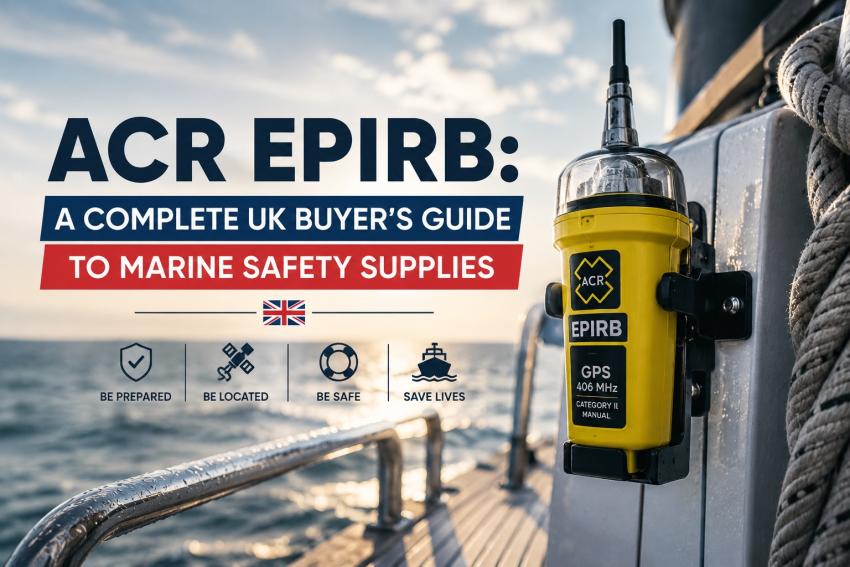
When operating in UK waters, safety should always come before convenience. Whether you own a commercial fishing vessel, a sailing yacht, a workboat, or a leisure craft, having the right Marine safety supplies can make a significant difference during an emergency. One of the most important pieces of equipment every vessel owner should consider is an ACR EPIRB.
An Emergency Position Indicating Radio Beacon (EPIRB) is designed to alert search and rescue authorities if your vessel is in distress. Modern ACR EPIRB devices use satellite technology to transmit your location quickly, helping rescue teams respond faster when every second matters.
In this guide, we'll explain how an ACR EPIRB works, the different models available, the features you should look for, and how it fits into your overall Marine safety supplies checklist. Whether you're purchasing your first emergency beacon or replacing an existing one, this guide will help you make an informed decision. As a trusted supplier of Marine safety supplies in the UK, Adec Marine offers reliable solutions for both commercial and vessels.
What Is an ACR EPIRB?
An ACR EPIRB is an emergency beacon designed to transmit a distress signal via the international COSPAS-SARSAT satellite network when activated. It helps rescue services locate a vessel quickly, even in remote offshore locations.
Unlike standard communication devices, an EPIRB continues transmitting even when other onboard systems fail, making it one of the most dependable pieces of Marine safety supplies available today.
Understanding Emergency Position Indicating Radio Beacons
An Emergency Position Indicating Radio Beacon is specifically built for maritime emergencies. Once activated, it sends a unique identification code and, on GPS-enabled models, the vessel's precise location.
The distress signal is received by satellites and forwarded to rescue coordination centres, allowing emergency responders to launch rescue operations with accurate location information.
Most modern EPIRBs operate on:
406 MHz distress frequency
121.5 MHz homing frequency
GPS positioning for improved accuracy
High-intensity LED strobe lights for visual identification
These features make an ACR EPIRB an essential part of any vessel's emergency preparedness plan.
Why ACR EPIRB Is Trusted Worldwide
Among the many emergency beacon manufacturers, ACR has earned a strong reputation for producing dependable marine safety equipment.
Some of the reasons professionals choose an ACR EPIRB include:
Proven global reliability
Fast satellite distress transmission
GPS-enabled location accuracy
Long battery life
Durable waterproof construction
Easy self-testing features
Compliance with international maritime standards
For commercial operators and leisure boat owners alike, investing in a trusted emergency beacon provides added confidence while at sea.
Why Marine Safety Supplies Are Essential for UK Vessel Owners
Every vessel faces potential risks, regardless of its size or operating area. Sudden weather changes, equipment failures, collisions, onboard fires, and man overboard situations can occur without warning.
Having the correct Marine safety supplies significantly improves emergency preparedness and supports faster rescue operations.
In the UK, many commercial vessels must comply with maritime safety regulations and carry approved emergency equipment. Even when not legally required, recreational boat owners are strongly encouraged to equip their vessels with reliable safety devices.
Essential Marine safety supplies help you:
Improve onboard safety
Support faster rescue responses
Meet SOLAS recommendations where applicable
Increase confidence during offshore voyages
Reduce risks during emergencies
Reliable equipment should never be viewed as an optional purchase. It is an investment in crew safety and vessel protection.
Key Features to Look for in an ACR EPIRB
Not every EPIRB offers the same functionality. Understanding the key features helps you choose the right model for your vessel and operational requirements.
GPS Integration
GPS-enabled models transmit highly accurate location information to rescue authorities.
Benefits include:
Faster rescue response
Improved location accuracy
Reduced search area
Greater confidence during offshore emergencies
Automatic vs Manual Activation
There are two main activation methods.
Automatic Activation (Category I)
These EPIRBs deploy automatically if the vessel sinks. They are ideal for commercial vessels and offshore operations where immediate activation is critical.
Manual Activation (Category II)
These models require manual release and activation, making them suitable for smaller recreational boats and leisure craft.
Long Battery Life
An ACR EPIRB typically provides years of standby battery life while delivering continuous distress transmissions once activated.
Always check:
Battery expiry date
Manufacturer recommendations
Replacement schedule
Regular maintenance ensures the beacon remains ready for use whenever needed.
Float-Free Housing
Certain models include float-free housings that automatically release the beacon if the vessel submerges.
This feature is particularly valuable for:
Offshore fishing vessels
Commercial workboats
Cargo vessels
Passenger vessels
406 MHz and 121.5 MHz Transmission
Modern EPIRBs use dual frequencies.
406 MHz transmits the distress alert through satellites.
121.5 MHz assists rescue teams during the final stages of locating the vessel.
Together, these frequencies improve rescue efficiency.
Built-In Strobe Light
Many ACR EPIRB models feature a bright LED strobe, making the beacon easier to identify during night-time operations or poor visibility.
Self-Test Function
Routine testing helps confirm the beacon is operating correctly without transmitting a false distress alert.
Most manufacturers recommend performing self-tests according to the product manual.
Types of ACR EPIRB Models
Choosing the correct model depends on your vessel type, operating area, and regulatory requirements.
Category I EPIRB
Category I models are designed for maximum automation.
Features include:
Automatic deployment
Hydrostatic release unit
Float-free activation
Ideal for offshore operations
Suitable for commercial vessels
These are commonly found on fishing vessels, cargo ships, and offshore support vessels operating around the UK.
Category II EPIRB
Category II models require manual activation.
They are well suited for:
Sailing yachts
Leisure boats
Small commercial vessels
Coastal operators
Although manually activated, they still provide the same satellite distress capability once deployed.
Which Model Is Right for You?
Before purchasing an ACR EPIRB, consider:
Vessel size
Distance from shore
Number of crew onboard
Commercial or recreational use
UK maritime safety requirements
Budget
Installation preferences
Consulting an experienced supplier such as Adec Marine can help ensure you choose the right beacon for your operational needs while maintaining compliance with applicable regulations.
How an ACR EPIRB Fits Into Your Marine Safety Supplies Checklist
An ACR EPIRB should never be the only emergency device carried onboard. It works best as part of a complete collection of Marine safety supplies designed to protect everyone on board.
A well-equipped vessel should also include:
SOLAS-approved lifejackets
Lifebuoys
Distress flares
Marine first aid kits
Fire extinguishers
Grab bags
Emergency lighting
Personal Locator Beacons (PLBs)
Searchlights
Survival suits where required
GMDSS safety equipment
Together, these Marine safety supplies provide multiple layers of protection and improve your vessel's readiness for emergencies at sea.
ACR EPIRB vs Personal Locator Beacon (PLB)
Although both devices are designed to help rescue services locate people during emergencies, they serve different purposes. Understanding the differences will help you select the right equipment for your vessel.
Feature
ACR EPIRB
Personal Locator Beacon (PLB)
Intended Use
Protects the entire vessel
Protects an individual
Registration
Registered to a vessel
Registered to an individual
Activation
Manual or automatic (depending on model)
Manual
Battery Life
Longer operational life
Shorter operational life
Best For
Commercial and recreational boats
Crew members, kayakers, sailors
For most vessel owners, an ACR EPIRB should be considered an essential item within their Marine safety supplies, while a PLB can provide an additional layer of personal safety for crew members.
How to Choose the Right ACR EPIRB
Selecting the right ACR EPIRB depends on several important factors.
Before making a purchase, consider:
The size and type of your vessel
Whether you operate offshore or near the coast
Commercial or recreational use
UK maritime safety requirements
GPS-enabled functionality
Category I or Category II activation
Ease of installation
Battery replacement schedule
Manufacturer support and warranty
If you're unsure which model best suits your vessel, seeking advice from marine safety specialists such as Adec Marine can help you make a confident and compliant choice.
ACR EPIRB Registration Requirements in the UK
Buying an ACR EPIRB is only part of the process. Proper registration is equally important.
When your beacon is registered, search and rescue authorities receive valuable information about your vessel, helping them respond more effectively during an emergency.
Registration also allows authorities to:
Identify your vessel quickly
Contact your emergency contacts
Verify distress alerts
Reduce delays during rescue operations
Keep your registration details updated whenever there is a change in ownership, vessel name, or contact information.
It is also good practice to carry out routine inspections and follow the manufacturer's recommendations for testing your beacon.
EPIRB Maintenance and Inspection Tips
Like all Marine safety supplies, an ACR EPIRB requires regular maintenance to remain reliable.
Perform Regular Self-Tests
Most EPIRBs include a built-in self-test feature.
Regular testing helps confirm:
Battery status
GPS functionality
Signal performance
Overall device health
Always follow the manufacturer's testing schedule to avoid unnecessary transmissions.
Replace the Battery on Time
EPIRB batteries are designed for long-term reliability, but they eventually expire.
Replace the battery:
Before the expiry date
After activation
Through an authorised service centre where required
Inspect the Hydrostatic Release Unit (HRU)
If you own a Category I beacon, inspect the Hydrostatic Release Unit regularly and replace it according to the manufacturer's recommendations.
Check the Mounting Bracket
Ensure the beacon:
Is securely mounted
Is free from corrosion
Can be easily removed during an emergency
Has no visible damage
Proper storage and inspection help ensure your emergency beacon performs when it matters most.
Common Mistakes Boat Owners Make
Even experienced boat owners can make mistakes when managing their Marine safety supplies.
Avoid these common issues:
Buying Non-Certified Equipment
Always purchase marine safety equipment that meets recognised international standards.
Forgetting Battery Expiry Dates
Expired batteries may prevent the beacon from operating during an emergency.
Failing to Register the EPIRB
An unregistered beacon can delay rescue efforts because authorities have limited information about the vessel.
Incorrect Installation
Improper mounting may prevent automatic deployment or make manual activation more difficult.
Skipping Routine Inspections
Regular maintenance is just as important as purchasing quality equipment.
Choosing the Wrong EPIRB Category
Selecting a Category II beacon when a Category I model is more appropriate may reduce the level of emergency protection for certain vessels.
Why Buy Marine Safety Supplies from Adec Marine?
Choosing a trusted supplier is just as important as selecting the right equipment.
Adec Marine supplies reliable Marine safety supplies for commercial operators, leisure boat owners, offshore industries, and marine professionals across the UK.
When purchasing from Adec Marine, you benefit from:
Genuine marine safety products
Trusted industry brands
Expert product advice
Support for commercial and recreational vessels
High-quality GMDSS safety equipment
SOLAS-compliant emergency beacons
Competitive pricing
Dependable customer support
Whether you need an ACR EPIRB, lifejackets, distress flares, or other Marine safety supplies, working with an experienced supplier helps ensure your vessel remains prepared for emergencies.
Conclusion
Investing in reliable Marine safety supplies is one of the most important decisions any vessel owner can make. From lifejackets and distress flares to GMDSS safety equipment, every item contributes to improving onboard safety and supporting effective emergency response.
An ACR EPIRB remains one of the most valuable emergency devices available today. Its ability to transmit accurate distress alerts through the global satellite network provides reassurance for commercial operators, offshore workers, and recreational boat owners alike.
By selecting the right beacon, maintaining it properly, and ensuring it is correctly registered, you can improve your vessel's emergency preparedness and help protect everyone on board.
If you are looking for dependable Marine safety supplies, SOLAS-compliant emergency beacons, or a high-quality ACR EPIRB, Adec Marine offers a trusted range of products to help UK vessel owners stay safe, compliant, and ready for every voyage