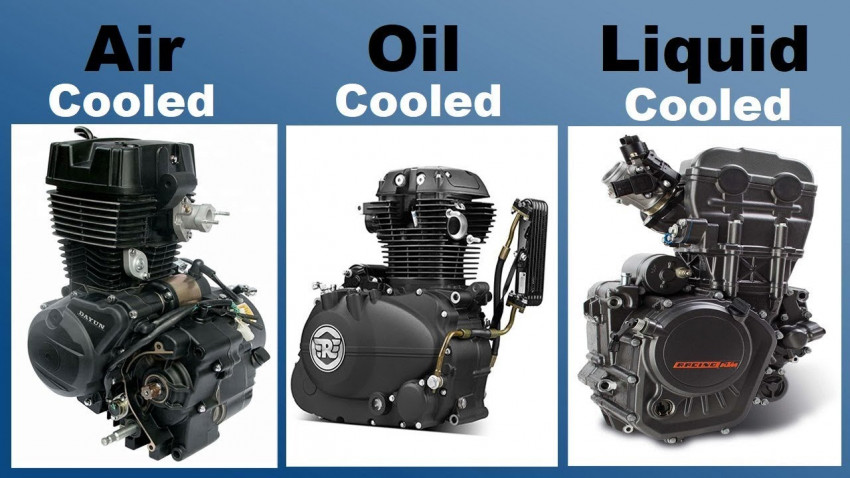
Air-cooled engines are more efficient and reliable than water-cooled engines and the same method comes in the cars that you rent from https://rentalcarsuae.com. However, they require regular maintenance and servicing. In addition, they are more expensive to buy than the water-cooled ones.
Air-cooled engines
Air-cooled engines are also more susceptible to overheating than water-cooled ones. The air in the engine cools by exchanging with the atmosphere. The water circulating inside the cylinder walls absorbs heat and dissipates it via evaporation into a radiator. This prevents overheating by absorbing excess heat from the hot exhaust gases.
Water-cooled engines
Water-cooled engines are cheaper to maintain as they do not need any external cooling system such as fans or radiators. They also do not require regular inspection and maintenance as often as air-cooled engines do.
Air-cooled engines are most efficient
Air-cooled engines are the most efficient. As a rule of thumb, air-cooled engines are 2-3% more efficient than water-cooled engines. Air-cooled engines have excellent heat transfer characteristics, as they are cooled by air flow around the engine rather than water flow through the radiator. The heat exchanger in an air-cooled engine is usually a series or parallel arrangement of fins that direct airflow to the radiator and dissipate heat from the engine core.
Water-cooled engines helps reduce fuel consumption
Water-cooled engines are not only more compact than air-cooled units but also create less drag and resistance on the moving surfaces of an aircraft. This helps reduce fuel consumption and increases range for heavier aircrafts.
Air-cooled engine facts
An air-cooled engine will have a fan in the cooling system to draw air through it. This means that there is less need for cooling water to be used, so this type of engine can be more efficient than a water-cooled engine. Another advantage of an air-cooled engine is that it is smaller than its water-cooled counterpart, making it easier to pack into a car.
Water-cooled engine facts
A water-cooled engine uses liquid coolant to keep the internal components of the vehicle cool and prevent damage from overheating. The liquid coolant flows through pipes attached to radiators and then into other parts of the car, such as the radiator or cooling fans. This type of cooling system is more efficient than an air-cooled one because it does not require any fans or pumps, which would increase noise levels in the cabin. Since there are no fans needed for this system, it can also be smaller than an air-cooled system.
It should also be noted that while an air-cooled car will use less power than its water-cooled counterpart when running at full speed on the road, it will have much higher top speeds at which these speeds are reached due
FAQ
Water-cooled engines are more efficient than air-cooled engines.
Water-cooled engines use the water in your car's radiator to cool the cylinder heads and other components, so they can be more efficient than air-cooled engines. Air-cooled engines rely on air temperatures to cool down the cylinders, which can make them inefficient.
There are different ways to cool a car's engine.
Air-cooled engines have a fan in the front of the engine that blows air over the radiator. The fan is powered by a belt connected to the crankshaft. Air-cooled engines are less efficient than water-cooled engines because they require more energy to run and produce more exhaust heat.
Water-cooled engines have their own water jacket around the cylinder block to absorb heat from hot exhaust gases, which then goes through a radiator and into a cooling system. Water-cooled engines are more efficient than air-cooled engines because they don't need fans or other devices to keep them running efficiently.
Air-Cooled Engine ( keep its temperature down )
An air-cooled engine uses air cooling to keep its temperature down. The air is drawn in through an intake system and then expelled out through a radiator on the outside of the vehicle. The coolant also comes into contact with this radiator, which helps it stay cool enough to do its job of carrying away waste heat from the engine.
Water-Cooled Engine ( do not need any external cooling system )
A water-cooled engine uses water as its cooling medium instead of air. The water is drawn into the cylinder block where it flows over heat exchangers before exiting at the exhaust valve. These exchangers are generally made up of metal plates that are spaced closely together so that they can transfer heat quickly from one surface to another without much loss in efficiency due to Carnot cycle efficiency loss caused by boundary layer separation (the separation of liquid film between adjacent plates).