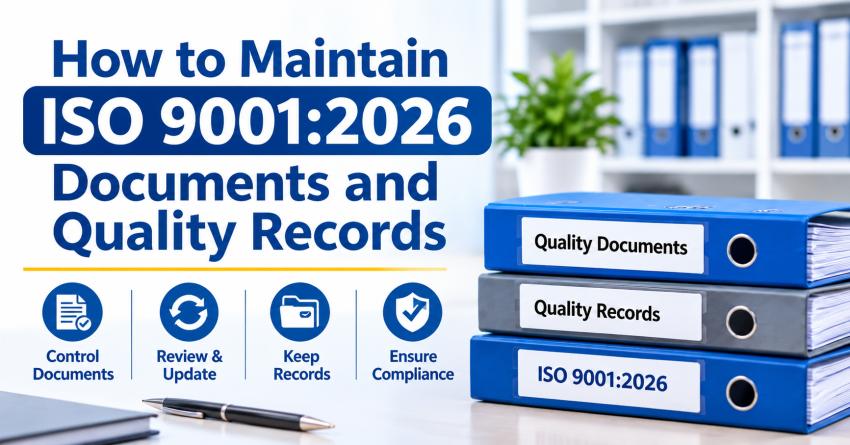
Maintaining documents and quality records is essential for an effective Quality Management System (QMS). Proper documentation helps organisations follow consistent processes and track activities. Regular reviews keep information accurate, accessible and useful for daily operations. Maintaining ISO 9001:2026 Documents also helps businesses organise quality-related information and support routine activities.
Understanding Documents and Quality Records
Documents and quality records have different roles in a quality management system. Documents explain how activities should be performed, whereas records provide evidence of completed activities.
For example, a quality procedure describes the steps involved in inspection, while an inspection report records the findings. Other examples include quality policies, work instructions, employee training records, audit reports and customer complaint records.
Establish a Proper Document Control Process
Organisations should define how documents are prepared, reviewed, approved, distributed and revised to ensure employees use authorised information. Each document should have identification details, such as a title, reference number, revision date and approval status.
An organised ISO 9001:2026 Documentation system helps maintain version accuracy. Outdated documents should be removed from points of use or clearly marked to prevent accidental use. This supports consistent working methods.
Review and Update Documents Regularly
Changes to equipment, responsibilities, customer expectations, suppliers or internal processes may require existing documents to be revised. Periodic reviews help identify information that no longer reflects current working practices or requirements.
Organisations should establish review intervals and assign responsibility to document owners. Before issuing a revised document, changes should be checked and approved by authorised personnel. Employees who use affected documents should be informed about important updates. This ensures employees follow updated instructions that align with current operational requirements.
Maintain Accurate and Traceable Quality Records
Quality records show whether planned activities have been carried out and provide information for evaluating performance. Records should be complete, readable, accurate and available when needed. Entries should be made promptly, and corrections should preserve traceability. Properly managed ISO 9001:2026 Documents help organisations maintain reliable evidence of their quality-related activities.
Common quality records maintained by organisations include:
- Internal audit reports and findings
- Inspection and testing records
- Employee training and competency records
- Customer feedback and complaint records
- Corrective action reports
- Supplier evaluation records
Consistent recordkeeping helps organisations investigate issues, identify recurring problems and evaluate the effectiveness of completed activities.
Ensure Secure Storage and Proper Retention
Documents and records need suitable storage arrangements to protect them from loss, damage or unauthorised access. Electronic information should be protected through access permissions and regular backups. Physical records should be kept in designated locations where they remain safe and accessible.
Organisations should define retention periods based on applicable requirements and business needs. Records that are no longer required should be disposed of securely.
Train Employees on Documentation Responsibilities
Employees should know which documents apply to their work and how to maintain related records. Practical training helps them understand document revisions, record completion and the importance of accurate information. Clear documentation responsibilities across departments help prevent missing records and inconsistent practices. Periodic checks help identify missing records, recurring errors and training needs.
Conclusion
Maintaining documents and quality records requires ongoing review, proper control and employee involvement. Consistent practices for updating, storing and protecting information support reliable operations, effective process monitoring and smoother audit preparation. Properly maintained quality information helps organisations keep essential records organised, accessible and ready when required.