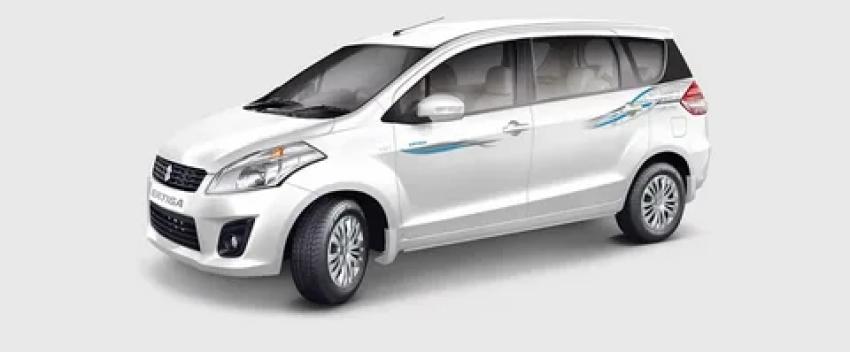
A seven-seat vehicle is often chosen for school trips, multi-generation family travel and weekend outings. The Maruti Suzuki Ertiga addresses those needs with three rows of seats and a relatively manageable footprint. Many buyers ask about maximum speed, but that is rarely the most useful way to judge a family multi-purpose vehicle. Seating comfort, overtaking response and controlled braking deserve greater attention.
Understand the seating layout before judging the size
The Ertiga is designed around seven seats arranged in three rows. For a household with several regular travellers, the extra positions can be more useful than a spacious five-seat vehicle. However, the last row should be tested by the actual people expected to use it. Adults may find legroom and access more limiting than children do.
Try entering the back seats without assistance, then adjust the second row for a fair balance. Check whether the middle-row occupants still have adequate support. A cabin that feels roomy in a photograph may become tight with everyone aboard and the front seats adjusted for tall drivers.
Luggage also needs attention. With every seating position occupied, space behind the third row becomes constrained. A family heading to the airport with seven people and several large bags may require a different arrangement or a larger vehicle. Try a real suitcase rather than judging volume through a specification alone.
Top speed is a limited family-car measure
Online listings sometimes mention Ertiga car top speed, yet a dependable India-specific manufacturer maximum-speed declaration is not always available for every current powertrain. Do not treat a third-party speed estimate as a verified test result or a reason to drive near that limit. Legal speed limits and road conditions govern safe operation.
For daily use, overtaking at permitted speeds is more relevant. Assess response when the vehicle carries passengers, uses air-conditioning and climbs an incline. A driver's confidence depends on accurate steering, usable torque and clear visibility, not a single peak-speed number. An Ertiga car top speed figure from a petrol automatic should not be assigned to a CNG manual.
The Maruti Suzuki Ertiga has a 1.5-litre petrol family powertrain, with factory CNG offered on relevant manual versions. Petrol automatic availability depends on the current variant list. The performance of a CNG vehicle may feel different from the petrol version under similar load, so a buyer should test the version intended for purchase.
Ride comfort matters on Indian family routes
Suspension behaviour can change when a vehicle is fully loaded. Check how the Ertiga handles speed breakers, uneven urban surfaces and patched expressway sections with passengers aboard. A short, empty showroom test will not reveal everything about a full-family trip. Tyres and tyre pressure also affect comfort and road noise.
The Ertiga offers a higher seating position than a conventional sedan, but the entrance height should still be tried by older family members. Second-row sliding and reclining adjustment can make longer journeys easier, while ventilation to the rear is an important practical consideration in summer.
Passengers should also assess the seat cushions and headrests rather than relying only on the number of seats. Children using appropriate restraints need secure anchorage and suitable belt geometry. Confirm the manual's recommended restraint positions and the variant's precise equipment.
Compare running costs by powertrain
An Ertiga used mainly for school and office trips may spend most of its time in dense traffic. In that case, ease of shifting and smooth low-speed response matter. A petrol automatic can simplify stop-go driving, while a petrol manual may appeal to a buyer comfortable with gear changes.
High-mileage households may investigate the CNG option, taking into account local filling queues and storage compromises. CNG fuel efficiency must be expressed in kilometres per kilogram, not petrol kilometres per litre. Compare current certified figures for the exact grade and transmission, remembering that actual consumption changes with traffic and passenger load.
For a household using seven seats every week, rear access and loaded comfort deserve priority. Highway travellers should examine overtaking response and cruising noise. School-run drivers may care more about low-speed steering and gearbox operation, while holidaymakers should check luggage space with every seat occupied.
The ertiga should not distract from these conditions. The vehicle's practical performance is best evaluated at lawful cruising speeds, with passengers and luggage accounted for. Version-specific claims need independent confirmation.
Include ownership and safety in the comparison
Ask for the current Ertiga grade's list of airbags, electronic stability control, parking assistance and child-restraint provisions. Safety equipment can vary by version and year. Verify any crash rating against its specific testing programme and covered configuration rather than assuming an old test applies to every variant.
Review scheduled servicing, tyre replacement, insurance and expected annual fuel expenditure. If financed, choose a monthly instalment that leaves room for maintenance and emergencies. Lower purchase price alone does not guarantee the cheapest family transport over several years.
Test the Ertiga as your family will use it
Seat the regular occupants, pack the luggage and drive an ordinary route before booking. The Maruti Suzuki Ertiga can be a sound fit for households that genuinely need seven positions in a compact package. If the family rarely needs the third row, another body style may be more comfortable. Treat maximum speed as a secondary curiosity, not the deciding figure.