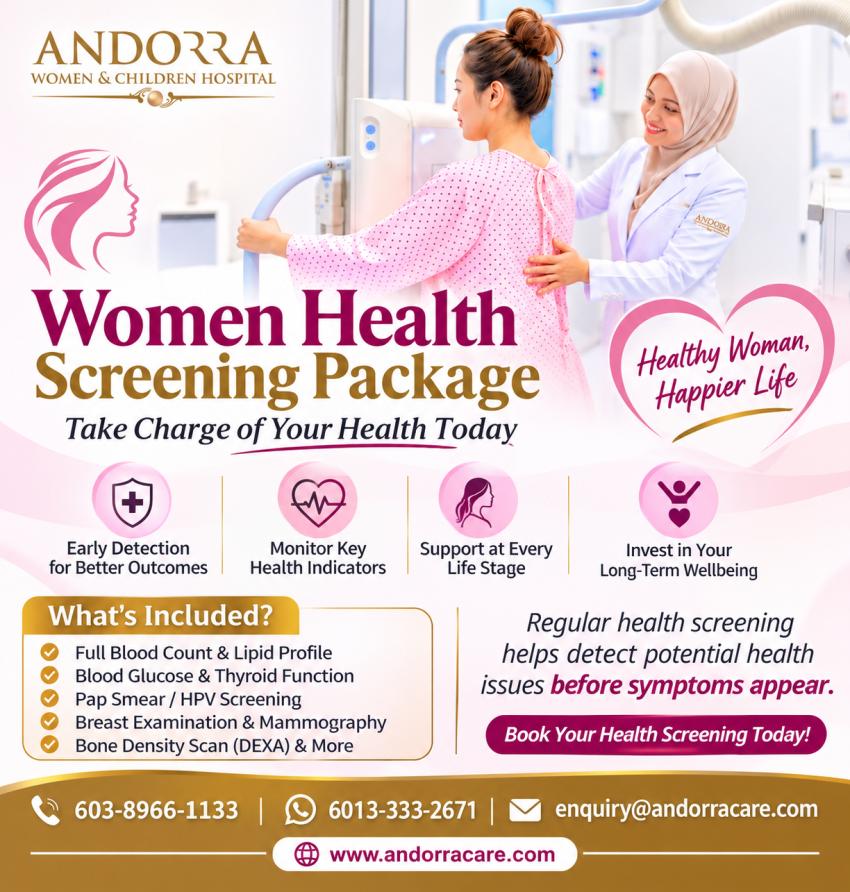
Regular health screening helps women detect potential medical conditions before symptoms appear, enabling early treatment and significantly better outcomes. Preventive checkups monitor key health markers — from blood pressure and cholesterol to hormonal balance and reproductive health — reducing the long-term risk of serious illness. For women managing careers, families, and everything in between, proactive screening is one of the most effective investments in lasting wellbeing.
Why Women Need Preventive Health Screening at Every Life Stage
Women's health needs shift considerably throughout life — from the reproductive years through perimenopause and beyond. Yet many women only visit a doctor when something feels wrong. By that point, conditions such as hypertension, diabetes, cervical abnormalities, or thyroid disorders may already be progressed.
According to the World Health Organization, non-communicable diseases — many of which are preventable or manageable with early detection — are responsible for a significant portion of premature deaths among women. Routine screening changes that equation entirely.
A structured women health screening package offers a coordinated approach to preventive care, covering a broad range of tests under one framework so nothing gets missed.
What Does a Women's Health Screening Package Typically Include?
A comprehensive women's health screen goes well beyond a basic blood test. Depending on your age and health history, a good package will generally include:
Full blood count (FBC) — checks for anaemia, infections, and immune function
Lipid profile — evaluates cholesterol and cardiovascular risk
Blood glucose and HbA1c — screens for diabetes and pre-diabetes
Thyroid function tests — thyroid disorders are significantly more common in women
Pap smear / HPV screening — detects early cervical changes
Breast examination and mammography — recommended for women over 40, or earlier with risk factors
Bone density scan (DEXA) — particularly important post-menopause
Blood pressure and BMI assessment — key metabolic markers
Hormonal panel — FSH, LH, and oestrogen levels, relevant during reproductive health evaluations
These tests collectively paint a detailed picture of your current health and flag areas that need closer attention — well before they become clinical problems.
How Often Should Women Get Screened?
Frequency depends on age, lifestyle, family history, and existing health conditions. As a general guide:
20s–30s: Annual blood work, Pap smear every 3 years, STI screening if sexually active
40s: Add mammography, more frequent cardiovascular screening, blood sugar monitoring
50s and beyond: Bone density checks, colorectal screening, more regular cardiac and hormonal reviews
Women who are pregnant or planning a pregnancy have additional needs — which is where maternity-specific health pathways become essential.
The Role of Antenatal and Maternity Packages in Women's Health
Pregnancy is one of the most medically significant periods in a woman's life, and consistent monitoring during this time is non-negotiable. An antenatal package provides structured prenatal care — covering ultrasounds, blood screenings, glucose tolerance tests, and foetal monitoring — at defined intervals throughout the pregnancy.
Beyond the pregnancy itself, choosing the right maternity packages ensures you have continuity of care from the first trimester through to postnatal recovery. This matters more than many women realise. Conditions like gestational diabetes, preeclampsia, and anaemia can develop without obvious early symptoms. Scheduled monitoring catches them early.
What to Look for in a Delivery Package
When selecting a delivery package, consider more than just the delivery room cost. A well-structured package should cover:
Labour ward stay and medical team attendance
Paediatrician review for the newborn
Post-delivery monitoring for the mother
Lactation support and postnatal education
Follow-up consultations
Choosing the right delivery package hospital means looking for a facility where maternity care is integrated — not fragmented. When your antenatal, delivery, and postnatal care all happen under one roof with a consistent clinical team, the experience is safer and significantly less stressful.
The Real Cost of Skipping Health Checks
It is easy to put off a health screen when you feel fine. But the financial and physical cost of treating an advanced illness far exceeds the cost of early detection. Consider cervical cancer: when caught at Stage 1, the five-year survival rate is above 90%. Detected at Stage 4, that figure drops dramatically.
The same logic applies to cardiovascular disease — the leading cause of death in women globally — and conditions like Type 2 diabetes, which often develops silently over years before diagnosis.
Preventive care is not an expense. It is a hedge against far greater ones.
Screening for Working Women: Making It Practical
One of the most common barriers for working women is simply time. Between professional commitments and family responsibilities, booking and attending health appointments often gets deprioritised.
A packaged screening approach addresses this directly. Rather than scheduling six separate appointments with different specialists, a women's health screening package consolidates key tests into a single visit or a short series of coordinated appointments. Results are reviewed together, giving a more complete clinical picture.
Some key practical tips:
Schedule your annual screen at the same time each year — treat it like a non-negotiable meeting
Use your screening results to track trends over time, not just single data points
Share your family history with your doctor — it shapes which tests are prioritised
If you are pregnant or planning to be, ask about combined antenatal and maternity package options early
Understanding Your Results: Beyond the Numbers
Getting screened is only half the equation. Understanding what your results mean — and what to do next — is where clinical support matters most. A good healthcare provider does not simply hand you a report. They walk you through each marker, explain what is within range, what warrants monitoring, and what requires immediate follow-up.
This is where choosing a women-focused healthcare provider makes a tangible difference. Clinicians experienced in women's health understand the interplay between hormonal cycles, lifestyle factors, reproductive health, and chronic disease risk — and can interpret your results in that fuller context.
Preventive Screening at Different Life Milestones
Before Pregnancy
Pre-conception screening helps identify conditions that could affect fertility or pregnancy outcomes — including thyroid function, rubella immunity, STIs, and blood type. This is a step many women skip, but it is one of the most valuable.
During Pregnancy
An antenatal package maps out your care from booking appointment to delivery. Blood tests, foetal anomaly scans, Group B Strep testing, and gestational diabetes screening are all part of a thorough antenatal programme.
After Delivery
Postnatal health is frequently overlooked. Iron levels, thyroid function, blood pressure, and mental health screening — particularly for postnatal depression — should all be part of post-delivery care.
Perimenopause and Beyond
As oestrogen levels decline, cardiovascular risk rises and bone density decreases. Regular screening in this phase helps manage the transition proactively rather than reactively.
Choosing the Right Healthcare Partner for Women's Preventive Care
Not all health screening packages are equal. The value of a package lies in the breadth of tests included, the expertise of the clinicians interpreting results, and the follow-up care available when something is flagged.
Look for a provider who offers women-specific packages — not generic adult health screens — with the flexibility to adjust based on your age, reproductive stage, and risk profile. If you are pregnant or planning a family, a provider who also offers structured maternity and delivery packages gives you continuity from preventive care through to childbirth and recovery.
Andorra Care offers women-centred health packages designed to support wellbeing at every stage — from routine annual screening to comprehensive maternity and antenatal care — bringing preventive health and specialist support together in one accessible place.
Frequently Asked Questions
What is included in a women's health screening package?
A women's health screening package typically includes blood tests (full blood count, lipid profile, blood glucose, thyroid function), Pap smear, blood pressure monitoring, and age-appropriate checks such as mammography or bone density scans. The specific tests vary by age and health history, so packages are often tailored to individual needs.
How is an antenatal package different from a maternity package?
An antenatal package covers prenatal monitoring throughout pregnancy — scans, blood tests, and foetal health checks. A maternity package is broader, encompassing antenatal care, delivery, and postnatal support. Both work together to ensure safe, continuous care for mother and baby from early pregnancy through to recovery after birth.
At what age should women start regular health screening?
Women should begin routine health screening in their 20s, starting with cervical smears, blood pressure checks, and STI screening if applicable. Additional tests such as mammography and bone density scans are introduced from the 40s onwards. Women with a family history of certain conditions may need earlier or more frequent checks.
What should I look for when comparing delivery package hospitals?
When comparing delivery package hospitals, assess what postnatal care is included, whether a paediatrician is available for newborn review, and how well the antenatal and delivery teams are integrated. Continuity of care — having the same clinical team across your pregnancy journey — is a strong indicator of a well-structured maternity service.
Can health screening detect conditions even if I feel well?
Yes — this is precisely the point of preventive screening. Many serious conditions, including hypertension, early-stage cervical abnormalities, thyroid disorders, and diabetes, often develop without noticeable symptoms. Routine screening identifies these issues early, when treatment is most effective and least invasive, before they progress into more serious health problems.
How often should I book a women's health screening package?
For most women, an annual health screen is recommended. The frequency of specific tests — such as Pap smears or mammograms — may vary based on clinical guidelines and individual risk. Your doctor can help you build a personalised screening schedule based on your age, lifestyle, and family medical history.