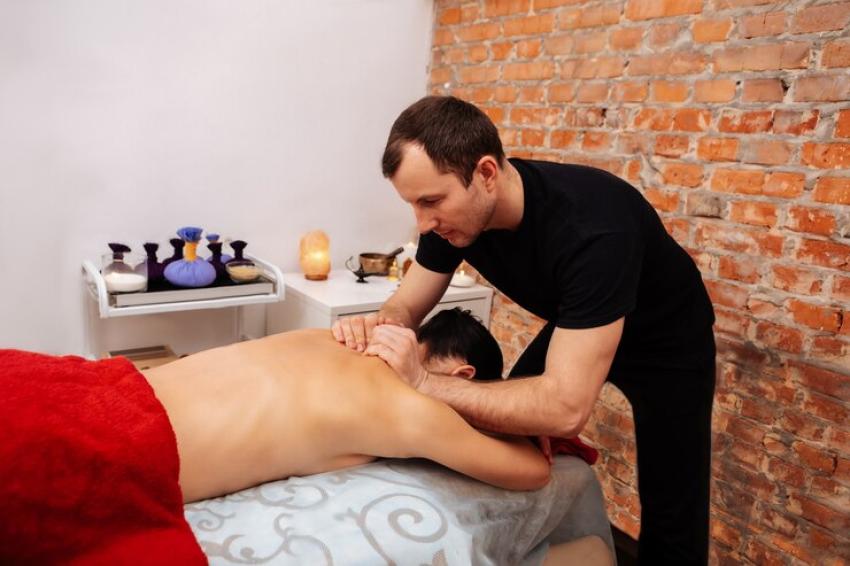
The phrase deep tissue massage near me hides a real decision. "Deep" does not mean "as hard as possible," and a hard massage is not always a better one. Pressure that is too light leaves a knot untouched. Pressure that is too heavy leaves you sore, tense and unwilling to book again. This guide gives you a way to choose the right level before you lie down.
What deep tissue massage actually does
Deep tissue massage works on the deeper layers of muscle and the connective tissue around them. The therapist uses slow, deliberate strokes and steady pressure to work on tight bands of muscle, often called knots, and on adhesions, which are areas where tissue feels stuck together. Studio descriptions say it may not feel as instantly relaxing as other styles, since the aim is longer-term release.
Two points matter here. Deep tissue is about depth and focus, not speed. And the pressure should build gradually, based on how your body responds. If a therapist leans in hard in the first minute, that is a warning sign.
Decision 1: Is your goal relief or relaxation?
If you want to feel calm and sleepy, a relaxing or Swedish massage usually suits better. If you want a specific tight spot worked, such as the muscles beside the spine or the top of the shoulder, deep tissue fits. Some people want both. In that case, ask for a lighter start and a firmer finish on the problem area.
Decision 2: How do you react to pressure?
People differ. Some find a strong press a relief, and others tense up against it. Think about past experiences. Did a firm foam roller feel good or awful? Did a physio session leave you bruised? Use that history to set your level. You can always go deeper in the next session. It is harder to undo a session that went too hard.
Decision 3: Do you have a reason to be careful?
Some conditions call for caution or medical advice before deep pressure. Tell the therapist, and check with a doctor first, if any of these apply.
You take blood thinners or bruise easily
You are pregnant
You have a recent injury, a fracture or surgery
You have osteoporosis or a clotting condition
You have a skin infection or an open wound
Deep work can also leave tender spots for a day. That is normal. Sharp pain, numbness or swelling is not, and it needs a check.
Decision 4: Where and when will you go?
"Near me" is a practical filter. For many people in Wokingham, Reading is a short journey, and some studios there list Wokingham among the areas they serve. Asian Rose Massage is one example, and its massage in Wokingham page sets out the treatments available. Its pricing page lists deep tissue massage at £30 for 30 minutes, £40 for 45 minutes, £45 for 60 minutes and £70 for 90 minutes. Confirm current prices and opening hours when you book.
Studios describe deep tissue sessions as typically lasting 60 to 90 minutes, depending on the area and depth required. A shorter slot works for one problem area, such as a shoulder. A longer one suits a full back and neck.
When to switch to a different style
Deep tissue is not the answer to every ache. Switch styles in these cases.
Choose hot stone massage if you like warmth and want muscles to soften before the therapist works on them.
Choose Swedish or relaxing massage if sleep and calm matter more than knots.
Choose head and shoulder massage if your tension sits mainly in the neck and scalp.
Choose a doctor or physiotherapist if the pain followed an injury or keeps getting worse.
There is no shame in changing your mind between visits. Bodies change with the seasons, the workload and the amount of sleep you get.
Why deep tissue sometimes disappoints
Three reasons come up again and again. First, the client said nothing about pressure and the therapist guessed wrong. Second, the session was too short for the area, so the therapist skimmed the surface. Third, the client expected one session to undo months of tension. Muscles that tightened over months rarely release in an hour, and relief tends to build over several visits.
Each problem has a simple fix: speak up, pick a length that matches the area, and judge progress over two or three sessions, not one.
What a good deep tissue session looks like
A careful session has a clear structure.
A consultation about where you feel tension and what you have tried.
Warm-up strokes on the area to loosen the surface muscles.
Slow, deeper work that builds gradually while the therapist checks in.
A cooling-down finish with lighter strokes.
Watch for check-ins. A good therapist asks how the pressure feels without being prompted. If nobody asks, ask for it yourself.
How to describe what you want
Therapists cannot see your tension from the outside. Short descriptions help. Say where it sits ("left shoulder blade"), how it feels ("tight, stuck, burning"), how long it has been there ("three weeks") and what makes it worse ("long hours at a desk"). Then name your pressure level using the scale above.
Avoid the phrase "as hard as you can." It sounds tough, but it takes away the therapist's chance to match the pressure to your tissue.
After the session
Drink water, move gently and avoid heavy exercise for the rest of the day. Studios say soreness for a day or two is normal and recommend plenty of fluids. Heat from a warm bath can feel good. Do not press on the area yourself. Let it settle.
If you feel better, note how long the relief lasts. If you feel worse for more than two days, contact the studio, and see a doctor if pain is sharp or spreading.
How often is it worth booking?
For chronic tension, studios suggest a session every two to four weeks. For a single stiff spot, one visit may be enough. If you notice that tension returns within a few days, ask whether a different style, a longer session or a change in daily habits might help more.
Making the call
Put the four decisions together. Know your goal, set your pressure on the one-to-five scale, check your health and pick a slot you can reach. Then say all of it out loud at the start of the session. That is how a search for deep tissue massage near me turns into a session that actually matches the way your body feels.