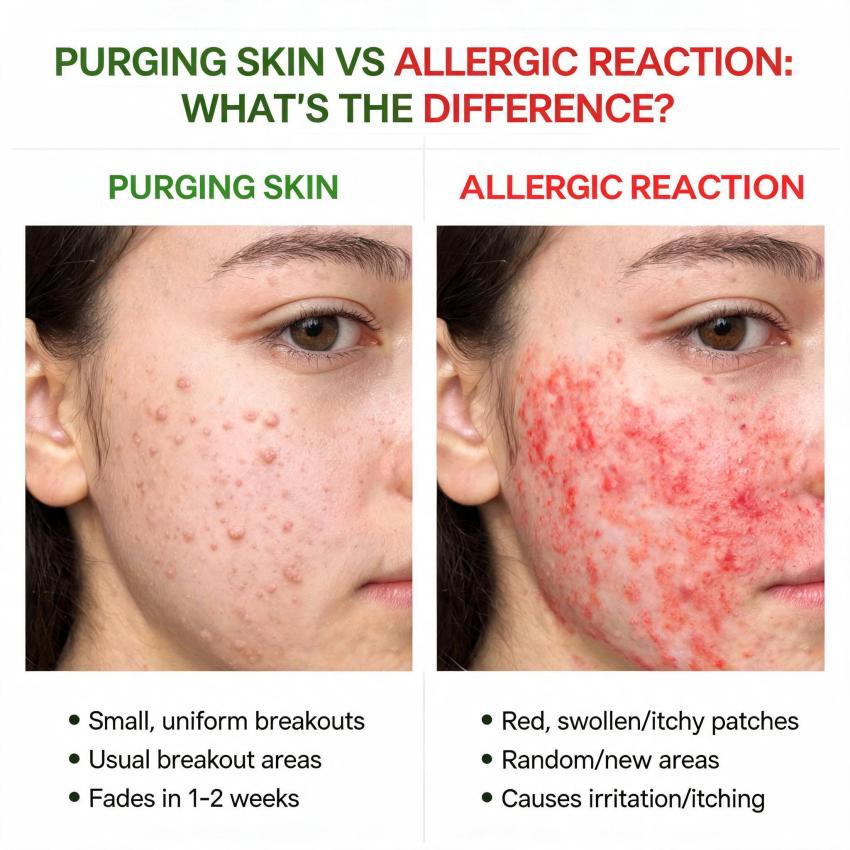
You start a new skincare item, and a few days later your face breaks out. Now you are worried. Is this purging, which is said to be a good sign, or is your skin reacting badly to the item? It is a common question, and the two can look a lot alike at first. The good news is that there are clear signs that tell them apart. Once you know what to look for, you can decide what to do next without panic.
What Is Skin Purging?
Purging happens when you start something that speeds up how fast your skin renews itself. Items with ingredients like retinoids, salicylic acid, or glycolic acid are the usual cause. They push the dirt and oil that were already sitting deep in your pores up to the surface faster than normal. So you may see more pimples for a short time. It feels like things are getting worse, but it is really your skin clearing out old buildup.
What Is an Allergic Reaction?
An allergic reaction is different. It means your skin does not agree with something in the item, such as a fragrance, a preservative, or a plant extract. Your body sees it as a threat and reacts. This can show up as redness, itching, burning, swelling, or small bumps. It is not the skin clearing out. It is the skin being irritated.
Check What You Started
The first question to ask is what you began using. Purging only happens with items that make skin renew faster. If you started a simple cleanser, a face wash, or a moisturizer, purging is very unlikely, because these do not speed up cell turnover. In that case, a sudden breakout is more likely to be irritation or a mild reaction. So always think about the type of item before you decide.
Look at Where the Pimples Appear
With purging, pimples show up in the places where you usually get breakouts, such as the chin, the forehead, or the cheeks. They look like your normal pimples, only more of them. With an allergic reaction, the bumps can appear in new places, often wherever the item touched your skin. You may see a rash across the cheeks or around the eyes, even in areas where you rarely break out.
Look at How the Pimples Look and Feel
Purging usually brings small whiteheads, blackheads, and a few red pimples. They come up, heal, and go away within a few days. An allergic reaction often looks flatter and more spread out, with red patches, dry flaky skin, or tiny itchy bumps. Burning and stinging are strong signs of a reaction. Pimples from purging may feel sore, but they do not usually itch or sting all over the face.
Check How Long It Lasts
Time is a big clue. Purging usually starts within the first one or two weeks and settles in about four to six weeks. The new pimples come and go quickly, and you should see your skin getting better after that. An allergic reaction often shows up fast, sometimes within hours or a day or two, and it does not get better as long as you keep using the item. If your skin keeps getting redder or itchier, it is not purging.
What to Do If You Think It Is a Reaction
Stop using the new item right away. Rinse your face with lukewarm water and keep your routine very simple until the redness settles. Swelling of the lips or face, or trouble breathing, is serious and needs urgent help. Do not try to fight a reaction with scrubs or strong home remedies, as they can make it worse. Let your skin rest.
What to Do If You Think It Is Purging
If you are sure it is purging, stay calm and stay regular. Do not stop and start the item again and again, as this can confuse your skin. Use it a little less often, such as every second or third night, until your skin settles. Never squeeze or pick at the pimples, since this can leave marks. Give it a few weeks before you decide.
Keep Your Basic Routine Gentle
Whether it is purging or a reaction, the rest of your routine should be soft and simple. A face wash and face moisturizer for fresh skin is all you need as the base. In the morning, wash with the Creamy Face Wash, which cleans well without leaving your skin tight. Then apply the Face Moisturizer to keep your skin soft and comfortable. At night, use the Gotu Kola Cleanser to remove dust and oil. Gotu kola is a plant that people have used for years to calm tired skin, so it feels soothing when your face is sore or red. Finish with the Face Moisturizer. If your skin feels dusty or oily, you can wash again with the Creamy Face Wash before moisturizing.
Do a Patch Test Next Time
To avoid this confusion in the future, test any new item before using it on your whole face. Apply a small amount behind your ear or on your jaw for two days. If you see no redness, itching, or bumps, you can try it on your face. Start slowly, using it two or three times in the first week. Add only one new item at a time, so you know what is causing what.
Small Habits That Help
Drink enough water, sleep seven to eight hours, and eat fruits and home-cooked food. Wash your hands before touching your face, and change your pillow cover every few days. Avoid hot water on your face, since it makes sensitive skin worse. Skip strong scrubs while your skin is settling.
Final Words
Purging and allergic reactions can look similar, but the clues are different. Purging comes from items that speed up skin renewal, appears in usual breakout areas, and settles within weeks. A reaction brings itching, burning, and spread-out redness that does not get better. Keep your routine gentle, test new items first, and listen to what your skin is telling you. With a calm approach, your skin will return to feeling soft, clear, and comfortable.