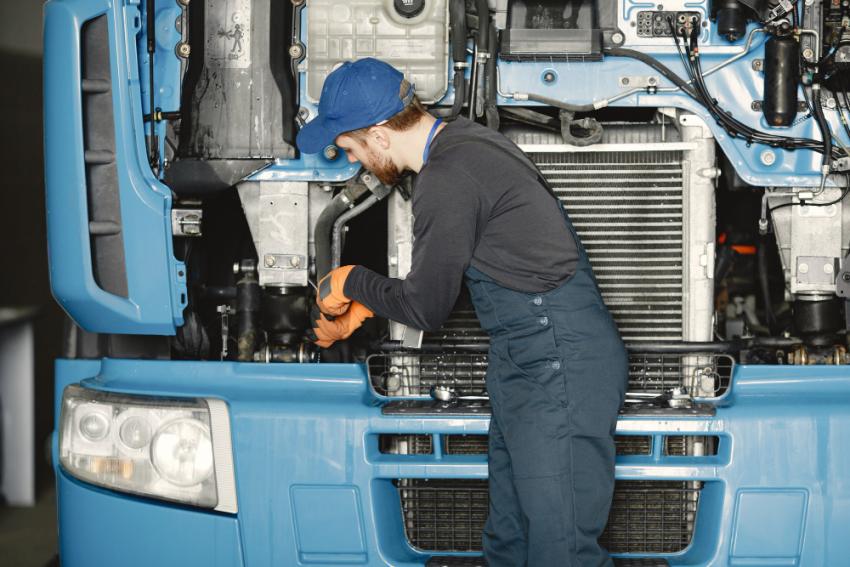
A dashboard warning light rarely explains itself. It tells a driver something is wrong, not what, and guessing at the cause wastes time a working truck cannot afford to lose. Truck diagnostics in Newman, WA exist to answer that question properly. Operators new to the process often have the same handful of questions before booking a check. Here are straight answers to the ones that come up most.
What Does Truck Diagnostics Actually Involve?
Modern trucks run onboard computer systems that monitor the engine, transmission, brakes, and emissions equipment in real time. When a sensor reading falls outside its expected range, the system logs a fault code and often triggers a warning light. Diagnostics means connecting a scan tool to read those codes, then testing the specific component or system the code points to. This confirms the actual fault instead of guessing from a dashboard light alone.
A single warning light can point to several possible causes. One light might mean a failing sensor, a loose connector, or an issue with the actual component the sensor monitors. Diagnostics narrows that list down to one confirmed cause, rather than leaving the driver or the workshop to guess which of the three is actually responsible.
When Does a Truck Need Diagnostics Rather Than a Regular Service?
A scheduled service covers routine wear items on a fixed interval, regardless of whether anything has actually gone wrong. Diagnostics responds to a specific symptom: a warning light, a noise, a performance change, or a fault a driver has noticed. A truck running perfectly between services does not need a diagnostic check just because the calendar says so.
A truck showing any unusual symptom benefits from a diagnostic check immediately, well before the next scheduled service is due. Waiting for the next service date to mention a fault means the truck keeps working with an unresolved problem in the meantime. That often makes the eventual repair larger than it needed to be.
What Actually Happens During a Diagnostic Check?
A technician starts by scanning for stored and active fault codes across the truck's systems. Each relevant code gets checked against the actual symptom. A stored code does not always match what the driver is experiencing, so this comparison step matters.
The technician then tests the specific component involved. That might be a sensor, a wiring connection, or a mechanical part, depending on what the code and the symptom point to together. A written summary usually follows, listing the confirmed fault and the recommended repair. This summary gives the operator a clear basis for approving the work, rather than a vague explanation delivered verbally and forgotten within the week.
Can Diagnostics Happen On-Site, or Does the Truck Need a Workshop?
Most diagnostic work on trucks does not require a full workshop. A scan tool, some basic test equipment, and an experienced technician can confirm most faults at a depot or even roadside. Providers offering truck diagnostics in Newman, WA, including G Auto Electric & Air Con, generally carry out this work on-site or via a mobile service. That avoids sending a truck to a distant workshop just to find out what is wrong. A workshop visit still becomes necessary for a repair that needs a hoist or specialised equipment, but the diagnostic step itself rarely does.
Is Diagnostics Only for Engine Problems?
No. Modern trucks run separate onboard systems for the engine, transmission, brakes, emissions equipment, and often the cab electronics as well. Each system can log its own fault codes independently of the others. A brake system warning, for instance, gets diagnosed the same structured way as an engine fault: scan for codes, test the relevant component, confirm the cause before recommending a repair.
This matters because a driver sometimes assumes a warning light means engine trouble by default, when the actual system involved is something else entirely. Treating every warning light as an engine issue can send a technician looking in the wrong place first. A proper diagnostic scan avoids that wasted time from the start.
What If a Fault Code Does Not Match the Symptom the Driver Reported?
This happens more often than people expect. A stored fault code points to a system, not always the exact part causing trouble. A code logged against an emissions sensor, for example, might actually trace back to a wiring fault upstream rather than the sensor itself. A good technician treats the code as a starting point, not a final answer, and tests the surrounding components until the symptom and the cause actually line up.
How Often Should a Working Truck Get Checked?
There is no single answer that suits every truck. A truck running consistent, heavy Pilbara routes generally benefits from more frequent checks than one doing light, occasional trips. Rather than following a fixed calendar alone, most experienced operators pair a basic diagnostic scan with each scheduled service and act immediately on any new warning light or symptom in between. This catches developing faults earlier than waiting for symptoms to become obvious.
What Happens After Diagnostics Finds a Fault?
Once the actual cause is confirmed, the technician can quote the specific repair needed, rather than a rough estimate based on the symptom alone. This matters for parts ordering too. Confirming the exact fault before ordering avoids the delay of a wrong part arriving and needing to be sent back. For a straightforward fault, the repair often happens in the same visit as the diagnostic check. A more complex issue might need parts ordered in first, particularly for a less common component.
Does Diagnostics Cost Extra on Top of the Repair?
Diagnostic work is a service in its own right, separate from the repair itself, and it is usually charged that way. The value is in what it prevents: a guessed repair that does not fix the actual problem, followed by a second visit and a second bill. Confirming the fault first, even though it adds a step, tends to cost less overall than replacing parts on a guess and hoping the symptom goes away.
Treating diagnostics as an unnecessary extra, rather than the first step of any real repair, is one of the more expensive habits an operator can fall into. A part replaced without confirming it was actually the fault still needs to be paid for, even when it turns out the truck's real problem was somewhere else entirely.
What Tools Does a Technician Actually Use?
A scan tool connected to the truck's diagnostic port reads stored and active fault codes from each onboard system. Beyond that, a technician uses standard test equipment: a multimeter for checking electrical circuits, pressure gauges for fuel and oil systems, and basic mechanical tools for physical inspection. None of this equipment is exotic or workshop-only. That is part of why most diagnostic work can happen on-site rather than requiring a specialist facility.
Does Every Warning Light Mean the Truck Should Stop Immediately?
Not every warning light is the same emergency. Some, such as an emissions-related code, can usually wait for a scheduled diagnostic check without immediate risk. Others, particularly anything related to engine oil pressure, coolant temperature, or braking, need attention straight away and are not worth continuing to drive on.
When a driver is unsure which category a warning light falls into, treating it as urgent is the safer default. A quick phone call to a technician to describe the light and any accompanying symptoms usually clarifies whether the truck can keep working or needs to stop for a check first.
Getting the Most From a Diagnostic Visit
Giving the technician as much detail as possible before the check starts helps. Noting when a symptom appears, whether it is constant or occasional, and what conditions seem to trigger it gives a clearer starting point than a vague description on the day. Truck diagnostics in Newman, WA works best as the first step in fixing a fault properly, not an optional extra tacked onto a repair that could have been diagnosed correctly from the start.