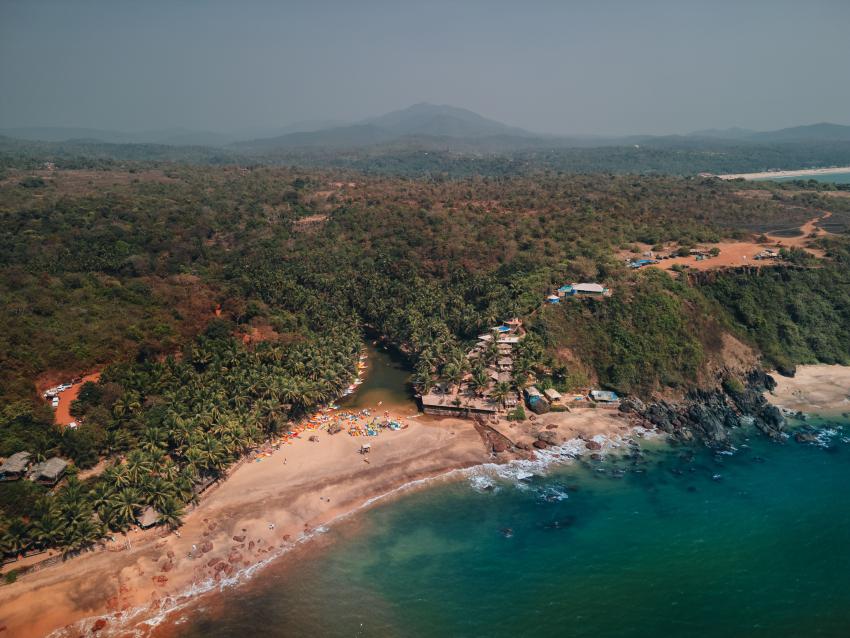
Goa has a coastline of roughly 100 kilometres, and somehow that thin strip holds two entirely different holidays. One involves music that drifts past midnight, scooters weaving between shacks and a market on most evenings of the week. The other involves a hammock, a plate of fish curry and nothing louder than the surf. Plenty of first-time visitors choose a side by accident, usually because one hotel photo looked nicer. That is a weak way to decide. A better one starts with knowing what each half offers, and what it quietly lacks.
What is the main difference between North Goa and South Goa?
North Goa vs South Goa is a question of energy more than scenery. (Both have palms. Both have sunsets.) The north is busy, social and varied. Calangute, Baga, Candolim, Anjuna and Vagator sit close enough that one day can hold a fort, a beach, a market and a late dinner with live music. The south is slower. Its beaches run longer and emptier, and resorts tend to sit in their own quiet pockets instead of along a main road. The Zuari river loosely marks where one half gives way to the other, which makes a handy mental divider on a map.
Which side has better beaches?
Neither wins outright. They win different things.
Anyone hunting for the best beaches in North Goa will end up with a long list, and the smartest way to sort it is by mood. Baga and Calangute are the loud, loved stretch of shacks and water sports. Anjuna and Vagator bring rocky edges and cliff-top cafes. Go further up, to Morjim, Ashwem, Mandrem and Arambol, and the crowd thins, yoga studios appear and the pace drops a gear. Arambol also has a freshwater lake, Sweetwater Lake, a short walk inland.
The south plays a different game. Palolem curves into a neat crescent with a row of beach huts. Agonda is wide, open and famously unhurried, and Olive Ridley turtles are known to nest there. Colva and Benaulim stretch out long and flat, ideal for walking early, before the sun gets serious. Butterfly Beach, a small cove near Palolem, needs a boat or a trek to reach, which already filters out the casual crowd.
Where is the nightlife better?
North, and it is not close. Baga’s Tito’s Lane is the best-known address for late nights, and the clubs and beach bars around Anjuna, Vagator and Arpora carry the scene further. Markets add a second layer. The Anjuna flea market runs on Wednesdays and the Saturday Night Market at Arpora operates during the season. (Both are seasonal, so check before building an evening around either.)
The south keeps nights simple. Shack dinners, a drink while the tide comes in, and occasionally some music. Palolem has been known for its silent disco nights, which is about as wild as the south usually gets, and about as wild as most people in the south want.
Which side is better for sightseeing and food?
The north holds most of the heritage. Old Goa has the Basilica of Bom Jesus, a UNESCO World Heritage site, with the Se Cathedral close by. Panaji’s Fontainhas quarter offers painted Portuguese-era houses and lanes made for aimless wandering. Fort Aguada in Candolim and Chapora Fort in Vagator (the one from the film Dil Chahta Hai) supply the sea views.
The south trades monuments for space. Cabo de Rama Fort sits on cliffs above the Arabian Sea, the Goa Chitra museum in Benaulim covers traditional Goan life, and Cotigao Wildlife Sanctuary offers forest walks. Dudhsagar Falls can be reached from either coast, though southern bases generally shorten the drive.
Food is Goan everywhere: fish thali, xacuti, prawn balchao, bebinca. The north has the wider spread of international menus. The south leans toward fish grilled a few metres from the water.
How do airports and trains affect the choice?
Getting there shapes the first and last day of a trip. Manohar International Airport at Mopa opened in 2023 and sits in the north, closer to Arambol, Mandrem and Morjim. Dabolim Airport, near Vasco da Gama, is the older gateway and lies south of the Zuari. By rail, Madgaon junction serves the south, and Thivim serves the north. Moving between the two halves can take a couple of hours by road, depending on traffic and season.
Travelers who would rather not juggle transfers can look at domestic holiday options through Travel Junky, an India-based company that plans trips for Indian travelers across the country.
When is the best time to visit either side?
November to February is the comfortable stretch, with the busiest weeks around Christmas and New Year. The monsoon runs roughly from June to September. Seas turn rough, swimming is generally avoided and many shacks stay closed. Both halves are greener then, and a lot quieter.
What are the highlights of each side?
North Goa
Busy beaches with shacks and water sports at Baga and Calangute
Late-night scene around Tito’s Lane, Anjuna and Arpora
Forts, churches and Panaji’s Fontainhas quarter
Calmer pockets at Mandrem, Ashwem and Arambol
South Goa
Long, calm beaches at Palolem, Agonda, Colva and Benaulim
Beach huts and slow evenings
Cabo de Rama Fort and Cotigao Wildlife Sanctuary
Madgaon junction for rail arrivals
Who should pick which side?
Friends on a short break, first-timers who want everything within reach and anyone who treats sleep as optional will be happier in the north. Couples after quiet, families who want room on the sand, and travelers planning to finish an entire book will lean south.
Pro tip: On a week-long trip, split the stay. Do the busy half first and the quiet half last. Holidays should end with a hammock, not a hangover.
So, which one wins?
The honest answer is that it depends on what you plan to do with your evenings. North Goa is a conversation that never quite ends, and South Goa is a pause. Choose the conversation if you want stories to bring home. Choose the pause if you want to bring home a tan and a lowered pulse. Or take both, which Goa makes surprisingly easy. Travel Junky can help turn whichever answer you pick into an actual plan at traveljunky.in.