Hair transplant technology has come a long way, and it’s easy to assume it can fix anything. It can’t. Your donor area sets the ceiling for what’s possible, and no technique can create new follicles. It can only move the ones you already have.
That’s why the first question at any consultation shouldn’t be “how many grafts do I need?” It should be “how many can my scalp safely spare?” The best hair transplant doctor in Delhi, India will answer that honestly before planning anything else.
What Is the Donor Area?
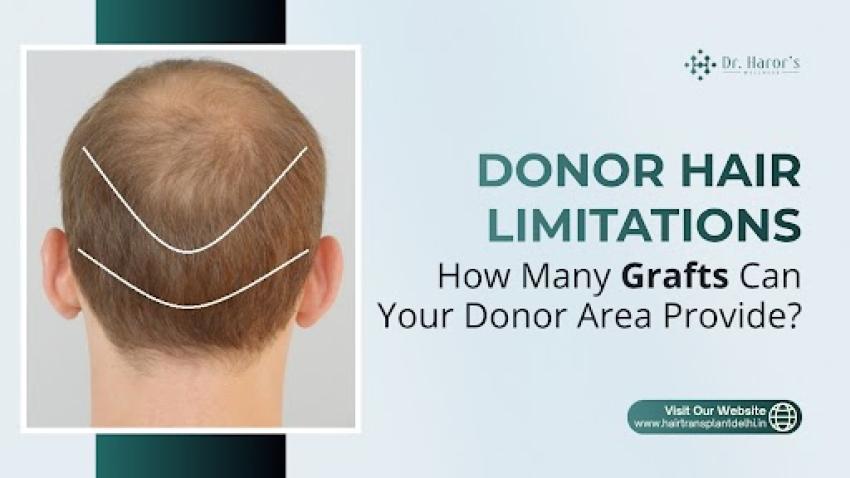
The donor area is the strip of scalp across the back and sides of your head. Hair here is genetically resistant to the hormone that causes pattern baldness, so it keeps growing even after the hair on top has thinned. During a transplant, healthy follicles are taken from this zone and placed in the thinning or bald areas.
How Many Grafts Can It Provide?
It depends on the person. Some people have thick, dense donor hair and can give a generous number of grafts. Others have a lighter supply and need a more conservative plan. For most people, the back and sides can safely yield somewhere between 6,000 and 8,000 grafts over a lifetime. Take too many and the donor area ends up thin and patchy, which is hard to hide and impossible to undo.
Signs of a Strong Donor Area
A good donor area gives you what you need without looking noticeably sparse afterwards. The goal is a well-planned hairline, not the highest possible graft count. Look for:
Good follicular density
Thick, healthy hair shafts
Stable growth with little miniaturisation
No active scalp disease
Good scalp elasticity
Hair that blends naturally with the recipient area
What Decides Your Graft Count?
Several things work together:
Density: More follicles per square centimetre means more can be taken while the area still looks full.
Hair type: Coarse or curly hair covers more scalp than fine, straight hair, even when the number of grafts is the same.
Safe zone: The back and sides usually resist hair loss best, but that isn’t equally true for everyone.
Future loss: If your hair loss is still progressing, you’ll want to save some donor supply for later sessions.
Scalp condition: Scarring, skin problems or an earlier transplant can reduce how many usable follicles remain.
Protecting Your Donor Hair
Your choice of surgeon matters more than most people realise. A good dermatologist will check your scalp health, hair calibre and likely future hair loss before suggesting a graft number, and will plan the hairline around those findings rather than a sales target. If you’re searching for the best hair transplant doctor in Delhi, India, ask how they assess and preserve donor hair before they quote you anything.
Final Thoughts
Your donor supply is finite, so every graft counts. A careful plan gives you a natural result that lasts, while an overambitious one can use up your supply early. If you’re considering hair restoration treatment in Delhi, book a consultation with Dr. Haror’s Wellness. Their experienced dermatologists will examine your donor area, explain what’s realistic, and guide you through each step. The clinic uses advanced equipment that meets global standards, which supports precise graft placement and better graft survival.
#HairTransplantDelhi #BestHairTransplantDoctorInDelhi #HairRestorationDelhi #HairTransplantIndia #DrHarorsWellness #DonorArea #GraftCount #HairTransplantResults #HairLossTreatment #HairRegrowth #Dermatologist #DelhiNCR