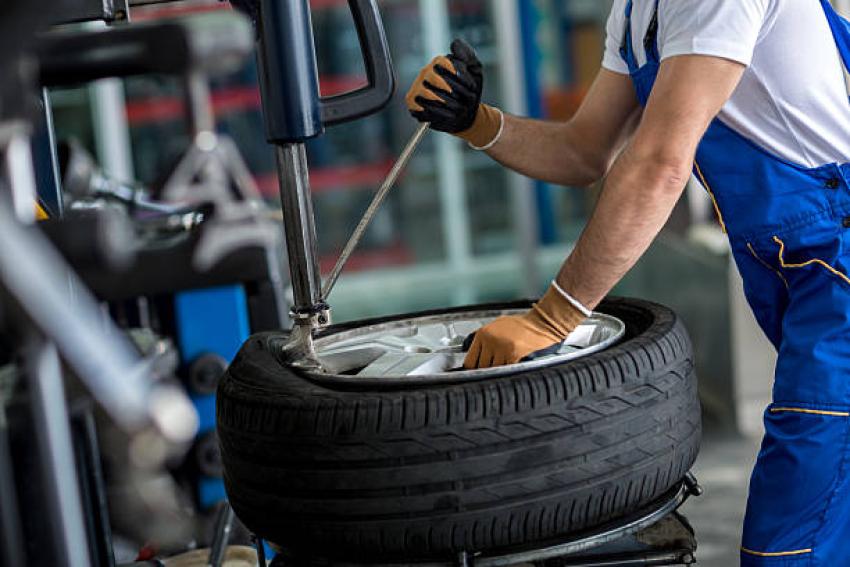
How does a mobile tyre fitter replace a damaged tyre without a traditional workshop ramp? Mobile tyre fitting in Edinburgh lets motorists get new tyres fitted at home, work, or safely at the roadside. A fully fitted van brings heavy machinery directly to the car, removing the need for recovery trucks or risky trips on flat tyres.
The procedure involves carrying out the same thorough safety checks as those carried out during a normal garage visit. Qualified fitters examine the rim, fit a new valve, mount the tyre and then balance the assembly before tightening the wheel nuts. When drivers understand what happens at a mobile service, they will be better prepared for a smooth, quick tyre replacement.
Preparing the Vehicle for an On-Site Technician
The car should be in a secure and stable position before the operative gets there. For the technician to work safely, the ground must be firm and level. For example, a private driveway or a quiet street, since soft ground, steep hills, and narrow public lanes can prevent the job from starting.
Drivers ought to find the locking wheel nut key before the van gets there. The special socket adapter, which is typically located in the glovebox or in the toolkit in the boot, enables them to remove the anti-theft bolts.
How Mobile Technicians Secure the Work Area
Can an on-site technician lift a modern car safely without a hydraulic workshop ramp? Professional vans carry commercial trolley jacks and axle stands with a rated load, which securely support the vehicle on level tarmac. To avoid damaging the sills, technicians place rubber jack pads under the reinforced lifting points.
Once the car is firmly on the stand, the specialist removes the deflated wheel. The mobile van is equipped with a tyre-changing machine which is powered by an internal generator and an air compressor.
Stripping, Inspecting, and Preparing the Wheel Rim
The fitter prepares the bare rim with clear mechanical steps:
Fully deflating the worn tyre by removing the inner core.
Pulling the tyre bead free from the inner and outer rim flanges.
Levering the old tyre off the wheel using the van-mounted changing machine.
Looking for any signs of rust or aluminium corrosion on the inside of the rim surface.
Cleaning the sealing lip with a wire brush before applying bead sealant.
Replacing the rubber valve stem to prevent future pressure loss.
Rust or aluminium oxidation is often found along the inner edge of wheel rims, and, before applying a bead-sealing compound to it, technicians clean the surface with a wire brush. Taking this step prevents slow air leaks, which could cause a reduction in pressure later on. Since a conventional rubber tyre valve has to withstand heavy stress caused by heat and movement, the fitter always removes the old valve and fits a new one.
Mounting and Balancing the New Car Tyre in Edinburgh
To fit the new tyre, use the correct technique to prevent the inner bead from tearing. The technician spreads tyre-mounting paste around the edge of the rim so that the tyre can slide easily over the wheel lip when pressure is applied by the machine. After the tyre has been mounted, the technician fills it with compressed air until the bead securely pops into place against the wheel flange at the air pressure indicated on the vehicle's door-pillar plate.
Next, a computerised balancing machine mounted inside the van performs dynamic wheel balancing. Even a few grams of imbalance can make a wheel wobble at motorway speeds, causing steering wheel vibrations and rapid suspension wear. The machine spins the wheel to find the imbalance. It then shows where to stick small weights on the inner rim to keep the tyre rolling smoothly.
Refitting, Torquing, and Selecting Replacement Rubber
Drivers buying car tyres in Edinburgh must match the size, load index, and speed rating in the car handbook. Technicians can supply budget, mid-range, or premium compounds, but each unit must suit the axle needs. Fitting an incorrect load rating compromises handling stability and can lead to sudden structural tyre failure under heavy braking.
The technician puts the balanced wheel back into the car hub and manually tightens the lug bolts to avoid cross-threading. When the car has settled down on the ground, the fitter then tightens each bolt in a criss-cross manner, using a torque wrench which has been calibrated to the manufacturer's specification. Since pneumatic impact guns are likely to over-tighten the bolts and thus warp the brake discs or break the wheel studs, hand tightening is an essential final safety measure.
Safe Disposal and Environmental Standards
After finishing the job, the mobile specialist puts the old tyres in the van for proper recycling. Motorists cannot put old car tyres in household rubbish or council dumps. UK environmental law classifies them as controlled commercial waste. Licensed garages send worn casings to registered shredding plants, where they repurpose the rubber for playground surfaces, sports tracks, and civil engineering projects.
The technician also updates the digital paperwork and presents a summary of the work. Drivers receive confirmation of the final tyre pressures, torque settings, and tread depth details across all four corners. This clear record proves useful during the annual MOT test, guaranteeing the car remains roadworthy and fully compliant with UK tyre safety laws.
Conclusion
Mobile tyre fitting provides a safe and convenient solution for both flat tyres and those being replaced at home. There is no need for drivers to go to a garage since mobile vans replicate all the steps that a workshop would take. The fitters seal the beads neatly, balance the wheels accurately and check the wheel torque using calibrated tools. Drivers avoid the risk of driving on flat tyres and end up with tyres that exactly match the specification set out by the car manufacturer.
Frequently Asked Questions
Can a mobile fitter repair a puncture instead of replacing the tyre?
If the damage is within the central three-quarters of the tread, a technician is able to carry out a repair. However, cuts or punctures in the sidewall or outer shoulder cannot be safely plugged. In these cases, British safety standard BS AU 159 requires a full tyre replacement to ensure structural strength.
How much clearance space does a mobile tyre van need?
A mobile fitting van needs about two car lengths of clear space and enough side clearance to access the vehicle wheels safely. The van requires firm, level ground to operate hydraulic jacks and axle stands without tilting. Fitters cannot work on sharp slopes or soft grass verges.
Do mobile fitters supply tyres for electric vehicles?
Mobile technicians supply tyres for electric cars. They check the handbook or door-pillar plate to confirm the size, load index, and speed rating. Electric cars also benefit from tyre compounds engineered for low rolling resistance. Fitters check the manufacturer's door pillar plate to select matching specifications.
How soon can a car be driven after mobile tyre fitting?
You can drive straight away once the technician finishes torquing the wheel nuts. The mounting paste dries quickly around the bead, and the technician sets the correct cold tyre pressures before you leave. Drivers needing Car Tyres Edinburgh services should check wheel nut tightness after fifty miles using a torque wrench.