Vietnam is a fascinating destination where ancient traditions meet modern city life. From Hanoi’s bustling streets to the beautiful coastline of Da Nang and the lively atmosphere of Ho Chi Minh City, the country offers something for different types of travelers. However, preparing for a successful trip involves more than choosing destinations. Visitors should also consider visa requirements, transportation, accommodation, local customs, and seasonal weather.
This guide covers the essential details to help first-time visitors prepare for a comfortable and memorable Vietnam holiday.
1. Understand Vietnam Visa Requirements
Before booking your journey, check the entry requirements for your nationality. Depending on your passport and travel purpose, you may need a visa or qualify for a visa exemption.
Eligible travelers can apply for a Vietnam eVisa online before departure. The application typically requires passport information, a digital photograph, and travel details. Applicants should carefully review their information before submitting the form.
When preparing your Vietnam visa application, check the approved entry checkpoint, permitted stay, number of entries, and visa validity dates. These details should match your itinerary.
Travelers with an approaching departure date may also research urgent Vietnam eVisa assistance. Private service providers may offer expedited application support, but fees, processing times, and eligibility vary. Faster processing does not guarantee approval.
For a smoother experience, prepare your documents early and verify the latest requirements before making non-refundable travel arrangements.
2. Choose the Best Places to Visit
Vietnam stretches from the northern mountains to the southern delta, offering diverse landscapes and cultural experiences.
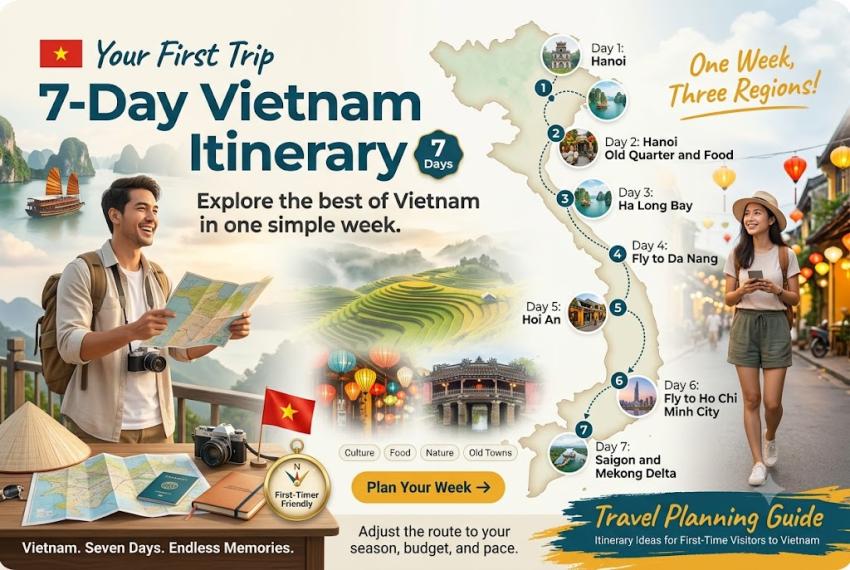
Hanoi is a great starting point for exploring historic temples, traditional markets, and local street food. Visitors can spend time around Hoan Kiem Lake and explore the narrow streets of the Old Quarter.
Ha Long Bay attracts travelers with its limestone islands and scenic cruises. It is a popular choice for nature lovers and photography enthusiasts.
Hoi An is known for its lantern-lit streets, preserved architecture, riverside restaurants, and traditional crafts. The town is particularly enjoyable for travelers who prefer a relaxed atmosphere.
Da Nang offers sandy beaches, coastal scenery, and convenient access to attractions such as the Marble Mountains.
Ho Chi Minh City combines historical landmarks, modern shopping areas, busy markets, and an exciting food scene.
Choose destinations according to your available time rather than trying to cover the entire country in one short trip.
3. Plan Your Transportation
Domestic flights can save time when traveling between northern, central, and southern Vietnam. Trains and long-distance buses are alternatives for travelers who prefer scenic journeys or want to manage their budget.
In major cities, taxis and app-based transport services can make getting around easier. Always confirm the destination and expected fare before starting a journey.
Allow extra time for airport transfers, especially during busy travel periods. If you have connecting flights or separate tickets, check baggage arrangements and immigration requirements in advance.
4. Explore Vietnamese Food
Food is an important part of the travel experience. Vietnam offers regional specialties, fresh ingredients, and affordable meals at local restaurants and street-food stalls.
Try pho, a flavorful noodle soup, or banh mi, a baguette sandwich filled with savory ingredients. In central Vietnam, Hoi An is known for cao lau noodles, while Hue is famous for bun bo Hue.
Travelers with dietary restrictions should explain their needs clearly when ordering. If you have food allergies, carry a translated note describing the ingredients you need to avoid.
5. Prepare for Vietnam’s Weather
Vietnam has different weather patterns across its regions. Northern destinations can experience cool winters, while central areas may have heavy rain during certain months. Southern Vietnam generally has distinct wet and dry seasons.
Check the forecast for each destination on your itinerary. Pack breathable clothing, comfortable walking shoes, sunscreen, and a lightweight rain jacket when appropriate.
If your trip includes beaches, mountains, and cities, prepare for changing conditions instead of relying on one general national forecast.
6. Organize Your Travel Budget
Your expenses will depend on your accommodation, transportation, dining choices, and planned activities. Budget travelers can often save money by using local eateries and public transport, while guided excursions and premium hotels increase overall costs.
Keep some Vietnamese dong available for small purchases. Before exchanging money or using an overseas bank card, check exchange rates and transaction fees.
It is also sensible to budget for travel insurance, entrance tickets, airport transfers, and unexpected expenses.
7. Complete Your Pre-Departure Checklist
Before leaving for Vietnam, make sure you have prepared the essentials:
Check passport validity and visa requirements.
Complete your Vietnam eVisa application if required.
Confirm flights and accommodation.
Keep copies of important travel documents.
Check baggage allowances and airline rules.
Arrange suitable travel insurance.
Review the weather forecast.
Save your hotel address and emergency contacts.
Keep your approved visa accessible during travel and follow the entry conditions stated on the document.
Make Your Vietnam Trip Easier to Plan
A successful Vietnam holiday begins with practical preparation. Choose destinations that suit your interests, understand local transport options, plan for regional weather, and organize your documents before departure.
If you need an entry permit, review the latest Vietnam visa online requirements and submit accurate information. Travelers who require application assistance can compare available services and confirm all fees and processing conditions before proceeding.
With thoughtful planning, you can spend less time managing unexpected problems and more time enjoying Vietnam’s landscapes, cuisine, history, and welcoming travel experiences.