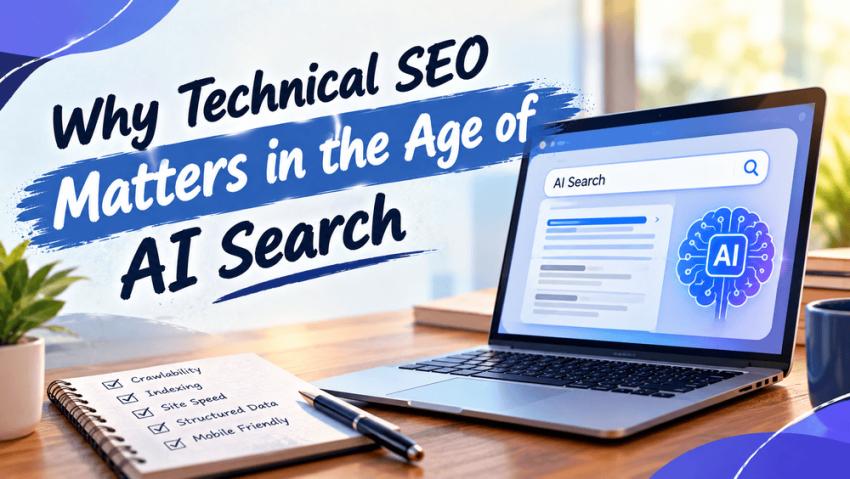
A website can contain useful information and still struggle to appear in search results. Sometimes, the problem has little to do with the writing itself. Pages may load slowly, important sections may remain inaccessible, or search engines may have trouble understanding how different parts of a site fit together. As AI becomes more involved in online discovery, these technical details deserve closer attention.
Search Systems Need Access to Website Information
Before a page can contribute to search visibility, automated systems need to find and process it. This begins with crawling and indexing. If important pages are blocked by incorrect settings, buried behind complicated navigation, or disconnected from other sections, they may receive less attention than intended.
Website owners should review their robots.txt file, XML sitemap, internal links, and indexing directives. These elements help search engines discover relevant URLs and understand which pages should appear in results. A sitemap cannot guarantee indexing, but it can help communicate which addresses matter.
Website Structure Helps Machines Understand Meaning
A website is easier to interpret when its information follows a sensible order. Clear headings, descriptive page titles, relevant internal links, and well-organised sections help distinguish one subject from another.
Imagine an online electronics store with separate pages for laptops, accessories, repairs, and warranty information. If these sections are connected logically, visitors can navigate the site without unnecessary effort. Search systems can also gain a clearer understanding of the relationships between products and services.
Structured data can provide additional context about products, organisations, articles, and other eligible entities. However, markup must reflect information that genuinely appears on the page. Adding irrelevant schema or using incorrect properties can create problems rather than improve understanding.
Speed and Stability Affect the Experience
Nobody enjoys waiting for a page to become usable. Slow loading, unexpected layout shifts, and delayed responses can interrupt browsing, particularly on mobile connections. These problems may also make important information harder to access.
Technical teams should examine Core Web Vitals, image sizes, caching, server response times, and unnecessary scripts. Compressing oversized media, removing unused code, and improving hosting configurations can reduce friction without changing the site's visual identity.
Performance is not simply about achieving a perfect score in testing tools. The practical goal is to help visitors reach the information they need without frustration.
Mobile Compatibility Cannot Be Overlooked
Many people research products, compare services, and contact companies through smartphones. A page designed mainly for a large monitor may become difficult to use on a smaller display if text is cramped, menus are awkward, or buttons sit too close together.
Responsive layouts, readable typography, accessible controls, and properly sized images help prevent these issues. Businesses should test important pages across different screen sizes rather than assuming that a desktop preview tells the whole story.
A comfortable mobile experience also makes it easier for visitors to explore additional pages and complete actions such as submitting enquiries or making purchases.
AI Search Still Needs Reliable Foundations
AI-powered search can interpret questions, summarise information, and connect related concepts. Yet these capabilities do not remove the need for accessible, accurate website information. If essential details are missing, outdated, or difficult to retrieve, automated systems may have less dependable material to work with.
Technical SEO cannot guarantee a mention in an AI-generated answer. Visibility depends on several factors, including relevance, source quality, the search system being used, and the nature of the question. Still, a technically sound website gives useful information a better foundation for discovery.
Regular Audits Help Catch Hidden Problems
Technical issues can develop after redesigns, plugin updates, migrations, or changes to website navigation. Broken links, accidental noindex directives, duplicate URLs, redirect chains, and missing canonical tags may go unnoticed until performance starts to suffer.
Routine audits help identify these concerns before they spread across important sections. Teams should prioritise errors affecting valuable pages instead of treating every warning as equally serious.
For companies adapting to AI-driven discovery, ai seo services in India can support technical audits, crawlability improvements, structured data checks, website performance, and search visibility planning. The most useful approach combines sound engineering with clear information, giving both visitors and search systems a better experience.