How Does a Gas Fired Heat Treatment Furnace Support Industrial Metal Processing?
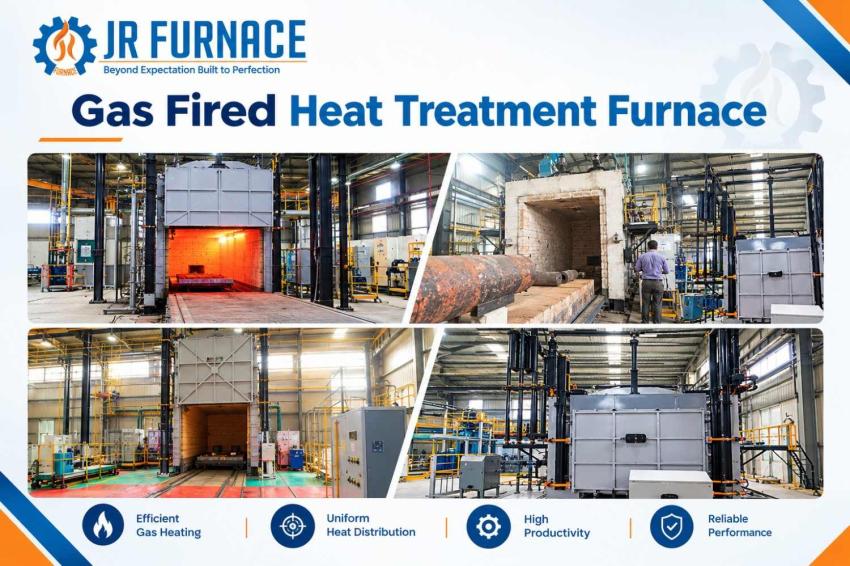
Heat treatment is an important part of manufacturing when metal components need controlled changes in hardness, strength, toughness, or internal structure. For industries processing large components and heavy production loads, a gas fired heat treatment furnace can provide the heating capacity required for demanding thermal processes.
Unlike electric heating systems that use resistance elements, gas-fired furnaces generate thermal energy through controlled combustion. Natural gas, LPG, or other suitable fuels can be used depending on the plant infrastructure and furnace design. The furnace configuration is normally selected according to the material, component dimensions, batch weight, operating temperature, production volume, and required heat treatment cycle.
What Is a Gas Fired Heat Treatment Furnace?
A gas fired heat treatment furnace is an industrial heating system designed to heat metal components according to a controlled temperature cycle. The process can include heating, soaking, and controlled cooling, depending on the treatment being performed.
The furnace chamber, burners, insulation, circulation system, temperature sensors, and control system all work together to maintain stable process conditions. Proper heat circulation is particularly important for large loads because temperature differences inside the chamber can affect the consistency of the finished components.
Industrial gas-fired furnace systems can be designed in several configurations, including chamber, batch, bogie hearth, and continuous arrangements. The appropriate design depends on the way components are loaded, processed, and unloaded.
Where Are Gas-Fired Furnaces Used?
A gas fired heat treatment furnace can be used for several metal-processing applications. Common processes include annealing, stress relieving, normalizing, hardening, tempering, solution treatment, and reheating.
For example, stress relieving may be required for fabricated or welded components to reduce residual stresses. Annealing can be used to modify material structure and improve machinability, while hardening and tempering are commonly applied when specific mechanical properties are required.
Gas-fired systems can be particularly suitable for applications involving large components or high thermal loads. Furnace manufacturers may also incorporate forced air circulation, multi-zone burner arrangements, automatic temperature control, and programmable process sequences to improve heating consistency.
Why Temperature Uniformity Matters
Temperature uniformity is a critical consideration in industrial heat treatment. If different areas of a furnace chamber operate at substantially different temperatures, components in the same batch may experience different thermal cycles.
Burner positioning, combustion control, air circulation, furnace insulation, and temperature measurement therefore play important roles in furnace performance. Modern systems can also use PLC-based controls, HMI interfaces, and process monitoring to help operators manage heating cycles more consistently.
The atmosphere may also need consideration for processes where oxidation or decarburization could affect the surface of the material. Controlled atmospheres are commonly used in heat treatment when protecting the metal surface or achieving a particular metallurgical result is important.
Selecting the Right Furnace for Production
Choosing a furnace should begin with the actual production requirements rather than simply selecting a standard furnace size. Manufacturers should evaluate maximum component dimensions, batch weight, operating temperature, heating rate, soaking requirements, cooling method, production frequency, available fuel, and automation requirements.
Safety is another important consideration because gas-fired equipment involves combustion, fuel supply, flame monitoring, and high-temperature operation. Proper burner management and interlocking systems are therefore essential parts of an industrial furnace installation.
For manufacturers looking for a system suited to their specific thermal processing requirements, JR Furnace & Ovens provides gas-fired heat treatment furnace solutions designed around industrial applications and production requirements.
A properly engineered gas-fired furnace can provide controlled heating for demanding metal-processing operations while supporting repeatable production and efficient handling of large thermal loads. The final furnace configuration should always be selected according to the material, process cycle, production capacity, and operating conditions of the individual manufacturing facility.