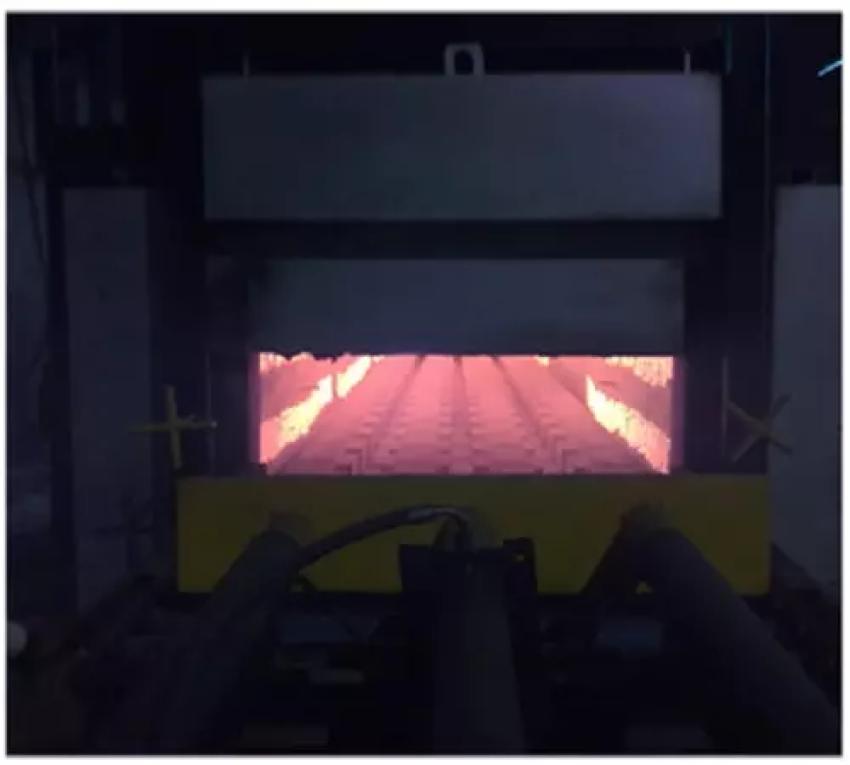
Modern manufacturing industries require dependable heat treatment systems that can process large quantities of metal components while maintaining consistent quality. A pusher type furnace is an industrial heating solution designed for continuous processing, making it suitable for production environments where efficiency, repeatability, and controlled heating are essential.
These furnaces are widely used in automotive manufacturing, steel processing, forging, and heavy engineering industries. Their mechanical material handling system allows components to move through different heating zones without requiring individual manual loading and unloading for every processing cycle.
What Is a Pusher Type Furnace?
A pusher type furnace is a continuous heat treatment system in which components are loaded onto trays or fixtures and moved through a furnace chamber using a mechanical or hydraulic pushing mechanism.
As a new tray enters the furnace, the existing load advances toward the discharge end. This arrangement supports a continuous production sequence and allows components to receive controlled heating for a specified duration.
Depending on the application, pusher furnaces can be designed for processes such as carburizing, hardening, annealing, stress relieving, solution treating, and ageing.
The furnace configuration depends on component dimensions, material characteristics, production volume, temperature requirements, and the required atmosphere.
Working Principle of a Pusher Type Furnace
The operation of a pusher type furnace involves coordinated material movement and temperature control.
First, components are arranged on suitable trays or fixtures at the charging section. A hydraulic or mechanical pusher advances the loaded trays through the furnace at predetermined intervals.
The components then pass through different processing zones, which may include preheating, heating, and soaking sections. Each zone is designed to maintain the required thermal conditions.
For applications involving hardening or carburizing, the system may incorporate controlled atmospheres and suitable downstream quenching arrangements.
Temperature regulation, pusher movement, and process monitoring help maintain consistent operating conditions. The residence time depends on the furnace design, material characteristics, and specified heat treatment cycle.
Industrial Applications of Pusher Type Furnaces
Pusher type furnaces are particularly useful for processing similar components in large production quantities.
Automotive Manufacturing
Automotive manufacturers use these furnaces for heat treatment of gears, shafts, transmission components, axle parts, and other drivetrain components. Controlled heating and suitable process conditions help achieve the required material properties.
Steel and Forging Industries
Forged components and steel products may require annealing, normalizing, stress relieving, or other thermal processing operations. Pusher systems can support continuous processing in suitable production lines.
Heavy Engineering
Heavy engineering manufacturers use industrial furnaces to process components that require carefully controlled temperature cycles and repeatable results.
Gear and Bearing Manufacturing
Gear and bearing production often involves heat treatment processes to improve hardness, wear resistance, and component performance. Pusher furnaces can be configured for compatible high-volume applications.
Important Features of Modern Pusher Furnaces
The design of a pusher type furnace can incorporate various features to suit industrial requirements.
Automatic material handling: Mechanical or hydraulic pushers help move trays through the furnace.
Multiple heating zones: Different zones support controlled temperature profiles throughout the process.
Flexible heating systems: Electric or gas-fired heating can be selected according to the application.
Atmosphere control: Suitable systems can help regulate furnace atmospheres for processes such as carburizing.
Process monitoring: Automated controls can monitor temperature, movement, and selected process parameters.
The availability of these features depends on the furnace configuration and the manufacturer's design.
Factors to Consider When Selecting a Pusher Type Furnace
Selecting the right furnace requires an understanding of the manufacturing process and production requirements.
Manufacturers should consider the type and size of components, required production throughput, operating temperature, and necessary heating duration.
The heating method should be evaluated according to energy availability and process requirements. For applications requiring controlled atmospheres, gas supply, atmosphere composition, and monitoring arrangements should also be considered.
Other important factors include the available installation space, loading arrangements, automation requirements, maintenance accessibility, and integration with existing production equipment.
A detailed assessment of these factors helps manufacturers identify a furnace configuration that supports their operational needs.
Choosing a Pusher Type Furnace Manufacturer in India
Choosing a suitable furnace manufacturer is an important step in establishing a reliable industrial heat treatment system.
JR Furnace & Ovens (P) Ltd is an ISO 9001:2015-certified industrial furnace manufacturer established in 2008. The company provides industrial furnaces and ovens for different heat treatment and industrial heating applications.
Manufacturers looking for a Pusher Type Furnace manufacturer in India can explore JR Furnace's solutions for high-volume thermal processing requirements.
Discussing component specifications, production capacity, temperature requirements, heating methods, and process parameters with the manufacturer can help determine a suitable furnace design.
Conclusion
A pusher type furnace is an important industrial heating solution for manufacturers requiring continuous processing of large quantities of metal components. Its mechanical pushing arrangement, controlled heating zones, and adaptable configuration make it suitable for various heat treatment applications.
Understanding the furnace's working principle, industrial uses, and selection factors helps manufacturers plan thermal processing systems according to their production requirements.
With appropriate furnace design and process control, manufacturers can support consistent heat treatment results and dependable industrial production.