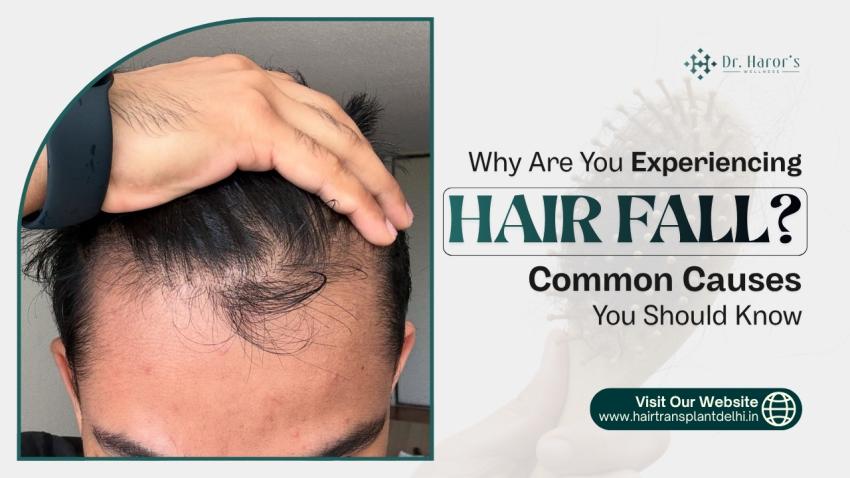
Finding clumps of hair in your shower drain or on your pillow can easily trigger panic. While shedding between 50 and 100 strands a day is completely normal as old follicles cycle out, chronic or sudden thinning is another story altogether. When everyday shedding turns into visible scalp visibility, waiting around rarely helps. Identifying the exact trigger early on is the key to finding lasting relief through targeted hair loss treatment.
In this guide, we break down the most frequent drivers behind thinning hair and explain when it is time to consult the best trichologist in Delhi NCR for an accurate diagnosis.
Common Causes of Hair Fall
Hair follicles are sensitive biological sensors. Any major physical, chemical, or emotional change in your body can interrupt their growth cycle. The most common culprits include:
Genetics and Hereditary Hair Loss: Family history remains the primary driver behind progressive thinning. Whether inherited from your mother’s or father’s side, androgenetic alopecia causes hair follicles to gradually shrink over time due to DHT sensitivity. This usually presents as a receding frontal hairline, diffuse crown thinning, or a widening central part.
Stress and Lifestyle Factors: Chronic work pressure, disrupted sleep cycles, poor diet, and constant screen exposure take a direct toll on your system. High cortisol levels push active hair roots into an abrupt resting state (telogen effluvium). Young working professionals, students, and IT employees in fast-paced urban environments are particularly vulnerable to sudden stress-induced shedding.
Hormonal Changes: Significant hormonal shifts—such as those during puberty, pregnancy, postpartum recovery, menopause, or thyroid irregularities—often stall follicle development. Conditions like Polycystic Ovary Syndrome (PCOS) can raise androgen levels, accelerating thinning across the top of the scalp.
Nutritional Deficiencies: Healthy hair requires steady nutritional building blocks. Low levels of serum ferritin (iron), vitamin D3, vitamin B12, zinc, and biotin weaken follicle anchoring and starve the hair matrix. Restrictive dieting or skipped meals will quickly reflect in the quality and thickness of your hair.
Medications and Medical Conditions: Certain prescription drugs—including blood pressure pills, anti-depressants, and cholesterol medication—can trigger shedding as a side effect. Similarly, recovering from a high-grade fever, severe infection, or autoimmune flare-up can prompt hair to fall out months later. Consulting the best trichologist in Delhi NCR helps isolate whether your shedding stems from internal deficiencies, lifestyle habits, or genetics.
Best Hair loss Treatments Worth Trying
If home remedies, switching shampoos, and over-the-counter hair oils have failed to slow your shedding, modern clinical dermatology offers several proven options:
PRP (Platelet-Rich Plasma) Therapy: A popular, minimally invasive procedure where a small sample of your own blood is drawn and spun in a specialized centrifuge to isolate concentrated platelets. When injected across thinning sections of the scalp, these platelets release active growth factors that awaken dormant follicles, increase cellular metabolism, and improve micro-circulation.
GFC (Growth Factor Concentrate): An advanced evolution of traditional PRP. GFC isolates pure, concentrated growth factors directly from your blood platelets without red or white blood cells. Because it delivers a cleaner, highly stable dose of natural proteins, it often requires fewer sessions and offers enhanced comfort during administration.
Microneedling: A clinical procedure where a sterile roller or automated dermapen creates controlled micro-punctures on the scalp surface. This micro-trauma triggers the body's natural healing response, promoting collagen production and stimulating blood supply directly around weakened hair roots. It also boosts the absorption of topical peptide and minoxidil solutions.
When Should You See a Specialist?
Losing a few stray hairs while brushing is nothing to worry about. But if you notice your ponytail feeling noticeably lighter, your parting line widening, bald patches appearing, or excessive daily shedding that lasts longer than six to eight weeks, it is time to take action. Scheduling a visit with the best trichologist in Delhi NCR gives you access to digital trichoscopy—a high-magnification scalp evaluation that examines your follicle density, miniaturization rates, and scalp health so you can address the root problem before follicles permanently shut down.
Conclusion
Hair thinning is rarely caused by just one factor; it is almost always a mix of lifestyle stresses, nutritional gaps, and biological triggers. Skipping self-diagnosis and avoiding unverified internet remedies will save you valuable time and donor hair.
If you want an honest clinical assessment and a tailored hair loss treatment plan, schedule a consultation with the medical team at Dr. Haror’s Wellness. Their experienced dermatologists and trichologists utilize advanced diagnostic tools and proven clinical therapies to help you stop active shedding and restore strong, healthy hair growth. Book your scalp assessment today to take control of your hair health.
#besttrichologistindelhincr #besthairclinicindelhi #hairlosstreatmentindelhi #besthairfallreatmentindelhi #drnavnitharor #drharorswellness #hairdoctorindelhi #besthairtreatmentindelhi #besthairlosstreatmentindelhi #prphairlosstreatment #beforeafterresults #hairrestorationtreatmentindelhi #besthairdoctorindelhi #gfchairlosstreatmentindelhi #hairlosstreatmentindelhi #hairtreatmentclinicindelhi #bestdermatologistindelhincr #besthairspecialistdoctorindelhi