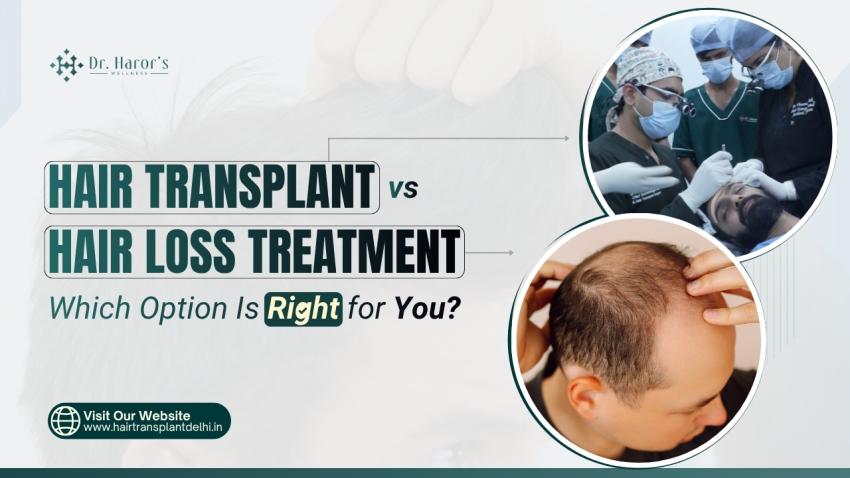
Thick, healthy hair is something most people take for granted until it starts thinning out. Pollution, stress, poor diet, hormonal shifts, genetics — there's rarely just one cause, and that's exactly why so many people end up confused about what to do next.
When hair starts falling more than usual, two paths usually come up: a hair transplant or a non-surgical treatment. Both aim to bring back fuller, healthier-looking hair, but they work in completely different ways and suit different situations. This blog walks you through both so you can figure out which hair loss treatment in Delhi actually makes sense for you, rather than copying whatever worked for a friend or a celebrity you saw online.
What Is a Hair Transplant?
A hair transplant is a surgical procedure where healthy follicles are taken from a "donor area" — usually the back or sides of the scalp — and moved to spots where hair has thinned or gone bald. It's a fairly quick, well-established procedure, though it only works if there's enough healthy donor hair to begin with.
Common types of hair transplant
FUE (Follicular Unit Extraction): Individual follicles are removed one at a time and implanted where needed. Scarring is minimal and recovery is quicker compared to FUT, though the procedure itself takes longer and tends to cost more.
FUT (Follicular Unit Transplantation): A thin strip of scalp is removed surgically, and follicles are separated from it before being placed in the balding areas. It covers more ground per session than DHI, but leaves a visible linear scar and needs more downtime to heal.
DHI (Direct Hair Implantation): Follicles go straight into the scalp without any extraction or incisions first. It's the least invasive of the three, heals fast, but also comes with the highest price tag.
What Is a Hair Loss Treatment?
Hair loss treatment in Delhi refers to non-surgical methods that slow down hair fall and encourage regrowth. Rather than moving hair from one part of the scalp to another, these treatments focus on improving scalp health and reviving follicles that have gone dormant.
Common types of hair loss treatment
PRP (Platelet-Rich Plasma) therapy: Blood is drawn, processed to separate the plasma, and then injected into the scalp to nourish weak follicles. It's often paired with hair transplants as well, to help the transplanted hair settle in better.
GFC (Growth Factor Concentrate): A more advanced version of PRP, where blood is processed to isolate growth factors. These are injected into the scalp to nourish follicles and support stronger, healthier growth over time.
Low-Level Laser Therapy: Red or infrared light is used on the scalp to stimulate follicles. It tends to work best for people catching hair loss in its early stages, before things get too advanced.
Hair Restoration vs Hair Transplants: What Is the Main Difference?
The core difference between hair loss treatment in Delhi and a hair transplant lies in how each one tackles the problem. A transplant is a surgical fix — follicles are physically relocated from a donor site to a balding or thinning area.
Hair loss treatments, on the other hand, don't involve surgery at all. They work by nudging weakened follicles back into their active growth phase, improving overall scalp condition along the way.
Which Option Should You Choose?
There's no one-size-fits-all answer here — it really comes down to what's causing your hair loss, how far along it is, and how fast it's progressing. If you're noticing early thinning or shedding that's more than usual, a best dermatologist in Delhi NCR would typically start with treatment options aimed at protecting the hair you still have before considering anything surgical.
Conclusion
Hair transplants and hair loss treatments aren't interchangeable — they solve different problems. Non-surgical treatments are generally about slowing hair fall and improving the condition of existing hair, while a transplant is meant for cases of more complete or advanced baldness. Getting an actual diagnosis before picking either route makes a real difference in the outcome.
If you're exploring hair transplant or hair loss treatment in Delhi, it's worth booking a consultation with Dr. Haror's Wellness. The clinic offers reliable hair restoration and transplant procedures designed around natural-looking, long-term results. Their team, made up of some of the best dermatologists in Delhi NCR, takes the time to understand your lifestyle, diet, medical history, age, and scalp condition before recommending a treatment plan — all within a clean, safe clinical setup.
#besthairtransplantsurgeonindelhi #besthairclinicindelhi #hairlosstreatmentindelhi #besthairfallreatmentindelhi #drnavnitharor #drharorswellness #hairdoctorindelhi #besthairtreatmentindelhi #besthairlosstreatmentindelhi #beforeafterresults #hairrestorationtreatmentindelhi #besthairdoctorindelhi #besthairfalltreatmentclinicindelhi #hairtreatmentclinicindelhi #bestdermatologistindelhincr #besthairtransplantdoctorindelhi #hairtransplantinindia