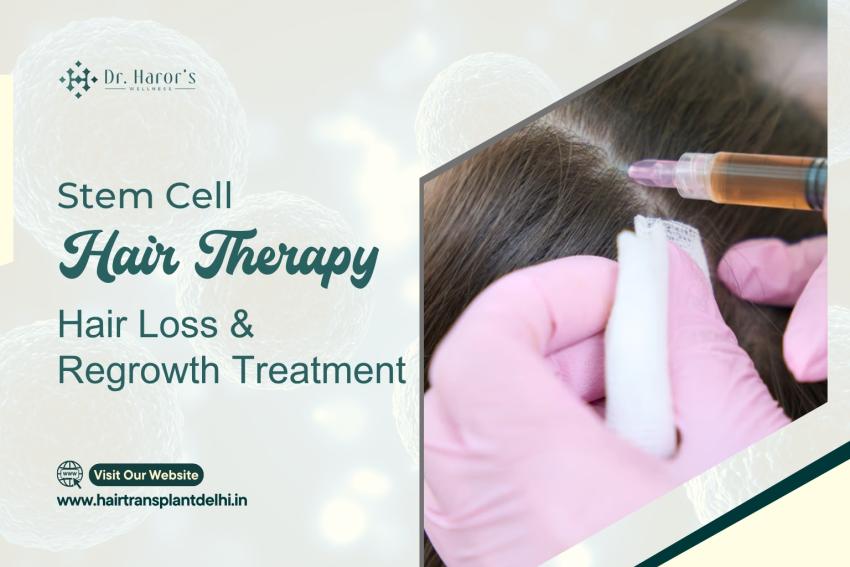
Losing hair is hard enough on its own — but it gets even more frustrating once you've cycled through every shampoo, oil, and supplement on the shelf and still don't see results. If your hair loss seems to be getting worse instead of better, there's a newer option worth knowing about: stem cell hair therapy.
This treatment is part of a growing field of regenerative hair restoration, and it's built around a simple idea — instead of masking the problem, work with the scalp itself to support healthier follicle activity. Below, we'll break down what stem cell hair therapy actually is, how it works, and who tends to benefit most from it.
What Exactly Is Stem Cell Hair Therapy?
Stem cell hair therapy is a regenerative treatment aimed at hair follicles that have become weak, damaged, or inactive. Rather than replacing hair, it works by delivering stem cells — or growth factors derived from them — directly to the scalp, with the goal of triggering repair at the cellular level and improving the overall environment the follicles live in.
This is where it differs from a hair transplant. A transplant physically moves healthy, functioning follicles from one area of the scalp to a balding one. Stem cell hair therapy takes a different route entirely: it tries to wake up and restore follicles that are already there but have stopped functioning properly, rather than relocating new ones.
How Does It Actually Work?
Healthy hair growth depends heavily on two things: a steady nutrient supply and the right growth signals reaching the follicle. Stem cell hair therapy introduces regenerative material into the scalp specifically to support both of those needs — stimulating follicular activity and encouraging tissue repair along the way.
The growth factors and signaling molecules used in this process are meant to create conditions that are more favorable for the follicles that are still there, giving them a better shot at functioning normally again.
That said, results aren't uniform across the board. How well someone responds to stem cell hair therapy depends on several factors, including:
The underlying cause of the hair loss
How much follicular damage has already occurred
The patient's age and general health
The specific method or protocol used
Who Is a Good Candidate?
Stem cell hair therapy tends to work best for people who still have intact — but weakened — hair follicles. It's not necessarily the right fit for everyone, which is why a proper consultation with a hair restoration specialist matters before moving forward.
During that consultation, a provider will typically examine the scalp, try to pinpoint what's actually causing the hair loss, and determine whether regenerative treatment makes sense for that particular case. For patients who've already lost a significant number of follicles, other approaches — like medication or surgical hair transplants — may end up being more effective.
Potential Benefits of Stem Cell Hair Therapy
While individual results vary, people considering this treatment are often looking for:
Support for follicles that have weakened over time
A healthier, more balanced scalp environment
Hair that looks fuller and healthier overall
Gradual improvements in hair thickness
A regenerative option that doesn't involve transplant surgery
The Bottom Line
Stem cell hair therapy represents a genuinely promising direction in hair restoration, particularly for people dealing with early-to-moderate thinning who want to slow things down before they progress further. That said, it's not a cure-all, and it won't be the right solution for every type of hair loss.
The most important step is figuring out why the hair loss is happening in the first place. From there, working with a qualified hair restoration provider will help you land on a treatment plan that's actually built around your specific situation — rather than a one-size-fits-all fix.