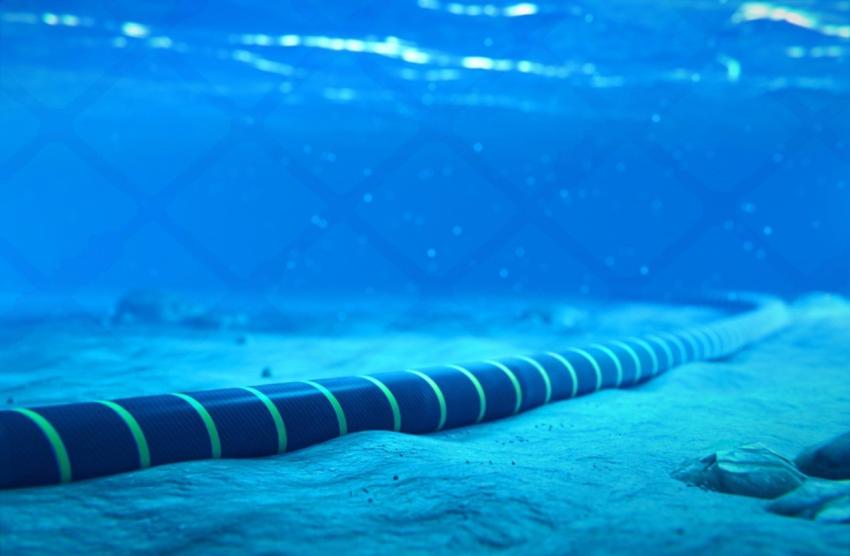
Every time you send an email to another continent, join a video call with an overseas client, or stream a show hosted on a foreign server, your data takes a journey most people never think about. It travels through cables laid deep on the ocean floor. These cables connect countries and continents, carrying almost all international internet traffic. Without them, cross-border communication as we know it would simply not exist.
The Role of Subsea Cable Technologies
Subsea cable technologies are the backbone of global connectivity. These systems use bundles of optical fibers, protected by layers of steel, copper, and insulation, to transmit data as pulses of light across ocean beds. Modern subsea cable technologies also include signal repeaters placed at regular intervals along the route. These repeaters boost the light signal so it does not weaken over thousands of kilometers. Because light travels faster and with less interference through fiber than data does through satellite links, subsea cables remain the most efficient way to move information between countries.
Why Speed and Reliability Matter
Cross-border data performance depends on two things: low latency and stable connections. Latency refers to the time delay between transmitting data and receiving a response. For businesses running financial trades, cloud services, or live video calls, even a small delay can cause real problems. Subsea cables reduce this delay because they take the shortest practical path between two points, unlike satellite signals that must travel much farther into space and back. This is why nations with strong subsea cable networks tend to have faster and more dependable international internet access.
Advances That Improve Performance
Cable design has changed a great deal over the past two decades. Engineers now use denser fiber counts within a single cable, allowing more data to pass through the same physical line. Wavelength division multiplexing, a method of sending multiple data streams through one fiber using different light wavelengths, has multiplied capacity without needing new cables for every route. Better cable armoring and burial techniques also reduce damage from fishing equipment, ship anchors, and natural seabed movement, which are the most common causes of outages.
Route diversity is another major improvement. Instead of relying on a single cable between two regions, network operators now build multiple paths so that if one cable is damaged, traffic can shift to another almost instantly. This redundancy has become a standard requirement for any country that wants reliable cross-border digital trade.
A Broader Connection: Data and Power Together
Interestingly, the same seabed corridors used for internet cables are increasingly shared with power transmission projects. An electricity interconnector, which links electricity grids between two countries through undersea cables, often follows planning and engineering principles similar to those used for data cables. Both require careful route surveys, protective armoring, and long-term maintenance plans. As countries invest in renewable energy and want to share electricity across borders, engineers are applying lessons learned from decades of subsea data cable installation to build these power links more safely and efficiently.
Case Study 1: The West Africa Cable Disruption of 2024
In March 2024, a series of undersea cable faults near the coast of Cote d'Ivoire disrupted internet service across more than a dozen African countries. Four cable systems were affected at once, including the West Africa Cable System, the Africa Coast to Europe cable, MainOne, and SAT-3. This incident stood out because several cables converged near a single physical point, which is unusual since most faults typically affect only one system at a time. Banking services, mobile networks, and business operations slowed sharply in Nigeria, Ghana, and Ivory Coast. The event pushed regional operators to invest in more diverse routing and additional cable landing points, showing how a single geographic bottleneck can affect an entire region's data performance.
Case Study 2: The Australia-Singapore Power Link Study
A separate but related case involves proposed high voltage subsea power connections between Australia and Singapore. Researchers examined the challenges of building an intercontinental power link stretching roughly 3200 kilometers, crossing water depths of up to 1900 meters near the Timor Trough. The study also reviewed the standard repair procedure used after a subsea cable fault, which involves cutting the damaged section and laying a replacement length before restoring the connection. This research highlights how deep water engineering challenges, once solved mainly for data cables, are now shaping the next generation of long distance energy infrastructure as well.
Challenges That Remain
Despite the progress, subsea systems are not without risk. Fishing activity and anchor strikes remain the leading causes of faults worldwide. Repairs can take weeks, and in remote or deep water locations, months. Rising demand for bandwidth also means new cables must be planned years in advance, with careful attention to geopolitical stability, ownership rights, and environmental impact along each route.
Conclusion
Subsea cables quietly power the modern world, carrying the overwhelming majority of international data traffic while increasingly supporting cross-border energy sharing as well. As more countries depend on stable, fast connections for trade, communication, and even electricity, the lessons learned from every subsea power cable event, from fault detection methods to repair logistics, continue to shape stronger, more resilient infrastructure for the future. Investing in better routes, materials, and redundancy is not just a technical upgrade. It is what keeps the connected world running smoothly.
Frequently Asked Questions
Q1. What are subsea cables made of?
Subsea cables contain a core of optical fibers surrounded by protective layers of steel wire, copper, and waterproof insulation. This structure protects the fragile fibers while allowing them to carry light signals across long distances.
Q2. How much of global internet traffic passes through subsea cables?
Subsea cables carry the vast majority of international internet traffic. Satellites handle only a small portion of global data because subsea fiber offers far higher capacity and lower delay.
Q3. What usually causes subsea cable damage?
Most faults happen due to fishing equipment or ship anchors dragging along the seabed. Natural causes such as underwater landslides or seismic activity can also damage cables, though this happens less often.
Q4. How long does it take to repair a damaged subsea cable?
Repair times vary depending on water depth, weather, and vessel availability. Shallow water repairs can take a few weeks, while deep water or politically sensitive locations may take considerably longer.
Q5. Can the same cable route carry both data and electricity?
Typically, data and power cables are separate systems, but they often share similar seabed corridors and planning methods. Engineers increasingly apply subsea data cable expertise when designing electricity interconnector projects.