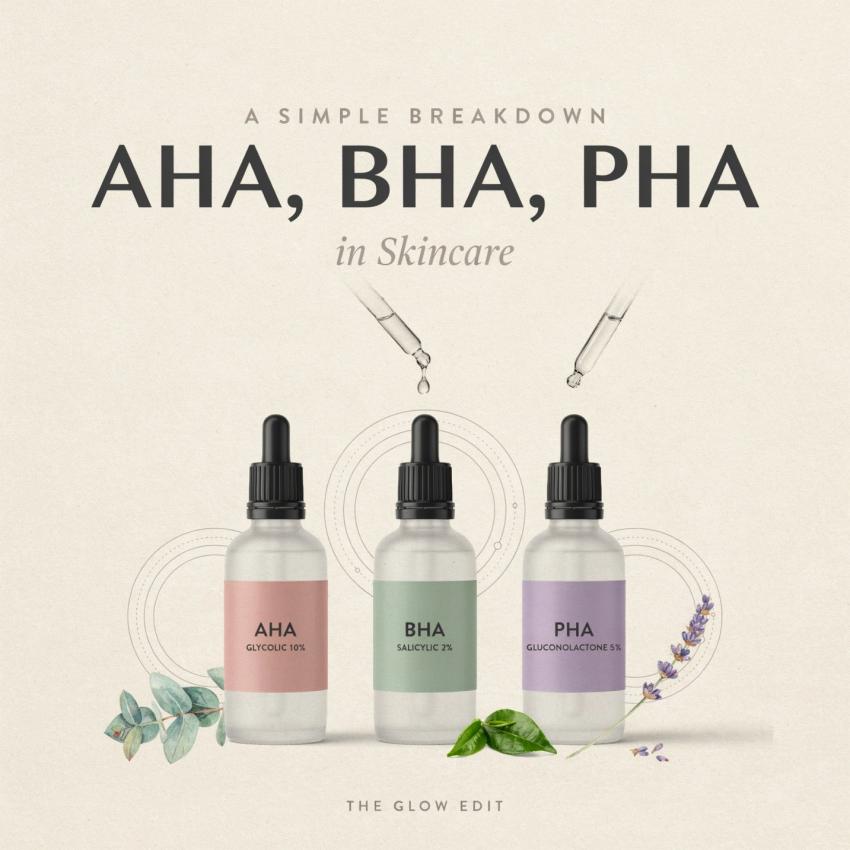
What These Acids Actually Are
AHA, BHA, and PHA are all types of chemical exfoliants, meaning they work by loosening the bonds between dead skin cells so they shed faster than they would naturally on their own. Unlike physical scrubs that manually buff away dead skin, these acids work at a deeper level, though how deep and how gentle each one is depends on which type you are using.
AHA: Best for Surface Level Concerns
AHA, or alpha hydroxy acid, works mainly on the surface of your skin. Common types include glycolic acid and lactic acid, both known for improving texture, dullness, and mild pigmentation. AHAs are water soluble, which means they work on the top layer of skin rather than going deeper into pores.
This makes AHA a good option for people dealing with rough texture, dullness, or early signs of aging, but it can be a bit more irritating for sensitive skin compared to other options, especially at higher concentrations.
BHA: Best for Oily and Acne Prone Skin
BHA, primarily salicylic acid, works differently since it is oil soluble. This means it can actually get inside your pores, where oil and dead skin often build up and cause breakouts. This is why BHA is usually recommended for oily or acne prone skin, since it works directly on the root cause of clogged pores rather than just improving surface texture.
BHA also has some natural anti inflammatory properties, which can help calm existing breakouts while working to prevent new ones from forming.
PHA: The Gentle Alternative
PHA, or polyhydroxy acid, is often considered the gentlest of the three. It works similarly to AHA in terms of surface exfoliation, but its larger molecular size means it does not penetrate the skin as deeply, resulting in less irritation overall.
This makes PHA a great starting point for people with sensitive skin, or anyone who wants the benefits of exfoliation without the higher irritation risk that AHA and BHA sometimes bring, especially when first introducing these ingredients into a routine.
Understanding the Theory Behind Skincare pH
A basic grasp of the theory behind skincare pH helps explain why these acids work the way they do. Your skin naturally sits at a slightly acidic pH, and this balance plays a role in how well your skin barrier functions and protects itself.
Exfoliating acids work by adjusting your skin's surface pH temporarily, which helps loosen dead skin cells for easier shedding. However, if this pH is disrupted too often or too aggressively, your skin barrier can weaken over time, leading to increased sensitivity, redness, and irritation rather than the smooth, glowing results you were hoping for.
Which One Should You Actually Use
If your main concern is oily skin or frequent breakouts, BHA is usually the better starting point, since it works directly inside your pores. If dullness, rough texture, or mild pigmentation are your focus, AHA tends to deliver more noticeable results in these specific areas.
For sensitive skin, or if you are completely new to chemical exfoliants, starting with PHA allows your skin to get used to the process without the higher risk of irritation that comes with AHA or BHA, especially at the start.
Can You Use Them Together
Combining acids is possible, but it is not something beginners should attempt right away. Using multiple exfoliating acids at once increases the risk of over exfoliation, which can seriously damage your skin barrier and lead to more problems than it solves.
If you do want to eventually combine them, it is safer to alternate on different days rather than layering everything at once, giving your skin enough time to recover between each type of exfoliation.
Signs You Might Be Overdoing It
If your skin feels unusually tight, stings when applying products that never bothered it before, or looks red and irritated more often than usual, these are signs you might be using too much exfoliating acid or using it too frequently. Cutting back to once or twice a week, rather than daily use, often helps resolve this kind of irritation.
Final Thoughts
AHA, BHA, and PHA all serve different purposes, and understanding these differences helps you choose the right one based on what your skin actually needs. Whether you are dealing with dullness, breakouts, or sensitivity, starting slow and paying attention to how your skin responds will always give better long term results than jumping straight into the strongest option available.