Few places on earth alter your perspective quite like the high-altitude deserts of northern India. The landscape here is stripped bare—monastic fortresses balance on jagged ridges, prayer flags snap violently in the thin mountain wind, and massive saltwater lakes reflect a sky so blue it feels surreal. However, planning a trip to this region isn't as simple as booking a flight and showing up. The altitude demands respect, the roads require patience, and your itinerary needs careful structuring to ensure you actually enjoy the experience rather than spending it nursing a severe headache.
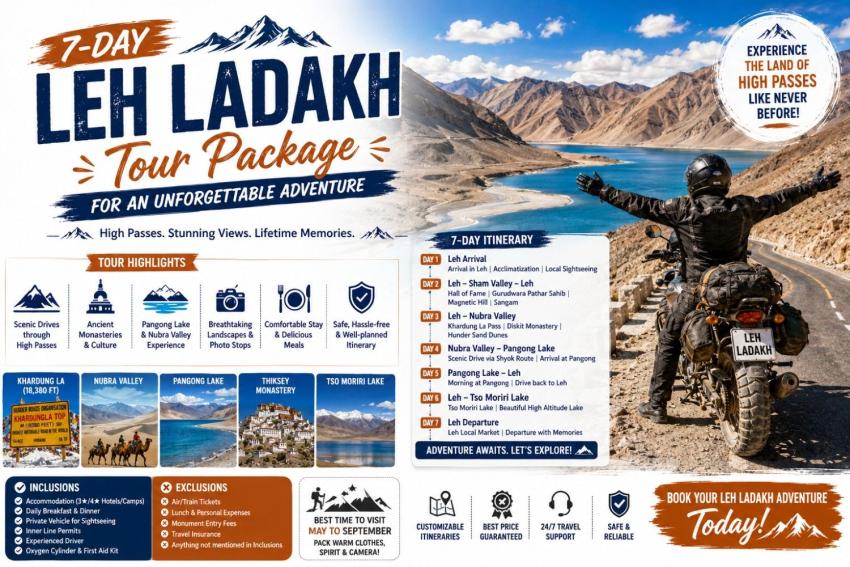
If you are looking for a reliable blueprint, a well-planned Ladakh tour package bridges the gap between rugged adventure and practical safety. This 7-day itinerary balances essential acclimatization with exploration across the region’s most iconic landscapes.
Why Rest is Your Most Important Activity on Day 1
You land at Kushok Bakula Rimpochee Airport in Leh, located at roughly 11,500 feet above sea level. The air is noticeably crisp, thin, and dry. The absolute worst mistake you can make is immediately heading out to sightsee. Your body needs time to adapt to the sudden drop in oxygen levels.
Spend your first day doing nothing. Check into your hotel, drink plenty of water, and rest. If you feel fine by late afternoon, a gentle stroll around the local Leh Market is perfectly fine, but keep physical exertion to an absolute minimum. Experienced Himalayan travelers know that sacrificing your first 24 hours to rest saves the rest of your trip from being ruined by Acute Mountain Sickness (AMS).
Day 2: Exploring the Historic Heart of Leh
Once your body has adjusted to the high altitude, you can begin exploring the immediate surroundings. Leh is steeped in history, serving for centuries as a vital trading post between India, Tibet, and Central India.
Leh Palace: This nine-story seventeenth-century structure offers panoramic views of the town and the Indus River. It bears a striking resemblance to Lhasa’s Potala Palace.
Shanti Stupa: Perched on a hilltop in Chanspa, this white-domed stupa is best visited during late afternoon. The sunset views over the Stok mountain range are spectacular.
Spituk Gompa: Located just outside the main town, this monastery offers a deeper look into the region's spiritual heritage and overlooks the airport runway, providing a unique contrast between ancient tradition and modern transit.
Day 3: Crossing Khardung La to the Sand Dunes of Nubra Valley
The drive from Leh to Nubra Valley is an adventure in its own right. You will head north and ascend toward Khardung La. Long celebrated as one of the highest motorable passes in the world, it sits at over 17,500 feet. The views from the top are expansive, but you shouldn't linger for more than 15 minutes due to the extreme altitude.
As you descend into the Nubra Valley, the landscape changes dramatically. You are greeted by a wide, flat valley floor where the Shyok and Nubra rivers meet. Your main stop here is Hunder, famous for its white sand dunes and the resident population of double-humped Bactrian camels—a legacy of the old Silk Road trading days. Spend the evening staying in a local guesthouse or a fixed tented camp under a incredibly clear night sky.
Day 4: Turtuk and the Diskit Monastery
Before heading toward the lakes, spend the first half of the day exploring deeper into the valley. Drive toward Diskit Monastery, where a massive 106-foot statue of Maitreya Buddha faces down the valley toward Pakistan. The monastery itself is the oldest and largest in Nubra.
If time permits, many travelers extend their valley stay to visit Turtuk, a village opened to tourists only in recent decades. It offers a fascinating cultural shift, as the local population is Balti, offering a stark contrast to the Buddhist culture found in Leh. Later in the day, begin tracking back down the Shyok River road toward your next major destination.
Day 5: The Brilliant Blues of Pangong Tso
Rather than backtracking all the way to Leh, modern itineraries cut across the rugged Shyok route directly to Pangong Tso. This massive endorheic lake sits at 13,940 feet and spans the border between India and China.
The first glimpse of the water through the mountain passes is unforgettable. Because the water is highly saline, it absorbs light in a way that creates shifting shades of turquoise, deep blue, and green throughout the day. Accommodation here is rustic, consisting mostly of eco-cottages and campsites. Keep in mind that nights at Pangong are intensely cold, even during the peak summer months, so high-quality layers are mandatory.
Day 6: Returning to Leh via Chang La
Wake up early to catch the morning light over the lake before beginning the long drive back to Leh. This journey takes you across Chang La, another massive mountain pass sitting at 17,586 feet.
Along the way down, make a stop at Thiksey Monastery. Mimicking the structure of a traditional fortress, this multi-tiered complex houses an exquisite two-story statue of the Future Buddha. It is one of the finest examples of Ladakhi architecture in the region. Arrive back in Leh by evening, leaving you with one final night to pick up local souvenirs like pashmina shawls, apricots, or Tibetan prayer bowls.
Day 7: Departure and Final Reminders
Your mountain adventure concludes with an early morning flight out of Leh. Flying out offers an incredible parting gift: a bird's-eye view of the snow-capped Zanskar range.
Essential Planning Tips for Your Journey
Peak Season: The ideal window to visit is between June and September when the mountain passes are clear of snow and the roads are fully accessible.
Permits: You will need an Inner Line Permit (ILP) to visit protected areas like Nubra Valley and Pangong Lake. Your local coordinator can arrange this, or you can apply online.
Cash is King: Digital payments are highly unreliable due to patchy cellular networks. Carry enough physical cash from Leh to cover your expenses in remote valleys.