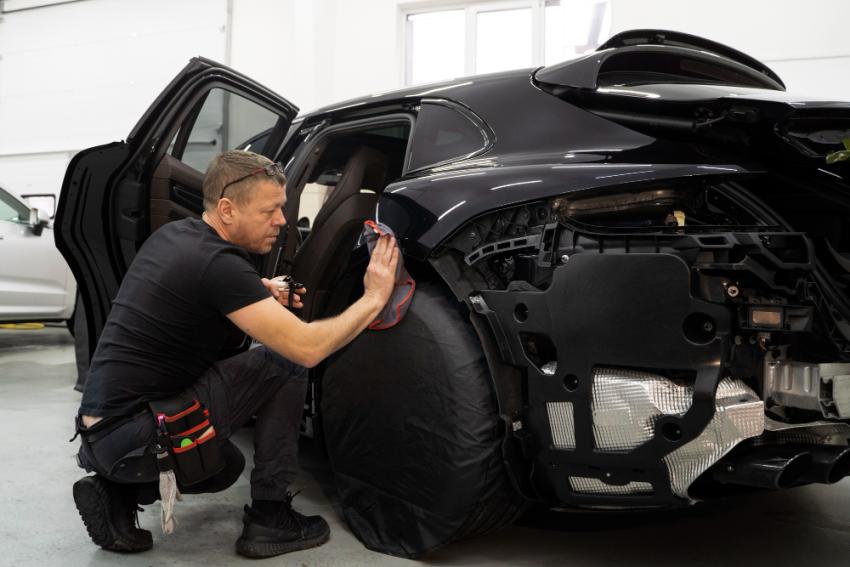
It is tempting to put off a dent, a scratch, or a cracked bumper cover. The vehicle still drives. The damage is cosmetic. The deductible feels like money better spent elsewhere. But auto body damage that goes unrepaired doesn’t stay static — it gets worse, and the eventual repair cost grows with it. (Information Credit: https://www.invisibletouchinc.com/collision-repair/)
Exposed Metal Rusts Quickly in New England
Any scratch, chip, or dent that breaks through the clear coat and base coat exposes bare metal to moisture and air. In states with mild climates, surface rust might take years to develop. In Massachusetts, where vehicles face road salt from November through April, exposed metal can show visible rust within weeks. Once corrosion starts underneath the paint, it spreads beneath the surface — often farther than what’s visible.
A paint chip that costs $100 to touch up in January can require a full panel repaint at $500 to $800 by the following fall if rust has penetrated the surrounding area.
Structural Damage Doesn’t Heal Itself
A fender bender that bent a bumper support or shifted a frame rail doesn’t correct itself over time. The misalignment causes uneven tire wear, pulls the vehicle to one side during braking, and stresses suspension components that weren’t designed to compensate for a crooked frame. These secondary problems develop gradually and often aren’t connected to the original accident until a mechanic traces the wear pattern back to the impact point.
Resale Value Takes a Permanent Hit
Every vehicle that goes through the used car market gets scrutinized for accident history. A properly repaired accident shows on the vehicle history report, but a clean repair with documentation has a manageable impact on value. An unrepaired accident — visible damage, misaligned panels, rust stains — signals neglect to every buyer, dealer, and appraiser who sees it. The discount buyers demand for visible damage far exceeds the cost of the repair itself.
Insurance Claims Have Time Limits
Most auto insurance policies require you to report and begin repair within a reasonable timeframe after an accident. Waiting months to file a claim or begin repairs can result in the insurer questioning whether the damage occurred as reported or has worsened due to neglect. A denied or reduced claim leaves you paying out of pocket for a repair that would have been fully covered if handled promptly.
The Practical Calculation
Auto body repair is not a luxury expense — it is maintenance that prevents larger expenses. A $300 bumper repair prevents $1,200 in rust damage. A $150 PDR repair preserves $2,000 in resale value. A $500 fender repair prevents $1,500 in suspension wear. The math consistently favors prompt repair over deferred repair.