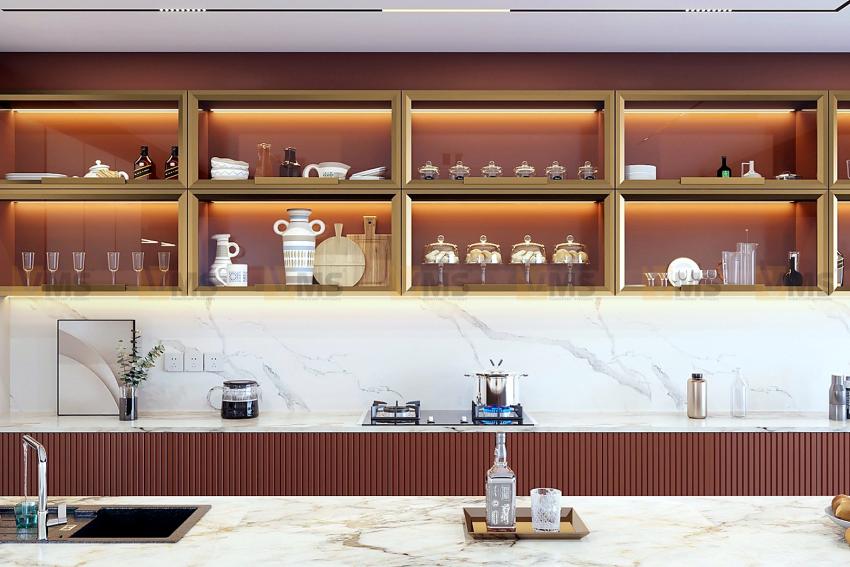
Modern kitchens are ditching traditional handles. Handleless kitchens represent a significant shift in kitchen design, from ultra-luxury buildings to the preferred choice of architects and premium households throughout India. This movement reflects converging trends: the mainstreaming of minimalist aesthetics and smart home connectivity and the practical truth that reducing projecting handles in tight urban kitchens improves both operation and visual space significantly. Understanding handleless kitchens and push-to-open cabinet profiles is critical for keeping up with modern kitchen design in India.
The Handleless Kitchen Revolution
Handleless kitchen feature cabinet systems that provide access via puch to open devices rather than standard pull handles. Why is the transition occurring now? Minimalist design has advanced from a fringe style to popular expectation. Handleless kitchens reduce visual interruption. Resulting in continuous cabinet faces that increase spaciousness - critical in India metro flats (1200–1500 sq ft), where kitchen areas are only 150–200 sq ft.
Handles provide visual clutter, impede movement and catch on clothing. These issues are resolved by handleless devices, which also provide superior aesthetics. In the last two years, demand among metro architects has increased by 45–60%, which is consistent with global adoption patterns. Handleless systems became commonplace in European markets years ago and indian companies are now increasingly using them for upscale residential and commercial buildings.
Why Architects Prefer Handleless Systems
Handleless kitchens solve multiple problems simultaneously. The seamless, uncluttered aesthetic creates visual continuity that traditional-handled cabinetry cannot match. The unbroken cabinet face allows the eye to travel unimpeded, creating expansiveness regardless of actual kitchen size.
Practical benefits extend beyond aesthetics. Easier cleaning - smooth surfaces without handle joints or crevices where grease accumulates. Safety advantages matter in Indian households: no protruding handles means no collision points in tight kitchens, particularly valuable where young children or elderly residents live. Specification flexibility is remarkable. Handleless kitchens work with various cabinet materials (plywood, MDF, solid wood, metal frames), island layouts, peninsula configurations, and all kitchen sizes.
The luxury positioning signals premium choice to clients, increasing perceived project value. When architects specify handleless kitchens, clients immediately recognize superior design commitment.
How Handleless Profiles Actually Work
Push-to-open kitchen cabinet profiles operate on a simple principle: controlled pressure on the cabinet face releases a latch, allowing smooth opening via soft-close hinges. Quality systems use calibrated damping - critical in Indian climates characterised by high humidity, temperature fluctuations, and salt-laden coastal air. Budget alternatives degrade within months; premium systems maintain performance indefinitely.
Profile edge design is crucial. Aluminum kitchen profiles provide ergonomic finger grips through subtle grooves and recessed edges that accommodate natural hand geometry. Finish options - matte for grip, polished for premium feel, textured for tactile feedback - allow customization.
Installation demands precision. Handleless kitchens require exact door-frame alignment (typically within 2- 3 mm tolerances). Hinge types vary; load-bearing specifications depend on door weight and usage frequency. Professional installation by specialists familiar with handleless kitchen systems is non-negotiable.
VMS Plus Handleless Kitchen Profile Solutions
VMS Plus specializes in aluminum kitchen profiles engineered for handleless applications in Indian climates. Our aluminum kitchen profiles feature ergonomic grooves, superior corrosion resistance (essential in coastal regions), and compatibility with soft-close hinge systems. Profiles available in multiple depths (15mm, 20mm, 25mm) and finishes - matte anodized, polished, textured - accommodate diverse aesthetic approaches within modern kitchen design India projects.
Our kitchen profile systems are developed through extensive Indian climate testing. The aluminum construction offers superior durability compared to plastic alternatives. Our professional team provides detailed technical specifications, load-bearing calculations, and installation guidelines. A network of trained installers across major Indian cities ensures precision installation that these systems demand.
Frequently Asked Questions
What are handleless kitchens?
Handleless kitchens feature cabinet doors opening through push-to-open mechanisms rather than traditional handles. Pressing the cabinet face releases a latch; soft-close hinges ensure smooth, quiet operation.
How do handleless kitchens perform in Indian climates?
Premium aluminum kitchen profiles with marine-grade anodizing resist humidity and salt corrosion exceptionally well. Stainless steel components maintain responsiveness in high-humidity conditions.
What precision does installation require?
Handleless kitchens require exact alignment - typically within 2- 3 mm. Professional installation by contractors familiar with push-to-open kitchen cabinet profiles is essential for optimal performance.
Why are aluminum profiles ideal for handleless kitchens?
Aluminum kitchen profiles offer superior durability, corrosion resistance, ergonomic design, and seamless soft-close hinge integration compared to plastic alternatives.
Conclusion
Handleless kitchens are now the standard among architects and designers. They deliver superior aesthetics, functionality, and alignment with modern kitchen design principles in India. Quality aluminum kitchen profiles engineered for Indian climates ensure long-term performance.
Partner with VMS Plus for your next kitchen project. Contact us today for architect consultations and detailed product specifications.