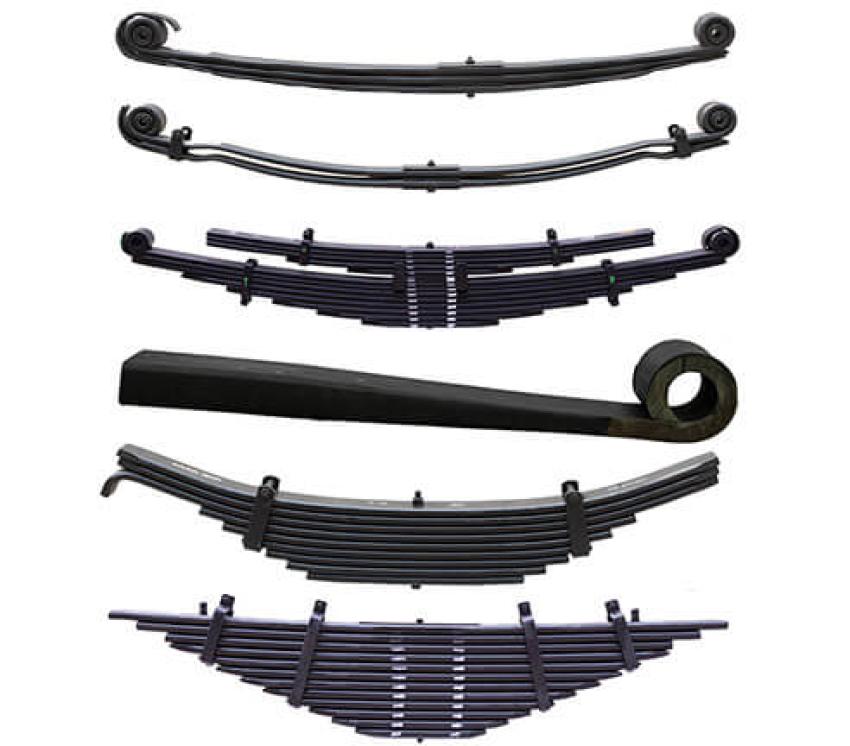
Trailer suspension systems are engineered to carry heavy loads while maintaining vehicle stability, ride quality, and structural integrity. At the core of many commercial trailer suspension systems are leaf springs, which distribute load forces, absorb road shocks, and maintain consistent axle alignment. However, even the highest-quality trailer suspension components cannot perform effectively if cargo weight is improperly distributed.
Proper weight distribution is one of the most critical yet frequently overlooked aspects of trailer operation. Uneven or excessive loading creates imbalanced forces throughout the suspension system, placing unnecessary stress on leaf springs, axles, tires, wheel bearings, and the trailer frame. Over time, these stresses accelerate component wear, reduce operational efficiency, and increase the likelihood of mechanical failure.
Whether transporting construction materials, agricultural equipment, industrial machinery, or freight, understanding how weight distribution affects trailer suspension performance is essential for improving safety, extending component life, and reducing maintenance costs.
Understanding Weight Distribution in Trailer Suspension
Weight distribution refers to how cargo weight is spread across the trailer's axles and suspension system. Every trailer is designed to carry loads within specific engineering limits that ensure each suspension component shares the load evenly.
A properly loaded trailer allows the suspension to function as intended by:
- Maintaining balanced axle loading
- Keeping leaf springs operating within their elastic range
- Ensuring consistent tire contact with the road
- Reducing stress on the trailer frame
- Improving braking and steering stability
- Minimizing suspension fatigue
When cargo is distributed unevenly, the suspension system experiences unequal loading, resulting in localized stress concentrations that can significantly reduce component life.
How Trailer Leaf Springs Manage Load
Leaf springs support the trailer's weight while absorbing shocks generated by uneven road surfaces. As the trailer moves, the springs flex repeatedly, storing and releasing energy to maintain tire contact and provide ride stability.
Each leaf spring assembly is engineered with specific design parameters, including:
- Load capacity
- Number of leaves
- Leaf thickness
- Spring length
- Camber
- Material grade
- Heat treatment characteristics
These factors determine how much weight the spring can safely support during normal operating conditions.
When cargo weight is evenly distributed, the leaf springs flex uniformly, allowing stresses to remain within acceptable design limits. Uneven loading disrupts this balance, causing certain suspension components to carry more load than intended.
Consequences of Improper Weight Distribution
Improper weight distribution does not simply overload one part of the trailer—it creates a chain reaction that affects the entire suspension system.
Some of the most common problems include:
- Uneven leaf spring loading
- Increased suspension fatigue
- Premature tire wear
- Axle misalignment
- Reduced braking efficiency
- Trailer sway
- Frame distortion
- Higher maintenance costs
Even when the total cargo weight remains within the trailer's rated capacity, poor load placement can create localized overload conditions.
Increased Stress on Trailer Leaf Springs
Leaf springs are designed to distribute loads evenly across multiple leaves. Improper weight distribution causes one spring assembly to carry significantly more weight than another.
This uneven loading increases:
- Bending stress
- Tensile stress
- Interleaf friction
- Deflection
- Fatigue loading
Over time, excessive stress leads to:
- Loss of camber
- Permanent deformation
- Sagging suspension
- Broken leaves
- Reduced ride height
The overloaded spring experiences accelerated fatigue while the lightly loaded spring contributes less to overall suspension performance.
Trailer Sway and Reduced Stability
Proper weight distribution plays a major role in trailer stability during towing.
When too much weight is concentrated toward the rear of the trailer, the center of gravity shifts backward. This reduces the downward force on the towing vehicle's hitch, increasing the likelihood of trailer sway.
Trailer sway can become particularly dangerous during:
- Highway driving
- Crosswinds
- Sudden steering corrections
- Emergency braking
- High-speed lane changes
Conversely, placing excessive weight toward the front increases tongue weight beyond recommended limits, placing unnecessary stress on both the towing vehicle and the trailer suspension.
Maintaining balanced cargo placement minimizes these risks and promotes predictable handling.
Uneven Tire Wear
Tires provide valuable insight into suspension loading.
Improper weight distribution often results in uneven tire wear patterns caused by inconsistent axle loading.
Common symptoms include:
- Shoulder wear
- Flat spots
- Rapid tread wear
- One-sided wear
- Excessive heat buildup
Uneven tire wear not only increases operating costs but also reduces traction and braking performance.
Balanced suspension loading helps maximize tire life while improving fuel efficiency.
Impact on Axles and Bearings
Axles are designed to share trailer loads evenly across the suspension.
Unequal cargo placement causes one axle to experience greater loading than the other.
The consequences include:
- Higher bearing temperatures
- Increased axle bending
- Faster bearing wear
- Reduced lubrication effectiveness
- Premature component replacement
Overloaded bearings are particularly vulnerable because additional heat accelerates lubricant degradation and shortens service intervals.
Increased Fatigue in Suspension Components
Fatigue is the gradual weakening of metal caused by repeated stress cycles.
Although trailer suspension systems are engineered for millions of loading cycles, uneven weight distribution increases stress amplitudes experienced by critical components.
Affected parts include:
- Leaf springs
- U-bolts
- Hangers
- Equalizers
- Shackles
- Mounting brackets
As fatigue accumulates, microscopic cracks develop and gradually propagate until structural failure occurs.
Routine inspection helps detect early signs of fatigue before major failures develop.
Reduced Braking Performance
Trailer braking performance depends on maintaining consistent tire contact with the road.
Improperly distributed cargo can reduce braking efficiency by:
- Uneven brake loading
- Tire skidding
- Reduced traction
- Increased stopping distances
- Brake overheating
Balanced suspension loading ensures braking forces are distributed evenly across all wheels, improving vehicle control during emergency situations.
Frame Stress and Structural Damage
The trailer frame acts as the foundation supporting the suspension system.
When loads are concentrated in specific areas, the frame experiences localized bending moments that exceed normal design conditions.
Long-term consequences include:
- Frame twisting
- Weld cracking
- Cross-member fatigue
- Mounting bracket distortion
- Reduced structural rigidity
Proper cargo placement helps distribute forces throughout the frame rather than concentrating them at isolated points.
Effect on Fuel Efficiency
Weight distribution also influences fuel consumption.
An imbalanced trailer requires greater effort from the towing vehicle because:
- Tire rolling resistance increases
- Aerodynamic stability decreases
- Suspension movement becomes less efficient
- Additional steering corrections are required
Over long-distance transport operations, these factors contribute to higher fuel costs and increased vehicle wear.
Fleet operators often improve operational efficiency simply by implementing standardized loading procedures.
Best Practices for Proper Weight Distribution
Maintaining proper weight distribution begins before cargo is loaded.
Several best practices help optimize trailer suspension performance.
Position Heavy Cargo Near the Axles
Heavy items should be placed as close to the trailer axles as practical.
This minimizes excessive loading at the front or rear while improving suspension balance.
Distribute Weight Evenly Side-to-Side
Cargo should be centered to prevent one side of the suspension from carrying more weight than the other.
Balanced side-to-side loading improves:
- Suspension performance
- Tire wear
- Braking
- Vehicle stability
Secure Cargo Properly
Shifting cargo changes weight distribution during transport.
Using appropriate tie-down systems prevents cargo movement that could alter suspension loading while driving.
Stay Within Rated Capacity
Every trailer has:
- Gross Vehicle Weight Rating (GVWR)
- Axle load rating
- Leaf spring load capacity
These limits should never be exceeded, even if cargo appears evenly distributed.
Monitor Tongue Weight
For bumper-pull trailers, tongue weight typically represents approximately 10–15% of the total loaded trailer weight.
Maintaining the recommended tongue weight improves towing stability while preventing excessive suspension loading.
Inspect Suspension Components Regularly
Routine inspections should include:
- Leaf springs
- U-bolts
- Equalizers
- Bushings
- Hangers
- Tires
- Axles
Early detection of wear prevents minor issues from developing into costly repairs.
Choosing the Right Trailer Suspension
Weight distribution is most effective when paired with a suspension system designed for the intended application.
Factors to consider include:
- Maximum payload
- Operating terrain
- Trailer type
- Frequency of use
- Road conditions
- Axle configuration
- Suspension design
Selecting high-quality leaf springs manufactured from premium spring steel ensures consistent performance under demanding operating conditions.
Modern manufacturing processes—including precision heat treatment, shot peening, and fatigue testing—produce leaf springs capable of delivering long-term reliability when used within their specified load ratings.
Benefits of Proper Weight Distribution
Maintaining balanced trailer loading provides numerous operational advantages.
These include:
- Longer leaf spring life
- Improved suspension durability
- Reduced tire wear
- Better braking performance
- Enhanced towing stability
- Lower maintenance costs
- Improved fuel efficiency
- Increased cargo protection
- Reduced component fatigue
- Greater road safety
For commercial fleet operators, these benefits translate directly into reduced downtime and lower total operating costs.
Trailer suspension systems are engineered to carry heavy loads while maintaining vehicle stability, ride quality, and structural integrity. At the core of many commercial trailer suspension systems are leaf springs, which distribute load forces, absorb road shocks, and maintain consistent axle alignment. However, even the highest-quality trailer suspension components cannot perform effectively if cargo weight is improperly distributed.
Proper weight distribution is one of the most critical yet frequently overlooked aspects of trailer operation. Uneven or excessive loading creates imbalanced forces throughout the suspension system, placing unnecessary stress on leaf springs, axles, tires, wheel bearings, and the trailer frame. Over time, these stresses accelerate component wear, reduce operational efficiency, and increase the likelihood of mechanical failure.
Whether transporting construction materials, agricultural equipment, industrial machinery, or freight, understanding how weight distribution affects trailer suspension performance is essential for improving safety, extending component life, and reducing maintenance costs.
Understanding Weight Distribution in Trailer Suspension
Weight distribution refers to how cargo weight is spread across the trailer's axles and suspension system. Every trailer is designed to carry loads within specific engineering limits that ensure each suspension component shares the load evenly.
A properly loaded trailer allows the suspension to function as intended by:
- Maintaining balanced axle loading
- Keeping leaf springs operating within their elastic range
- Ensuring consistent tire contact with the road
- Reducing stress on the trailer frame
- Improving braking and steering stability
- Minimizing suspension fatigue
When cargo is distributed unevenly, the suspension system experiences unequal loading, resulting in localized stress concentrations that can significantly reduce component life.
How Trailer Leaf Springs Manage Load
Leaf springs support the trailer's weight while absorbing shocks generated by uneven road surfaces. As the trailer moves, the springs flex repeatedly, storing and releasing energy to maintain tire contact and provide ride stability.
Each leaf spring assembly is engineered with specific design parameters, including:
- Load capacity
- Number of leaves
- Leaf thickness
- Spring length
- Camber
- Material grade
- Heat treatment characteristics
These factors determine how much weight the spring can safely support during normal operating conditions.
When cargo weight is evenly distributed, the leaf springs flex uniformly, allowing stresses to remain within acceptable design limits. Uneven loading disrupts this balance, causing certain suspension components to carry more load than intended.
Consequences of Improper Weight Distribution
Improper weight distribution does not simply overload one part of the trailer—it creates a chain reaction that affects the entire suspension system.
Some of the most common problems include:
- Uneven leaf spring loading
- Increased suspension fatigue
- Premature tire wear
- Axle misalignment
- Reduced braking efficiency
- Trailer sway
- Frame distortion
- Higher maintenance costs
Even when the total cargo weight remains within the trailer's rated capacity, poor load placement can create localized overload conditions.
Increased Stress on Trailer Leaf Springs
Leaf springs are designed to distribute loads evenly across multiple leaves. Improper weight distribution causes one spring assembly to carry significantly more weight than another.
This uneven loading increases:
- Bending stress
- Tensile stress
- Interleaf friction
- Deflection
- Fatigue loading
Over time, excessive stress leads to:
- Loss of camber
- Permanent deformation
- Sagging suspension
- Broken leaves
- Reduced ride height
The overloaded spring experiences accelerated fatigue while the lightly loaded spring contributes less to overall suspension performance.
Trailer Sway and Reduced Stability
Proper weight distribution plays a major role in trailer stability during towing.
When too much weight is concentrated toward the rear of the trailer, the center of gravity shifts backward. This reduces the downward force on the towing vehicle's hitch, increasing the likelihood of trailer sway.
Trailer sway can become particularly dangerous during:
- Highway driving
- Crosswinds
- Sudden steering corrections
- Emergency braking
- High-speed lane changes
Conversely, placing excessive weight toward the front increases tongue weight beyond recommended limits, placing unnecessary stress on both the towing vehicle and the trailer suspension.
Maintaining balanced cargo placement minimizes these risks and promotes predictable handling.
Uneven Tire Wear
Tires provide valuable insight into suspension loading.
Improper weight distribution often results in uneven tire wear patterns caused by inconsistent axle loading.
Common symptoms include:
- Shoulder wear
- Flat spots
- Rapid tread wear
- One-sided wear
- Excessive heat buildup
Uneven tire wear not only increases operating costs but also reduces traction and braking performance.
Balanced suspension loading helps maximize tire life while improving fuel efficiency.
Impact on Axles and Bearings
Axles are designed to share trailer loads evenly across the suspension.
Unequal cargo placement causes one axle to experience greater loading than the other.
The consequences include:
- Higher bearing temperatures
- Increased axle bending
- Faster bearing wear
- Reduced lubrication effectiveness
- Premature component replacement
Overloaded bearings are particularly vulnerable because additional heat accelerates lubricant degradation and shortens service intervals.
Increased Fatigue in Suspension Components
Fatigue is the gradual weakening of metal caused by repeated stress cycles.
Although trailer suspension systems are engineered for millions of loading cycles, uneven weight distribution increases stress amplitudes experienced by critical components.
Affected parts include:
- Leaf springs
- U-bolts
- Hangers
- Equalizers
- Shackles
- Mounting brackets
As fatigue accumulates, microscopic cracks develop and gradually propagate until structural failure occurs.
Routine inspection helps detect early signs of fatigue before major failures develop.
Reduced Braking Performance
Trailer braking performance depends on maintaining consistent tire contact with the road.
Improperly distributed cargo can reduce braking efficiency by:
- Uneven brake loading
- Tire skidding
- Reduced traction
- Increased stopping distances
- Brake overheating
Balanced suspension loading ensures braking forces are distributed evenly across all wheels, improving vehicle control during emergency situations.
Frame Stress and Structural Damage
The trailer frame acts as the foundation supporting the suspension system.
When loads are concentrated in specific areas, the frame experiences localized bending moments that exceed normal design conditions.
Long-term consequences include:
- Frame twisting
- Weld cracking
- Cross-member fatigue
- Mounting bracket distortion
- Reduced structural rigidity
Proper cargo placement helps distribute forces throughout the frame rather than concentrating them at isolated points.
Effect on Fuel Efficiency
Weight distribution also influences fuel consumption.
An imbalanced trailer requires greater effort from the towing vehicle because:
- Tire rolling resistance increases
- Aerodynamic stability decreases
- Suspension movement becomes less efficient
- Additional steering corrections are required
Over long-distance transport operations, these factors contribute to higher fuel costs and increased vehicle wear.
Fleet operators often improve operational efficiency simply by implementing standardized loading procedures.
Best Practices for Proper Weight Distribution
Maintaining proper weight distribution begins before cargo is loaded.
Several best practices help optimize trailer suspension performance.
Position Heavy Cargo Near the Axles
Heavy items should be placed as close to the trailer axles as practical.
This minimizes excessive loading at the front or rear while improving suspension balance.
Distribute Weight Evenly Side-to-Side
Cargo should be centered to prevent one side of the suspension from carrying more weight than the other.
Balanced side-to-side loading improves:
- Suspension performance
- Tire wear
- Braking
- Vehicle stability
Secure Cargo Properly
Shifting cargo changes weight distribution during transport.
Using appropriate tie-down systems prevents cargo movement that could alter suspension loading while driving.
Stay Within Rated Capacity
Every trailer has:
- Gross Vehicle Weight Rating (GVWR)
- Axle load rating
- Leaf spring load capacity
These limits should never be exceeded, even if cargo appears evenly distributed.
Monitor Tongue Weight
For bumper-pull trailers, tongue weight typically represents approximately 10–15% of the total loaded trailer weight.
Maintaining the recommended tongue weight improves towing stability while preventing excessive suspension loading.
Inspect Suspension Components Regularly
Routine inspections should include:
- Leaf springs
- U-bolts
- Equalizers
- Bushings
- Hangers
- Tires
- Axles
Early detection of wear prevents minor issues from developing into costly repairs.
Choosing the Right Trailer Suspension
Weight distribution is most effective when paired with a suspension system designed for the intended application.
Factors to consider include:
- Maximum payload
- Operating terrain
- Trailer type
- Frequency of use
- Road conditions
- Axle configuration
- Suspension design
Selecting high-quality leaf springs manufactured from premium spring steel ensures consistent performance under demanding operating conditions.
Modern manufacturing processes—including precision heat treatment, shot peening, and fatigue testing—produce leaf springs capable of delivering long-term reliability when used within their specified load ratings.
Benefits of Proper Weight Distribution
Maintaining balanced trailer loading provides numerous operational advantages.
These include:
- Longer leaf spring life
- Improved suspension durability
- Reduced tire wear
- Better braking performance
- Enhanced towing stability
- Lower maintenance costs
- Improved fuel efficiency
- Increased cargo protection
- Reduced component fatigue
- Greater road safety
For commercial fleet operators, these benefits translate directly into reduced downtime and lower total operating costs.
Conclusion
Proper weight distribution is fundamental to the safe and efficient operation of any trailer suspension system. While leaf springs are engineered to withstand demanding operating conditions, their performance depends on carrying loads that are balanced across the suspension and remain within the trailer's rated capacity.
Uneven cargo placement increases stress on leaf springs, accelerates fatigue, contributes to tire wear, reduces braking efficiency, and compromises vehicle stability. These issues not only shorten the lifespan of suspension components but also increase maintenance costs and create avoidable safety risks.
By following sound loading practices, inspecting suspension components regularly, and selecting high-quality trailer leaf springs designed for the intended application, operators can maximize suspension performance, improve towing safety, and extend the service life of their trailers. Proper weight distribution is not simply a loading recommendation—it is an essential engineering principle that supports reliable transportation, protects valuable cargo, and ensures long-term operational efficiency.