This article is for general information only and is not a substitute for professional medical advice, diagnosis, or treatment.
Quick takeaways
The number that matters after washing is the Total Motile Sperm Count (TMSC) — not the raw count from the original sample.
For IUI, a TMSC of roughly 5–10 million is generally considered acceptable, with outcomes tending to plateau above about 10 million.
Pregnancy is still possible below 5 million, but per-cycle success rates decline as the count drops.
For IVF with ICSI, the threshold is far lower — since a single healthy sperm is injected directly into each egg.
What Sperm Washing Actually Does?
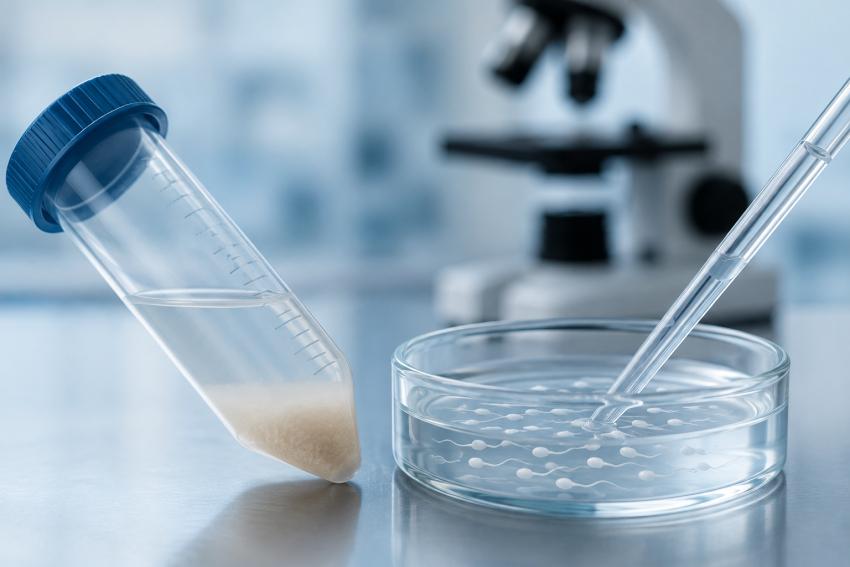
Sperm washing separates motile, healthy sperm from seminal fluid, debris, and immotile or dead cells. What's left is a concentrated sample used for IUI, or further prepared for IVF. Because washing removes a large portion of the original sample, the post-wash count is almost always lower than the count on your baseline semen analysis — that drop is expected, not a red flag by itself.
What's a Good Post-Wash Count for IUI?
The most clinically relevant number is TMSC: motile sperm count multiplied by sample volume, after washing.
Above ~10 million — generally considered the most favorable range. A peer-reviewed analysis published in Fertility and Sterility found pregnancy rates increased with TMSC up to roughly this level, then leveled off — more sperm beyond that point didn't meaningfully improve outcomes.
5–10 million — widely treated as an acceptable range for proceeding with IUI, though slightly lower than the optimal range above.
Below 5 million — success rates per cycle decline, but pregnancy is still reported at these counts. A 2025 analysis of TPMSC thresholds found that counts below 5 million were linked to meaningfully lower IUI success, particularly in couples with unexplained infertility — and suggested IVF may be more appropriate once counts fall this low.
Below 1–2 million — most clinics will recommend moving to IVF, often with ICSI, rather than continuing with IUI.
These ranges are general guidance, not hard cutoffs — your specialist will also weigh sperm motility, morphology, your partner's ovulation and tubal status, and how many IUI cycles you've already tried.
Why IVF (and Especially ICSI) Has Different Thresholds?
Conventional IVF — where sperm and eggs are combined in a dish and left to fertilize naturally — still benefits from a reasonable motile sperm count, though the bar is lower than for IUI since sperm don't have to travel through the cervix and uterus first.
ICSI (Intracytoplasmic Sperm Injection) changes the picture further: an embryologist selects and injects a single sperm directly into each mature egg. Because fertilization no longer depends on sperm reaching, penetrating, or competing to fertilize the egg unaided, ICSI can succeed even with very low post-wash counts — sometimes just a few thousand sperm, or sperm retrieved surgically in cases of azoospermia. This is why men with counts too low for IUI aren't necessarily out of options; ICSI is specifically designed for that situation.
If Your Count Is Lower Than Expected?
A low post-wash count doesn't automatically mean IUI or IVF won't work — but it does usually shift the conversation toward ICSI rather than IUI, and may prompt additional testing (hormone panels, a varicocele check, or a DNA fragmentation test) to understand why the count is low in the first place. Lifestyle factors — smoking, heat exposure, certain medications — can also affect sperm parameters and are worth discussing with your specialist.
Why Choose Mannat Fertility?
Interpreting a post-wash sperm count in isolation can be misleading — it only makes sense alongside the rest of your fertility workup. Mannat Fertility, a leading IVF centre in Sarjapur and across Bangalore, offers in-house semen analysis, sperm washing, IUI, and ICSI under one roof, so your treatment plan can be adjusted in real time based on your actual lab results. Book a consultation to discuss what your numbers mean for your next step.