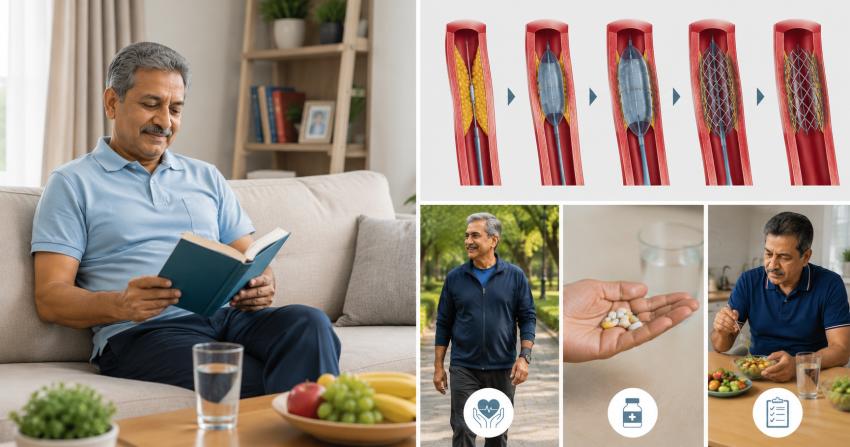
After Angioplasty, the moment one leaves the hospital, there is certainly a sense of relief. The family members feel reassured, the blood flow has been restored, and the chest pain has improved. For some, the first few days might be uneventful, as it takes a little time to adjust to the new normal, but life finds its own pace with new energy. At the same time, understanding the precautions after heart stent placement, and what to avoid after stent procedures can help make recovery smoother and safer.
The first thing to know about the recovery after angioplasty is that it is not a race. Everyone has their own speed; each one of us takes their own time.
Precautions Are Better Than The Procedure
The angioplasty procedure opens blocked arteries, but it actually erases years of bad habits that led to that blockage. What Angioplasty can’t do is make high cholesterol disappear overnight. It can’t remove high blood pressure or diabetes, it certainly can’t stop someone from smoking, and it can’t motivate someone to follow a heart-healthy lifestyle. Long-term heart-healthy habits and lifestyle come from within.
The reason why cardiologists usually say that precautions are better than the procedure.
Many of us make the mistake of assuming that after Angioplasty, the problem has been permanently solved. The truth is, the procedure is the second change to life, and often starts a new chapter in our lives. A life that will not be the same. If it will be better or worse than the last one, that depends entirely on our own choices.
Immediate Precautions
First things first, rest! Avoid heavy lifting or strenuous physical activities. If a stent is placed, the medication after Angioplasty must be observed exactly as they are prescribed to avoid the formation around the stent.
In case you feel chest pain, especially like the one that brought you to the hospital in the first place, or notice any swelling, bleeding, or extreme pain, fever or chills, or numbness in the arms or legs, contact your doctor immediately. Only if it is mild bruising, it is okay.
Many patients also ask what to avoid after stent placement. While every recovery journey is different, certain lifestyle habits can slow recovery and increase the risk of future heart problems.
Long-Term Precautions After Heart Stent Placement
Give up smoking, as it increases the chances of clotting in the arteries.
A heart-healthy diet goes a long way and helps with long-term outcomes.
Keep your Cholesterol, stress levels, diabetes, and hypertension in check.
Keep your alcohol intake to a moderate level. If your cardiologist asks, you might also have to cut it off completely.
Maintain a healthy weight, as being overweight puts extra pressure on your heart.
If your work stresses you out, it won’t work for your heart and might leave you with further complications.
Symptoms That Should Never Be Ignored
Chest pain similar to what got you to the hospital in the first place
Shortness of breath
Bleeding from the incision site
Persistent swelling or pain around the incision site
Numbness in the arms and legs
Most of the warning signs are minor and are easily avoidable. But when it comes to the heart, it is always advisable to consult your cardiologist immediately. Assumptions never work in favour of the heart, but making sure does.
Possible Complications After Angioplasty
With modern cardiological advancements and techniques, usually there are no serious complications after the angioplasty procedure. But knowing what to watch for in terms of possible complications matters. One possible complication is re-narrowing of the artery, medically known as restenosis. In rare cases, blood clots may also form around the implants. The reason why cardiologists prescribe blood-thinners after angioplasty.
After the procedure, some patients may experience arrhythmias or irregular heartbeats. Another complication to watch out for is bleeding or infection around the insertion site. Though these complications are not common, recognising the symptoms early on can make a significant difference in recovery.
Recovery After Angioplasty: Restoring Blood Supply. Restoring Lifestyle.
In recent times, angioplasty procedures have proven to be quite effective in restoring healthy blood flow to the heart, but the patient’s lifestyle choices after the surgery make the real difference. A heart-approved lifestyle can shorten the angioplasty recovery time and result in long-term consequences.
Angioplasty procedure not only restores the blood supply, but also restores hope in patients and their loved ones. It is as important to collect the right information about the procedure as it is to follow a heart-healthy lifestyle. What really makes the angioplasty procedure a success is the patient’s discipline and will to recover faster. In case you see warning signs after the procedure, consult your doctor immediately, as when it’s about the heart, even the slightest delay prolongs recovery, in some cases, leaves permanent damage to the heart muscle.