Introduction
Living with cerebral palsy (CP) can bring unique challenges at every life stage. For children with CP, movement, balance, motor development, and muscle control become difficult. While parents or primary caregivers get significantly engaged in prolonged medical consultations, therapies, or lifetime support for a child, this causes emotional, physical, psychological and financial stress.
Established CP treatments, including physiotherapy, medications, assistive devices, or surgery, help with symptom management. However, no cure improves function by targeting underlying damage to the brain. Researchers are widely exploring Stem Cells for Cerebral Palsy as a regenerative approach and activating natural healing processes.
Understanding Cerebral Palsy
CP is a neurological condition characterized by damage in the developing brain. Neurological dysfunction occurs before the child's birth, during delivery, or shortly after birth. The symptom's appearance differs among individuals. Common symptoms include:
Muscle stiffness
Restricted involuntary movements
Poor balance
Delays in reaching developmental milestones
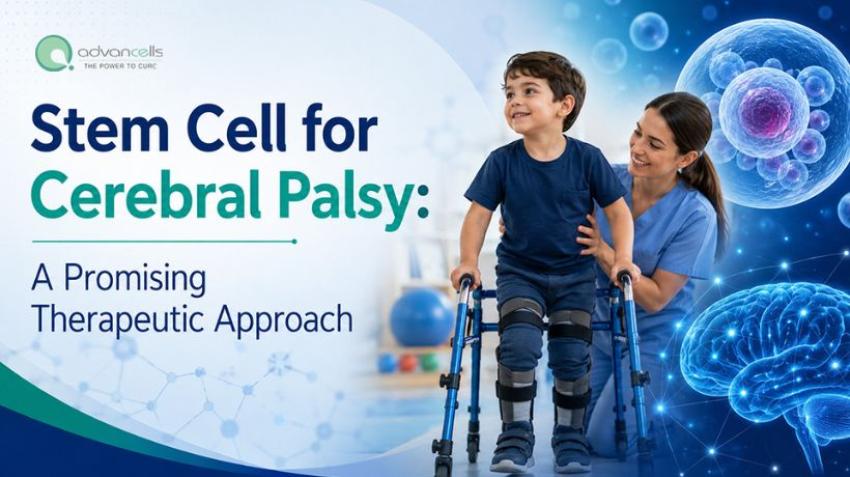
The most common CP type includes diplegic spastic cerebral palsy. The condition causes muscle stiffness, especially in the lower limbs. Children with this condition often find walking challenging and may need mobility aids or ongoing physical therapy to improve movement.
Early diagnosis and intervention can make a significant difference in improving an individual's quality of life.
Approaches to Cerebral Palsy Management
Currently, there is no cure for CP. The treatment focuses on gaining the highest level of independence and function. The common treatment includes:
Physiotherapy: Intends to improve strength, flexibility, balance, and mobility. A physiotherapist develops personalized exercises and movement training based on the child's needs.
Occupational therapy: Targets supports everyday skills (dressing, eating, writing)
Speech therapy: Helps in developing effective communication (verbal and non-verbal) and in overcoming swallowing difficulties
Medications: Management of co-morbid factors, such as relieving muscle stiffness and discomfort
Orthopedic surgeries: To correct muscle tightness or skeletal problems that interfere with movement
However, none of these therapies targets the damaged brain tissue repair mechanism. Emerging cerebral palsy treatment with stem cells
have laid a promising path in CP management.
Stem Cell for Cerebral Palsy: How Does It Work?
Stem cells are the body's "building blocks". The cells are multipotent, that is, they can differentiate into any cell type. Stem cells for cerebral palsy influences replacing damaged brain cells, activating the body's repair mechanisms by releasing growth factors, cytokines and signaling molecules.
Stem cells release anti-inflammatory molecules and neutralize the pro-inflammatory molecules' effect. The cells release angiogenic factors like VEGF, FGF, and IGF that promote new blood vessel formation, which improves blood, nutrient and oxygen flow in the brain's damaged area.
They promote cellular communication and aid in developing new neural connections. Some research showed cerebral palsy stem cell therapy in supporting neuroplasticity, i.e., the brain's natural ability to reorganize and adapt.
What Does Current Research Say About Stem Cell Therapy for Cerebral Palsy?
Over the last decade, interest in Cerebral Palsy Stem Cell Therapy has grown significantly. Researchers around the world have conducted studies to understand whether stem cells can safely improve outcomes for people living with the condition. The evidence reported in preclinical and clinical studies includes:
Improvements in movement, muscle control, correction in muscle tone, balance, and overall functional abilities
Children receiving stem cells for cerebral palsy, alongside rehabilitation, showed greater progress in comparison with the control group
Stem cell procedures showed safety and tolerance when performed under proper medical supervision
However, stem cell therapy is still at an early stage of research and clinical application. The result varies among individuals. Various factors, including age, CP severity, stem cell type, and rehabilitation program, influence the treatment outcomes.
In future, larger clinical studies are required for establishing long-term benefits, safety, and optimizing the standardized treatment protocols.
Potential Benefits of Cerebral Palsy Treatment with Stem Cells
Better muscle control and coordination
Ability to perform activities like sitting, standing, or walking
Reductions in muscle stiffness
Parents & caregivers reported improvements in attention, communication, and overall engagement
A combination of cerebral palsy stem cell therapy with conventional therapies produces better health outcomes
In Diplegic Spastic Cerebral Palsy, clinical investigation reported improvement in walking ability, posture, balance and muscle tone
Cerebral Palsy Treatment in India
India is a popular hub for medical tourism due to the availability of world-class facilities, experienced clinicians, and rehabilitation facilities. Families considering advanced CP treatment must consider:
Medical facilities that follow ethical practices, maintain regulatory compliance, and ensure comprehensive rehabilitation support
Use superior quality clinical-grade stem cells while considering the cell source, isolation procedure, and quality check
Involves a multidisciplinary team that combines regenerative medicine with conventional treatment
Ensure follow-ups and aftercare post-treatment
Conclusion
CP affects many aspects of daily life, and advances in medical research are opening new avenues for care. Stem cell therapy is a promising area of investigation because of its potential to support brain repair, reduce inflammation, and enhance recovery. Stem cells for Cerebral Palsy are still at an early stage of application. Early evidence supports its potential ability to improve movement, function, and quality of life for some individuals with cerebral palsy. The future of CP care can potentially evolve with regenerative therapies alongside traditional rehabilitation.