Most people pay attention when a tooth hurts.
Few pay attention when their gums start sending warning signs.
That is one reason gum disease often goes unnoticed for months, sometimes years. A little bleeding while brushing. Slight swelling near the gum line. Occasional bad breath. These symptoms seem minor, so many people ignore them.
The problem is that gum disease rarely stays minor.
If left untreated, it can progress from mild inflammation to serious infection, gum recession, loose teeth, and even tooth loss. Research has also linked advanced gum disease to health conditions such as diabetes, heart disease, and pregnancy complications.
The good news is that gum disease is often preventable and highly treatable when detected early.
Understanding the warning signs can help you protect your gums, teeth, and overall oral health.
What Is Gum Disease?
Quick Definition
Gum disease, also called periodontal disease, is an infection and inflammation of the tissues that support your teeth.
It usually begins with plaque buildup along the gum line.
Plaque is a sticky film of bacteria that forms on teeth every day. When plaque is not removed through brushing and flossing, it hardens into tartar. This creates an environment where harmful bacteria thrive.
Gum disease generally develops in two stages:
• Gingivitis, the early stage
• Periodontitis, the advanced stage
Gingivitis is reversible with proper treatment.
Periodontitis can cause permanent damage to the gums and supporting bone.
Why Early Detection Matters
Many people are surprised to learn that gum disease is one of the leading causes of tooth loss in adults.
The early signs are usually painless.
That makes routine dental examinations extremely important.
When gum disease is identified early, treatment is simpler, less invasive, and more affordable.
1. Bleeding Gums While Brushing or Flossing
Healthy gums do not bleed regularly.
One of the earliest signs of gum disease is bleeding during brushing or flossing.
Some people assume they are brushing too hard.
While aggressive brushing can contribute to irritation, persistent bleeding often indicates inflammation caused by plaque accumulation.
You may notice:
• Blood on your toothbrush
• Pink saliva while rinsing
• Bleeding during flossing
If bleeding occurs repeatedly, it should not be ignored.
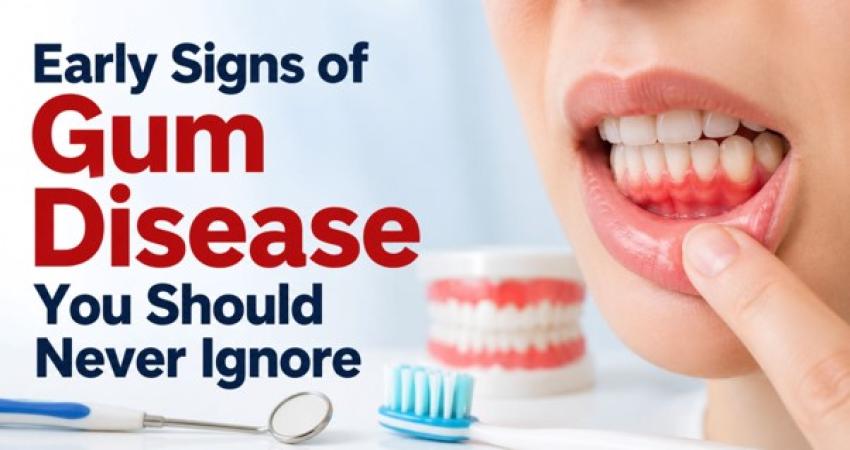
2. Red or Swollen Gums
Healthy gums are typically firm and light pink.
Inflamed gums often appear:
• Red
• Puffy
• Tender
• Swollen
The swelling occurs because bacteria trigger the body's immune response.
Many patients assume swollen gums will improve on their own.
In reality, the underlying cause usually remains until plaque and tartar are removed.
3. Persistent Bad Breath
Bad breath after eating certain foods is normal.
Bad breath that continues despite brushing and mouthwash may signal gum disease.
Bacteria trapped beneath the gum line release compounds that create unpleasant odours.
You may notice:
• Constant bad breath
• A bad taste in the mouth
• Fresh breath that doesn't last long
Persistent halitosis often points to an underlying dental problem rather than a simple hygiene issue.
4. Gum Tenderness or Sensitivity
Do your gums feel sore when brushing?
Do certain areas feel sensitive when eating?
Tender gums are often one of the first signs that inflammation is developing.
Many patients describe:
• Mild soreness
• Discomfort during brushing
• Sensitivity around specific teeth
Pain may be minimal in the early stages, which is why many people overlook it.
5. Receding Gums
Have your teeth started looking longer?
Gum recession occurs when the gum tissue gradually pulls away from the teeth.
This exposes more of the tooth surface and sometimes the root.
Common signs include:
• Teeth appearing longer
• Increased sensitivity
• Visible root surfaces
• Small gaps near the gum line
Gum recession can occur for several reasons, but periodontal disease is one of the most common causes.
6. Plaque and Tartar Buildup
Plaque forms continuously throughout the day.
If it is not removed, it hardens into tartar.
Unlike plaque, tartar cannot be removed with regular brushing.
Signs may include:
• Yellow deposits near the gums
• Rough areas on teeth
• Increased staining
• Visible buildup along the gum line
Tartar creates an ideal environment for bacteria that contribute to gum disease.
7. Loose Teeth
This symptom typically appears in more advanced stages but can sometimes develop earlier than expected.
As periodontal disease progresses, it damages the bone and tissues that hold teeth in place.
You may notice:
• Teeth shifting position
• Changes in your bite
• Slight movement when chewing
• Increased spacing between teeth
Any tooth mobility should be evaluated immediately.
8. Pus Between Teeth and Gums
Pus is a clear sign of infection.
If you notice discharge around your gums, seek dental care promptly.
This may indicate a periodontal abscess, which requires professional treatment.
Common symptoms include:
• Swelling
• Pain
• Bad taste
• Drainage around the gums
This is not a symptom that should be monitored at home.
9. Changes in the Way Teeth Fit Together
Many people do not associate bite changes with gum disease.
As supporting bone is lost, teeth can gradually shift position.
You may notice:
• Changes in your bite
• New gaps between teeth
• Difficulty chewing comfortably
• Food traps more easily
These changes often indicate progression beyond simple gingivitis.
10. Increased Tooth Sensitivity
Sensitivity is often linked to cavities.
It can also occur when gums begin to recede.
As root surfaces become exposed, teeth become more sensitive to:
• Hot drinks
• Cold foods
• Sweet foods
• Brushing
Persistent sensitivity deserves a professional evaluation.
What Causes Gum Disease?
Several factors increase the risk.
Poor Oral Hygiene
Inadequate brushing and flossing allow plaque to accumulate.
Smoking and Tobacco Use
Smoking reduces blood flow to the gums and weakens healing.
Diabetes
High blood sugar levels increase the risk of infection and inflammation.
Hormonal Changes
Pregnancy, menopause, and hormonal fluctuations can increase gum sensitivity.
Genetics
Some individuals are genetically more susceptible to periodontal disease.
Certain Medications
Some medications reduce saliva production, increasing bacterial growth.
A Real-World Patient Example
A 38-year-old professional noticed occasional bleeding while brushing.
He assumed he was brushing too aggressively.
Over the next year, the bleeding became more frequent. He also developed persistent bad breath.
When he finally visited a dentist, early periodontitis had already developed.
Fortunately, treatment was started before significant bone loss occurred.
This scenario is extremely common.
Most patients do not seek treatment until symptoms become difficult to ignore.
Common Mistakes People Make
Ignoring Bleeding Gums
Many people believe bleeding is normal.
It is not.
Healthy gums should not bleed routinely.
Depending Only on Mouthwash
Mouthwash may temporarily reduce odour.
It does not remove tartar or treat gum disease.
Skipping Dental Cleanings
Professional cleaning removes tartar that brushing cannot reach.
Waiting Until Pain Develops
Gum disease often progresses silently.
Pain usually appears later.
How to Protect Your Gums
Brush Properly Twice Daily
Use a soft-bristled toothbrush and brush for at least two minutes.
Floss Every Day
Flossing removes plaque between teeth where brushing cannot reach.
Schedule Regular Dental Checkups
Routine examinations help identify problems before they become serious.
Avoid Tobacco Products
Smoking significantly increases the risk of gum disease and treatment failure.
Maintain a Healthy Diet
A balanced diet supports gum health and immune function.
Manage Medical Conditions
Conditions such as diabetes should be controlled to reduce periodontal risks.
When Should You Visit a Dentist?
Schedule an appointment if you experience:
• Bleeding gums
• Gum swelling
• Persistent bad breath
• Gum recession
• Tooth sensitivity
• Loose teeth
• Pus around the gums
Early treatment can prevent extensive dental procedures later.
If you are searching for the Best Dentist in Hor Al Anz, choose a dental professional who focuses on preventive care, periodontal evaluation, and long-term oral health maintenance.
Frequently Asked Questions
What is the first sign of gum disease?
Bleeding gums during brushing or flossing is often the earliest warning sign.
Can gum disease go away on its own?
No. Professional treatment and improved oral hygiene are usually required to control the condition.
Is gum disease painful?
Not always. Early gum disease often develops without significant pain.
Can gum disease cause tooth loss?
Yes. Advanced periodontal disease is one of the leading causes of tooth loss in adults.
How often should I get my teeth professionally cleaned?
Most people benefit from professional cleanings every six months, although some may require more frequent visits.
Practical Summary
Watch for these early warning signs:
• Bleeding gums
• Swollen gums
• Red gums
• Persistent bad breath
• Gum tenderness
• Gum recession
• Plaque and tartar buildup
• Loose teeth
• Pus around the gums
• Tooth sensitivity
The earlier these symptoms are addressed, the easier treatment usually becomes.
Final Takeaway
Gum disease rarely starts with severe pain. It usually begins with small signs that are easy to dismiss. Bleeding while brushing, swollen gums, persistent bad breath, or increasing tooth sensitivity may seem minor, but they can indicate the early stages of a condition that affects your oral health for years.
Pay attention to these warning signs. Early diagnosis and treatment can help protect your gums, preserve your teeth, and reduce the need for more extensive dental procedures in the future.