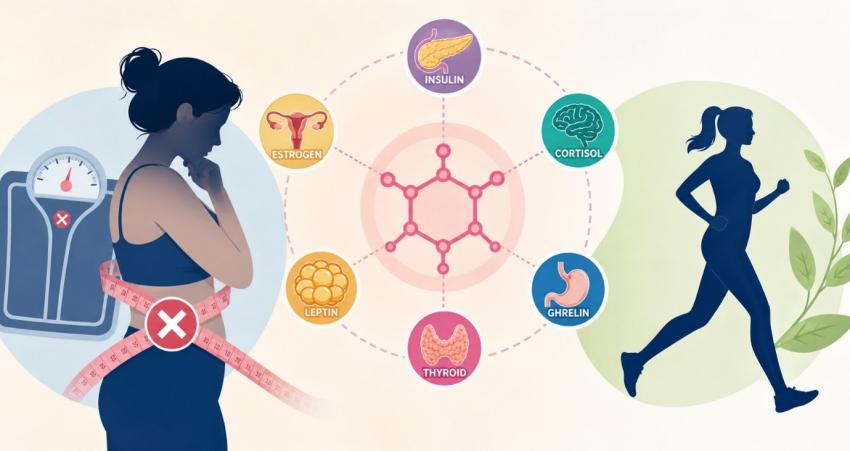
Weight loss often seems simple on paper.
Eat less. Move more. Lose weight.
But if you've ever followed a healthy eating plan, exercised regularly, and still watched the scale refuse to budge, you know it doesn't always work that way.
Many people blame themselves when weight loss becomes difficult. They assume they're not disciplined enough or that they're doing something wrong.
Sometimes that's not the real issue.
Your hormones may be playing a bigger role than you think.
Hormones affect hunger, metabolism, fat storage, energy levels, sleep, and even cravings. When they fall out of balance, losing weight can feel like pushing a heavy cart uphill.
Let's look at how hormones influence weight loss resistance and what you can do about it.
What Is Weight Loss Resistance?
Weight-loss resistance occurs when your body struggles to lose weight despite consistent efforts.
You may:
- Follow a calorie-controlled diet
- Exercise several times a week
- Get enough water
- Avoid junk food
Yet your weight stays the same.
Or maybe you lose a few kilograms and then hit a wall.
This can feel frustrating. I've spoken to many people who say the same thing.
"I don't understand what's happening. I'm doing everything right."
The truth is that your body is not just a calorie calculator. Complex biological systems control it, and hormones sit right in the middle of them.
Why Hormones Matter for Weight Loss
Hormones are chemical messengers produced by glands in your body.
They travel through your bloodstream and tell different organs what to do.
Some hormones control:
- Hunger
- Fullness
- Blood sugar
- Metabolism
- Fat storage
- Stress response
- Reproductive health
When these signals become disrupted, your body may hold on to weight even when you're trying hard to lose it.
Think about it.
Have you ever noticed stronger cravings during stress?
Or increased hunger after a poor night's sleep?
That's hormones at work.
Insulin and Weight Loss Resistance
Insulin is one of the most important hormones involved in weight management.
Its main job is to help move glucose from the bloodstream into cells.
Problems begin when the body becomes less responsive to insulin. This condition is called insulin resistance.
Signs of Insulin Resistance
- Increased belly fat
- Constant hunger
- Energy crashes
- Sugar cravings
- Difficulty losing weight
When insulin levels stay high for long periods, the body tends to store more fat.
It also becomes harder to access stored fat for energy.
This is one reason many people with insulin resistance struggle with weight loss.
What Helps?
- Eating more protein
- Including fibre-rich foods
- Strength training
- Regular walking
- Better sleep habits
Small changes often work better than extreme diets.
Cortisol: The Stress Hormone
Stress affects more than your mood.
It can influence your waistline too.
Cortisol is released when your body experiences stress.
A short burst of cortisol is normal. The problem comes when stress becomes constant.
Many people live in a state of ongoing stress.
Work deadlines.
Financial pressure.
Family responsibilities.
Poor sleep.
The body doesn't always know the difference between a real emergency and a stressful email.
High Cortisol Can Lead To:
- Increased appetite
- More cravings for sugary foods
- Belly fat accumulation
- Poor sleep
- Reduced energy
You may have noticed this yourself.
After a stressful week, healthy food suddenly seems less appealing than chips or dessert.
That's not a lack of willpower.
Your biology is influencing your choices.
Ways to Support Healthy Cortisol Levels
- Daily walks
- Meditation
- Deep breathing exercises
- Consistent sleep schedules
- Reducing excessive caffeine
Simple habits often make a bigger difference than people expect.
Leptin: The Fullness Hormone
Leptin tells your brain that you've had enough food.
It helps regulate appetite and energy balance.
In theory, more body fat should mean more leptin.
But things aren't always that straightforward.
Many people with obesity develop leptin resistance.
Their brains stop responding properly to leptin signals.
As a result:
- Hunger remains high
- Fullness signals become weaker
- Weight loss becomes more difficult
This creates a cycle that can be hard to break.
Supporting Leptin Function
- Prioritise sleep
- Eat enough protein
- Avoid chronic dieting
- Manage stress levels
Crash diets can sometimes make leptin issues worse.
Ghrelin: The Hunger Hormone
If leptin tells you to stop eating, ghrelin tells you to start.
Ghrelin increases appetite and encourages food intake.
Levels typically rise before meals and fall afterwards.
Sleep deprivation can increase ghrelin production.
That's why after a poor night's sleep, you may feel hungrier throughout the day.
Research consistently shows a connection between inadequate sleep and weight gain.
Better Sleep Can Help
Try:
- Sleeping 7 to 9 hours
- Limiting screen time before bed
- Maintaining a regular bedtime
- Creating a dark sleeping environment
It sounds basic.
Still, sleep is often one of the most overlooked factors in weight management.
Thyroid Hormones and Metabolism
Your thyroid gland produces hormones that regulate metabolism.
When thyroid function slows down, the body burns fewer calories.
This condition is known as hypothyroidism.
Common Symptoms
- Weight gain
- Fatigue
- Dry skin
- Hair thinning
- Feeling cold often
- Slower metabolism
Some people spend months trying to lose weight before discovering an underlying thyroid issue.
That's why unexplained weight changes should never be ignored.
Nutrition and Thyroid Health
A balanced diet that includes:
- Iodine
- Selenium
- Zinc
- Protein
can support overall thyroid function.
Medical treatment may also be necessary when thyroid disorders are diagnosed.
Estrogen and Weight Changes
Estrogen influences body weight in several ways.
Changes in estrogen levels can affect:
- Appetite
- Fat distribution
- Metabolism
- Insulin sensitivity
Women often notice weight fluctuations during:
- Puberty
- Pregnancy
- PCOS
- Perimenopause
- Menopause
These hormonal transitions can make weight management more challenging.
Not impossible.
Just different.
The strategies that worked in your twenties may not work in your forties.
PCOS and Weight Loss Challenges
Polycystic Ovary Syndrome (PCOS) is one of the most common hormonal conditions affecting women.
Many women with PCOS experience:
- Insulin resistance
- Weight gain
- Increased hunger
- Cravings
- Difficulty losing weight
This isn't simply about eating too much.
Hormonal changes can directly affect how the body stores and uses energy.
Helpful Lifestyle Approaches
- Protein-rich meals
- Regular exercise
- Balanced carbohydrates
- Strength training
- Stress management
A personalised plan often works much better than generic internet advice.
Testosterone and Body Composition
Most people associate testosterone with men.
Women produce it too, though in smaller amounts.
Healthy testosterone levels help maintain:
- Muscle mass
- Strength
- Metabolic health
Low testosterone may contribute to:
- Reduced muscle mass
- Lower calorie burn
- Increased fat storage
Since muscle tissue burns more calories than fat tissue, preserving muscle becomes important for long-term weight management.
Sleep Hormones and Weight Loss
Sleep and weight loss are deeply connected.
Poor sleep affects multiple hormones at the same time.
It can:
- Increase ghrelin
- Reduce leptin
- Raise cortisol
- Increase cravings
Ever noticed how everything feels harder after a bad night's sleep?
Exercise.
Meal planning.
Self-control.
That's not just in your head.
Your hormones are responding to sleep deprivation.
Signs Hormones May Be Affecting Your Weight
You may want to investigate hormonal factors if you experience:
- Weight gain without an obvious cause
- Persistent fatigue
- Intense cravings
- Irregular menstrual cycles
- Difficulty losing weight despite effort
- Frequent energy crashes
- Sleep problems
- Mood changes
These symptoms don't automatically mean a hormonal condition exists.
Still, they deserve attention.
Practical Steps to Support Hormonal Balance
You don't need a complicated routine.
Start with the basics.
Focus on Protein
Protein helps:
- Increase satiety
- Preserve muscle mass
- Support blood sugar control
Try including protein in every meal.
Strength Train Regularly
Muscle supports metabolic health.
Even two or three sessions per week can make a difference.
Prioritize Sleep
Aim for consistent sleep rather than trying to catch up on weekends.
Manage Stress
Stress management doesn't have to be perfect.
Even ten minutes of quiet time can help.
Eat More Fibre
Fibre supports:
- Gut health
- Blood sugar balance
- Appetite control
Good sources include:
- Vegetables
- Fruits
- Legumes
- Whole grains
Avoid Extreme Dieting
Very restrictive diets often trigger hormonal responses that make long-term weight loss harder.
Slow progress usually lasts longer.
When to Seek Professional Guidance
Weight loss resistance can have many causes.
Guessing rarely works.
A qualified nutrition professional can help identify patterns that you might miss on your own.
If you're searching for the Best Nutritionist in Bangalore, look for someone who:
- Understands hormonal health
- Uses evidence-based nutrition
- Creates personalised plans
- Considers lifestyle factors
- Works with medical reports when needed
The right guidance can save months of confusion and frustration.
How an Evidence-Based Nutritionist Can Help
A skilled nutritionist doesn't just hand you a meal plan.
They look at the bigger picture.
That may include:
- Eating habits
- Sleep quality
- Physical activity
- Stress levels
- Hormonal conditions
- Medical history
Good nutrition advice should come from qualified professionals with practical experience and a strong understanding of human health.
That's especially important when hormones are involved.
Final Thoughts
Weight loss isn't always about eating less.
Hormones influence hunger, metabolism, cravings, energy levels, and fat storage.
When these systems become disrupted, weight loss can feel much harder than it should.
The good news?
Hormonal challenges don't mean you're stuck.
Small changes in sleep, nutrition, movement, and stress management can have a real impact over time.
If you've been struggling despite your best efforts, it may be worth looking beyond calories and considering what your hormones are trying to tell you.
Sometimes the missing piece isn't more discipline.
It's understanding how your body actually works.