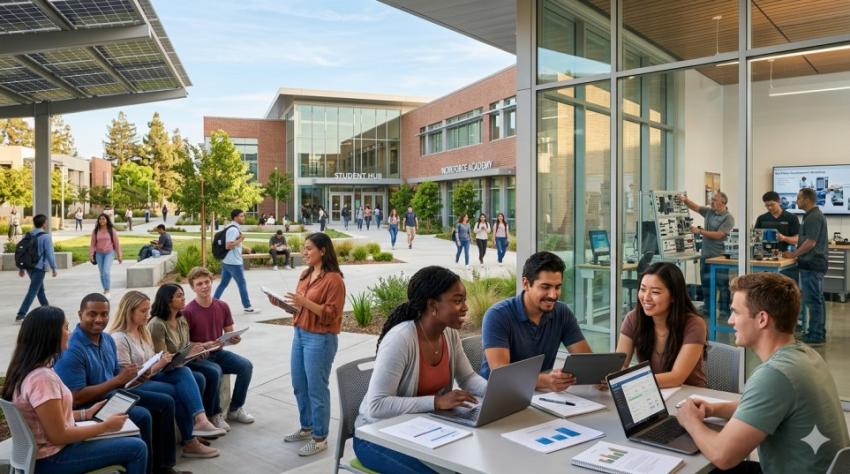
Community College history has shown that they provide access to higher education and career growth, as well as workforce development. Community Colleges allow students from diverse backgrounds to obtain affordable education in terms of both academic and career development through the sharing of educational programs, technical education, and continuing education opportunities.
Numbers from the Evaluation of Lansing Community College Data Breach Investigations have highlighted schools throughout our region that provide thousands of students, faculty, and members of the community an opportunity to achieve their educational goals. Even when specific events bring more attention to the educational industry, these investigations also reaffirm the importance of the educational industry and the role they play in providing access to thousands of local residents and students with an incredible amount of student-related information.
Many Community Colleges are different than traditional 4-year colleges and universities because of their focus on providing flexible educational pathways. Students may pursue an Associate's Degree, Transfer Program, Professional Certification, Workforce Development, or Non-Credit Continuing Education Opportunities based upon their individual needs.
Meeting the Needs of Today's Workforce
As industries continuously develop, employers are looking for workers with specialized skills and current training in practical form. Community colleges often build programs with local businesses and industries to meet the demands of the workforce.
Examples of these programs can include the following:
- Healthcare training
- Information technology
- Skilled trades
- Business and management
- Manufacturing certification
- Continuing education programs
Community colleges help prepare students with the necessary skills to work in an area where they can, by aligning the curriculum that is taught with workforce needs.
Affordability and Access
Community colleges offer a lower cost of education than private colleges will as employers want to provide their employees with the skills necessary to perform their jobs successfully; therefore, community colleges will offer lower tuition than four-year colleges.
Other reasons Community Colleges are an Advantage
- Flexible Scheduling
- Lower Tuition costs
- Smaller class sizes
- Classes are smaller in class size than four-year universities
- Locally located
All of the above are great reasons for students seeking a higher education to attend Community Colleges.
Support for Lifelong Learning
Education is for anyone, not just the traditional college-aged student. Many adults go back to school to learn new skills, change their careers, or pursue an interest outside of their job.
Community Colleges typically serve the following groups of students:
- Recent high school graduates
- Currently employed workers changing careers
- Veterans
- Retired persons
- Adult learners seeking new opportunities
Community colleges have an exceptionally diverse group of students; therefore, they have a significant impact on the areas in which they are located.
Technology's Growing Impact on Education
The way educational institutions deliver learning experiences has changed due to technology being utilized.
With the emergence of online courses, digital learning, virtual classes, and electronic student services, educational institutions are now delivering modern day learning experiences through technology.
Educational technology will benefit institutions by:
● Giving greater access to learning
● Increasing student engagement
● Streamlining administrative processes
● Providing support for remote instruction
● Improving communications between students and faculty
As educational technology continues to evolve, colleges will increasingly be able to utilize digital tools to assist students academically and foster operational efficiency.
What’s Ahead
Community colleges will continue to play a critical role in assisting individuals with gaining knowledge and developing skills for career advancement. With changing workforce needs (in addition to more flexible educational pathways), community colleges are well-positioned to participate with students at all levels/stages in their lives.
Community colleges will provide valuable opportunities (to both individuals and local economies) through their affordability, accessibility, and focus on practical training. They are committed to developing the workforce and to lifetime learning for individuals, which will enhance the vitality of the community in which they reside, as they prepare students for the workforce.
In conclusion, community colleges provide a vital bridge between education and opportunity; they support learners in achieving their goals while also meeting the changing needs of society at large.