The dental sector has witnessed some extraordinary technical advances in the last ten years. Technology has helped to improve the efficiency, accessibility and convenience of the dental treatment process for the patient through digital records / filing systems, electronic record-keeping, alternate imaging systems and video/telephonic consultations.
In the wake of the Access Dental Data Breach investigation, there has been renewed focus on the greater transparency of digital systems in today’s healthcare organisations, and the unique circumstances surrounding all data security incidents highlight the growing need for responsible management of patient data as healthcare providers implement new technologies.
Patients expects the same level of digital comfort when dealing with dental care today as they have grown accustomed to in other areas of life. Many dental practices now have online portals for their patients to submit forms, view treatment plans, get billing information and communicate with their providers electronically rather than physically visiting their offices.
The Rise of Digital Dentistry
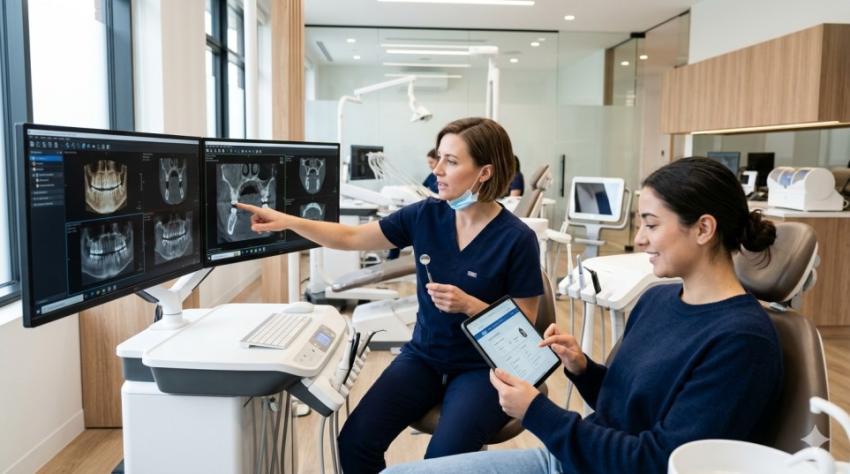
The development of technology has dramatically altered multiple facets of dental treatment by enhancing the way patients perceive their treatment (the experience) as well as enhancing the clinical results produced through the delivery of that treatment (the outcome).
Some common innovations being utilized in daily oral health practice include:
1. Digital X-rays
2. Electronic Health Records
3. Online Scheduling
4. Automated Appointment Reminder Systems
5. Digital Treatment Planning
6. Patient Communication Portals
These tools help to improve the efficiency with which administrative tasks can be completed, thus allowing dentists to spend more time providing patient care.
Improving Convenience for Patients
The convenience that technology provides to the patient has been one of its most pronounced benefits. Technology has allowed patients to schedule appointments or change their personal information online, and to receive reminders regarding treatment.
The use of these types of digital solutions serves to alleviate some of the administrative work associated with patient care for busy families and working professionals, and to simplify their interactions with the healthcare provider.
Additionally, technology helps to improve communication between patients and dental practices through providing patients with easy access to their appointment information, treatment recommendations, and insurance-related matter.
The Value of Information Management
As dental practices are implementing more digital-based solutions, they are now managing larger quantities of electronic based information than ever before. Examples of patient records include:
- Contact details.
- Medical histories.
- Insurance detail.
- Treatment details.
- Appointment details.
- Payment details.
As a result, it is important that this information is managed correctly so that the delivery of high-quality healthcare service can occur and the patient can have confidence in the service.
Building Patient Trust in a Digital Environment
The foundation of any healthcare experience is founded in trust. Patients expect their healthcare provider(s) to provide them with high quality care while utilizing their personal data appropriately.
Healthcare organizations create trust by providing:
- Transparent communication
- Consistently maintaining patient privacy
- Patient portal use
- Providing prompt customer service
- Preparing patients with educational materials
All five of these practices provide a positive experience that helps create a long-term relationship between provider(s) and patient(s).
The Future
Technology will continue to impact the evolution of dental care. The emergence of new technologies such as Artificial Intelligence, Advanced Diagnostic Tools, Cloud Computing and enhanced Electronic Patient Communication platforms will likely continue to grow in importance to the dental industry.
As the dental industry's digital transformation progresses, dental practices and patients will be challenged to find a balance of Convenience (Time), Efficiency(increased productivity) and Patient Expectation(what the Practice provides) A dental Organization that can blend Technological advancements with appropriate information management will experience the best opportunities to meet the needs of today's patients.
Ultimately, Technology can enhance virtually every aspect of the Patient Journey. When Dental Organizations use both Innovation and Trust as guide points, they can continue to improve the Safety, Access and Quality of care provided to their communities.