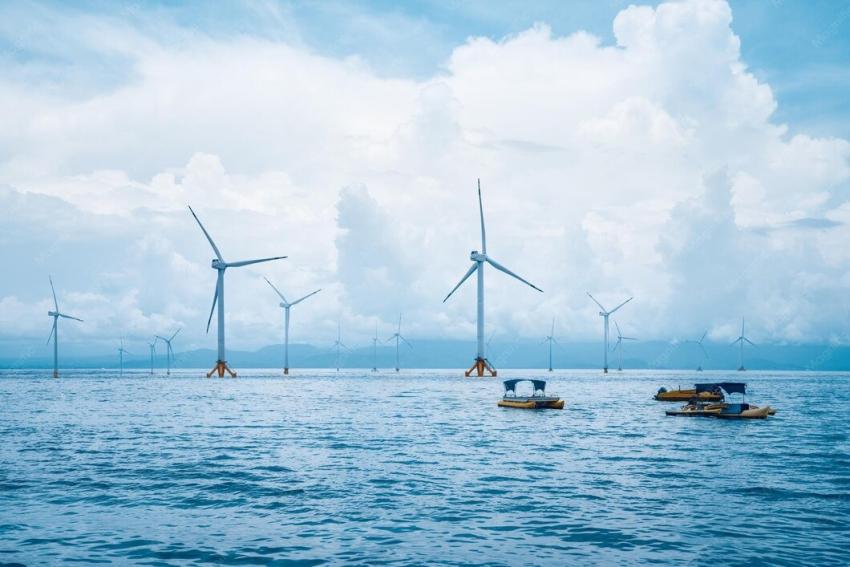
The world is racing to find cleaner ways to generate power, and the ocean is one of the most promising frontiers. Floating wind technology has quickly moved from an experimental concept to a serious solution for generating electricity in deep waters where traditional wind farms simply cannot operate. As energy demand grows and coastal land becomes limited, developers and governments alike are turning to the open sea for answers.
What Makes Deep Water Different
Most offshore wind farms that exist today are built on fixed foundations that are drilled or driven directly into the seabed. This works well in shallow waters, generally up to about 60 meters deep. Beyond that depth, the cost of installing fixed structures increases significantly and eventually becomes impractical.
More than 80 percent of the world's offshore wind resources exist in waters deeper than 60 meters. Countries like Japan, the United States (along the Pacific Coast), Norway, and parts of South Korea have very little shallow-water continental shelf available. For these nations, floating systems are not just a preference but a necessity.
How Floating Wind Systems Work
A floating wind system is essentially a wind turbine mounted on a buoyant platform that is anchored to the seabed using mooring lines and anchor systems. The platform keeps the turbine stable even in rough seas, while the mooring system prevents it from drifting. The generated electricity is transported to the shore via subsea cables.
There are three main platform designs used today: the spar buoy, the semi-submersible, and the tension leg platform. Each has its own strengths depending on water depth, wave conditions, and seabed type. This flexibility is one reason the technology is gaining traction across different regions with varying ocean environments.
Why Developers Prefer This Approach
Floating turbines can be assembled in port and then towed to their final location at sea. This significantly reduces the need for expensive offshore construction vessels and heavy-lift crane ships that fixed installations require. Assembly near shore also gives engineers easier access during the build phase, which tends to lower labor costs and reduce safety risks.
Another advantage is siting flexibility. Because floating turbines are not bound to specific seabed conditions, developers can choose locations based on wind quality rather than water depth or geology. Offshore areas that were previously off-limits are now accessible, opening up vast stretches of ocean with some of the strongest and most consistent wind resources on the planet.
Wind speeds also tend to be higher and more consistent further from shore, which means more electricity generated per turbine over its lifetime. This helps improve the overall economics of a project, which is critical as the industry works to bring costs down to compete with other forms of energy generation.
Case Study 1: Hywind Scotland, United Kingdom
Operated by Equinor, Hywind Scotland became the world's first commercial floating wind farm when it began operations in 2017. Located about 25 kilometers off the coast of Peterhead in water depths ranging from 95 to 120 meters, the five-turbine, 30-megawatt farm has consistently achieved capacity factors above 50 percent, outperforming many fixed-bottom offshore wind farms. It has provided valuable real-world data that has helped refine engineering standards and reduce costs for future floating projects.
Case Study 2: Windfloat Atlantic, Portugal
Developed by a consortium that includes EDP Renewables and Repsol, Windfloat Atlantic became Europe's first semi-submersible floating wind farm when it started generating power in 2020. Situated off the coast of Viana do Castelo in water depths of around 100 meters, the 25-megawatt project demonstrated that semi-submersible platforms could be built and operated commercially. Its success has encouraged Portugal to plan significantly larger floating wind projects and has inspired similar developments across the Mediterranean and Atlantic coastlines.
Environmental Considerations
Floating installations can be positioned further from shore, which reduces visual impact for coastal communities and lessens noise concerns. Being placed in deeper water also means less disruption to shallow marine ecosystems and fishing grounds that are closer to the coast. At the end of a project's life, the structures can be disconnected from their moorings and towed back to port for decommissioning, which is generally simpler than removing fixed foundations from the seabed.
Challenges Still Being Addressed
Cost remains the primary challenge. Floating wind is currently more expensive than fixed-bottom offshore wind, mainly because the technology is newer and supply chains are still being developed. Mooring systems, dynamic cables that flex with the platform's movement, and specialized installation vessels are all areas where costs need to come down through scale and experience.
Grid connection is another consideration. Projects located far offshore require longer cable routes and often need reinforcement of coastal grid infrastructure. Developers and governments are working together to plan transmission networks in advance so that new projects can connect without delays.
The Policy and Investment Landscape
Government support is accelerating the industry. The European Union has set ambitious targets for offshore wind, with floating systems expected to play a major role by 2050. The United States has identified several lease areas on the Pacific Coast specifically for floating wind development. South Korea, Japan, and Australia have all published national strategies that include floating wind as a key component of their clean energy transition plans.
Investment is following policy. Major energy companies, institutional investors, and sovereign wealth funds have committed significant capital to floating wind over the past few years. As projects grow in size from small demonstration farms to multi-gigawatt developments, the cost reductions seen in fixed-bottom offshore wind are expected to follow.
Conclusion
Floating wind is not simply a niche solution for countries without shallow coastal waters. It represents a fundamental expansion of where and how wind energy can be generated, and its potential scale is enormous. As projects mature, costs fall, and supply chains strengthen, the economics will increasingly favor this technology for the right locations.
The conversation around this sector is growing at every level, from boardrooms to policy forums. Industry events like the Floating Wind Conference bring together engineers, investors, regulators, and researchers to share findings and accelerate progress. These gatherings have become essential venues for aligning the industry and turning ambition into action. With strong wind resources, improving technology, and growing political commitment, floating wind is well on its way to becoming a cornerstone of global clean energy strategy.
Frequently Asked Questions
1. What is the main advantage of floating wind over fixed-bottom offshore wind?
The primary advantage is the ability to operate in deep waters where fixed foundations are not feasible. This opens up vast ocean areas with strong, consistent wind resources that would otherwise be inaccessible, significantly expanding the potential for offshore wind energy development.
2. How deep can floating wind turbines be installed?
Current floating wind systems are designed to operate in water depths ranging from about 60 meters to well over 1,000 meters. The technology is not strictly limited by depth in the way fixed foundations are, making it suitable for the vast majority of the world's offshore wind resources.
3. Are floating wind farms safe during storms and extreme weather?
Yes. Floating platforms are engineered to withstand harsh ocean conditions, including strong storms and high waves. Projects like Hywind Scotland have operated reliably through North Sea winters, which are among the most demanding marine environments in the world. The mooring systems are designed with significant safety margins.
4. When will floating wind become cost-competitive with fixed-bottom offshore wind?
Industry analysts and developers generally expect cost parity or near-parity by the early 2030s, as larger projects are built, supply chains mature, and installation methods become more efficient. The pace of cost reduction will depend heavily on the volume of projects commissioned over the next decade.
5. Which countries are leading in floating wind development?
Norway, the United Kingdom, Portugal, and South Korea are currently among the most active countries in developing and funding floating wind projects. Japan and the United States are also advancing quickly, driven by deep coastal waters and strong national clean energy commitments. Several European nations are planning large-scale projects for the 2030s.