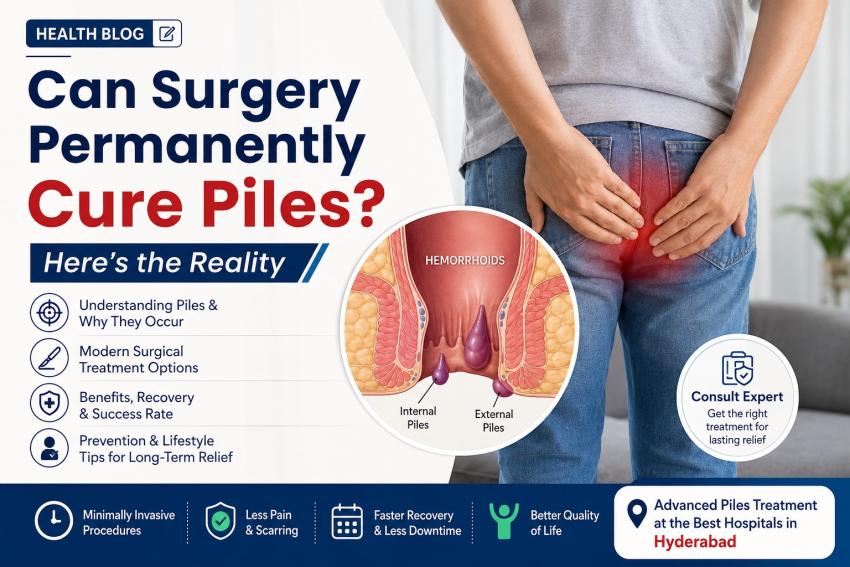
Piles, medically known as hemorrhoids, are one of the most common yet silently suffered anorectal conditions affecting millions of people worldwide. While many individuals initially ignore symptoms like bleeding during bowel movements, itching, swelling, or pain near the anus, advanced piles can significantly impact daily life, work productivity, and mental well-being.
One of the biggest questions patients ask is:
“Can surgery permanently cure piles?”
The short answer is — yes, in many cases surgery can provide a long-term or permanent solution, especially for severe or recurring piles. However, the reality is more nuanced. The success of piles surgery depends on factors like the stage of hemorrhoids, lifestyle habits, diet, bowel health, and the type of treatment chosen.
In this detailed guide, we’ll explain the truth about piles surgery, modern treatment options, recovery, recurrence chances, and how choosing the best hospital for piles treatment in Hyderabad can make a major difference in outcomes.
Understanding Piles: Why They Happen
Piles are swollen blood vessels located in the rectum or anus. They usually develop because of increased pressure in the lower rectal area.
Common causes include:
Chronic constipation
Straining during bowel movements
Sitting for long hours
Obesity
Low-fiber diet
Pregnancy
Sedentary lifestyle
Frequent spicy food consumption
Heavy lifting
There are mainly four grades of internal hemorrhoids:
Grade
Description
Grade 1
Small swelling inside the anus
Grade 2
Prolapse during bowel movement but goes back automatically
Grade 3
Prolapse that needs manual pushing
Grade 4
Permanently protruding piles with severe symptoms
Patients with Grade 1 or Grade 2 piles may improve through medications and lifestyle changes. However, advanced cases often require professional medical intervention or surgery.
Can Piles Go Away Without Surgery?
In mild cases, yes.
Early-stage piles can often be managed with:
Fiber-rich diet
Increased water intake
Stool softeners
Sitz baths
Topical creams
Lifestyle modifications
However, these methods usually manage symptoms rather than eliminate the root issue completely.
Many patients experience temporary relief, only for the symptoms to return later. This is why recurring piles are common among people who rely solely on home remedies.
When symptoms become severe, doctors at leading piles hospitals in Hyderabad generally recommend advanced procedures for permanent relief.
When Is Surgery Needed for Piles?
Surgery becomes necessary when piles start affecting quality of life or fail to respond to conservative treatment.
Common signs you may need piles surgery include:
Persistent bleeding
Severe pain while sitting or passing stools
Prolapsed hemorrhoids
Recurrent piles despite medication
Blood clots (thrombosed piles)
Chronic itching and discomfort
Difficulty maintaining hygiene
Large external piles
Ignoring these symptoms can sometimes lead to complications like anemia, infection, or severe inflammation.
The Reality: Can Surgery Permanently Cure Piles?
The truth is that modern piles surgery can remove existing hemorrhoids very effectively, and in many patients, the condition never returns.
However, surgery does not completely eliminate the possibility of future hemorrhoids if unhealthy lifestyle habits continue.
Think of surgery as:
Removing the damaged hemorrhoidal tissue
Correcting the immediate medical problem
Giving long-term relief
But if a person continues:
Chronic constipation
Excessive straining
Poor diet habits
Long sitting hours
Lack of exercise
new hemorrhoids can still develop over time.
This is why experienced colorectal specialists emphasize both:
Advanced treatment
Lifestyle correction
The best outcomes usually happen when both are combined.
Modern Surgical Treatments for Piles
Today, patients have access to minimally invasive procedures that are far more comfortable than traditional surgery.
1. Laser Piles Surgery
Laser treatment is currently among the most preferred options for piles treatment in Hyderabad.
Benefits:
Minimal pain
Less bleeding
Faster recovery
Short hospital stay
Reduced risk of infection
Quick return to work
Laser energy shrinks or removes hemorrhoidal tissue with high precision, making recovery smoother for patients.
2. Stapler Surgery (MIPH)
This procedure uses a stapling device to reposition prolapsed hemorrhoids and reduce blood flow.
Advantages:
Less postoperative pain
Faster healing
Effective for prolapsed piles
It is commonly recommended for Grade 3 and Grade 4 hemorrhoids.
3. Open Hemorrhoidectomy
This traditional surgical approach completely removes large hemorrhoids.
Usually recommended for:
Severe piles
External hemorrhoids
Complicated recurrent cases
Although recovery may take longer, it remains highly effective in advanced situations.
Which Surgery Is Best for Permanent Relief?
The answer depends on:
Severity of piles
Internal vs external hemorrhoids
Patient’s overall health
Recurrence history
Surgeon’s expertise
For many patients, laser surgery offers an excellent balance of:
effectiveness,
comfort,
and faster recovery.
However, advanced Grade 4 piles may still require conventional surgery for complete resolution.
Consulting an experienced colorectal specialist at the best hospital for piles treatment in Hyderabad is essential for accurate diagnosis and personalized treatment planning.
Recovery After Piles Surgery
One major fear patients have is painful recovery.
The good news is that modern procedures have significantly improved patient comfort.
Typical recovery timeline:
Laser surgery: 3–7 days
Stapler surgery: 1–2 weeks
Traditional surgery: 2–4 weeks
Recovery tips:
Drink plenty of water
Eat high-fiber foods
Avoid constipation
Walk regularly
Avoid heavy lifting
Follow prescribed medications
Maintain anal hygiene
Most patients notice dramatic symptom improvement shortly after treatment.
Chances of Piles Coming Back After Surgery
This is one of the most searched questions online.
The recurrence rate depends largely on post-treatment lifestyle.
Factors increasing recurrence risk:
Chronic constipation
Obesity
Low-fiber diet
Sedentary lifestyle
Poor hydration
Pregnancy
Excessive toilet straining
Patients who adopt healthier bowel habits after surgery usually experience long-term relief.
This is why many specialists now combine surgery with dietary counseling and lifestyle management.
Why Choosing the Right Hospital Matters
Not all treatments deliver the same outcomes.
Choosing a reputed piles hospital in Hyderabad can improve:
diagnosis accuracy,
treatment quality,
safety,
and long-term success.
A well-equipped hospital typically offers:
Advanced laser technology
Experienced proctologists
Personalized care
Post-surgery support
Minimally invasive procedures
Infection control protocols
Patients should always verify:
doctor expertise,
hospital reputation,
patient reviews,
and available treatment technologies.
Common Myths About Piles Surgery
Myth 1: Piles surgery is extremely painful
Modern laser and stapler procedures are much less painful than older techniques.
Myth 2: Surgery guarantees piles will never return
Surgery removes current hemorrhoids, but lifestyle factors still matter.
Myth 3: All piles need surgery
Early-stage piles can often be managed non-surgically.
Myth 4: Recovery takes months
Many patients return to work within days after minimally invasive procedures.
How to Prevent Piles After Surgery
Long-term prevention is possible with simple lifestyle changes.
Eat More Fiber
Include:
fruits,
vegetables,
oats,
whole grains,
and legumes.
Stay Hydrated
Drink enough water daily to prevent hard stools.
Avoid Straining
Never force bowel movements.
Exercise Regularly
Walking and physical activity improve digestion.
Don’t Sit Too Long
Extended sitting increases rectal pressure.
Respond to Nature’s Urge Quickly
Delaying bowel movements can worsen constipation.
Advanced Piles Treatment Options in Hyderabad
Hyderabad has become a major center for advanced proctology treatments due to:
modern healthcare infrastructure,
experienced surgeons,
and advanced laser technology.
Patients searching for:
piles treatment Hyderabad
best hospital for piles treatment in Hyderabad
laser piles surgery in Hyderabad
advanced hemorrhoid treatment
painless piles surgery
proctology hospitals in Hyderabad
often prioritize hospitals offering minimally invasive care with faster recovery.
Choosing the right specialist early can prevent complications and reduce the need for major surgery later.
Expert Insight: Early Treatment Matters
One of the biggest mistakes patients make is delaying consultation because of embarrassment.
Piles are a medical condition — not something to hide.
Early diagnosis can:
reduce complications,
avoid severe pain,
lower treatment costs,
and improve recovery outcomes.
Modern treatments are safer, faster, and more comfortable than many people assume.
Final Verdict: Can Surgery Permanently Cure Piles?
Yes — in many cases, surgery can provide long-lasting or even permanent relief from piles.
But the reality is this:
Surgery removes the existing hemorrhoids.
Lifestyle determines whether new hemorrhoids develop later.
The combination of:
expert surgical care,
healthy diet,
proper bowel habits,
and active lifestyle
offers the best chance for permanent relief.
If you are experiencing persistent symptoms like bleeding, pain, swelling, or prolapse, consulting an experienced specialist at a trusted piles hospital in Hyderabad can help you identify the most effective treatment option before the condition worsens.
Frequently Asked Questions (FAQs)
Is laser surgery permanent for piles?
Laser surgery effectively removes existing hemorrhoids, but maintaining healthy lifestyle habits is important to prevent recurrence.
Which is the best treatment for piles?
The best treatment depends on the grade and severity of hemorrhoids. Laser surgery is widely preferred for faster recovery and minimal pain.
How painful is piles surgery?
Modern procedures are significantly less painful than traditional surgery methods.
How long does recovery take after piles surgery?
Recovery may range from a few days to a few weeks depending on the procedure.
Can piles come back after surgery?
Yes, recurrence is possible if constipation, straining, and poor lifestyle habits continue.
When should I see a doctor for piles?
Seek medical attention if you experience persistent bleeding, severe pain, swelling, or recurring symptoms.