Vehicle safety becomes increasingly important when transporting heavy loads. Commercial trucks, trailers, buses, agricultural machinery, construction equipment, and industrial transport vehicles regularly operate under demanding weight conditions that place enormous stress on suspension systems. In such applications, maintaining vehicle stability, load balance, braking control, and road handling is essential for preventing accidents and ensuring safe transportation.
One of the most important components contributing to heavy-load vehicle safety is the leaf spring suspension system. Despite the advancement of modern suspension technologies, leaf springs continue to play a critical role in commercial and heavy-duty vehicles because of their durability, reliability, and exceptional load-carrying capability.
Leaf springs not only support vehicle weight but also improve stability, absorb shocks, distribute loads evenly, and enhance overall driving control. These functions directly contribute to safer vehicle operation, especially when transporting heavy cargo across long distances and challenging road conditions.
In this article, we will explore how leaf springs improve vehicle safety under heavy loads, understand their role in suspension systems, and examine why they remain indispensable in modern heavy-duty transportation.
Understanding Leaf Springs
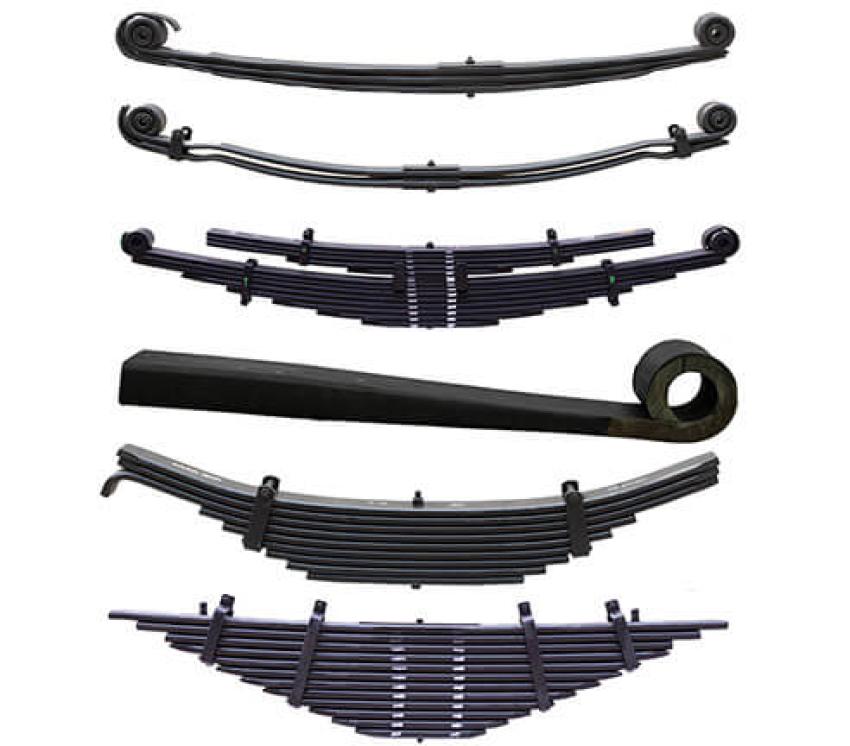
A leaf spring is a suspension component made from multiple layers of curved steel strips stacked together and clamped into a spring assembly. These steel layers, known as “leaves,” flex under load and help absorb road impacts while supporting the weight of the vehicle.
Leaf springs are commonly installed between the vehicle axle and chassis.
Main Functions of Leaf Springs
Leaf springs perform several critical functions, including:
- Supporting vehicle weight
- Absorbing shocks and vibrations
- Maintaining ride height
- Stabilizing axle movement
- Improving load distribution
- Enhancing driving control
Because heavy-duty vehicles carry substantial loads, suspension systems must be strong enough to handle continuous stress while maintaining safety and stability.
Why Heavy Loads Create Safety Challenges
Transporting heavy loads significantly changes vehicle dynamics. Increased weight affects:
- Braking distance
- Steering response
- Vehicle balance
- Suspension stress
- Tire performance
- Cornering stability
Without proper suspension support, overloaded or poorly balanced vehicles can become difficult to control, especially during emergency braking, sharp turns, or rough road conditions.
Common Safety Risks Under Heavy Loads
Heavy-load vehicles face several risks, including:
- Vehicle rollovers
- Suspension failure
- Excessive body sway
- Tire blowouts
- Reduced braking efficiency
- Uneven load distribution
- Loss of steering control
Leaf spring suspension systems are specifically designed to reduce these risks and maintain stable vehicle operation.
How Leaf Springs Improve Vehicle Safety
1. Superior Load Distribution
One of the most important ways leaf springs improve safety is through efficient load distribution.
Balanced Weight Support
Leaf springs distribute vehicle weight evenly across the axle system. This prevents excessive pressure from concentrating on a single point of the chassis or suspension.
Balanced weight distribution helps:
- Improve vehicle stability
- Reduce axle stress
- Prevent suspension sagging
- Maintain tire contact with the road
Uneven load distribution can cause instability and increase the risk of accidents. Leaf springs help maintain proper balance even when carrying heavy cargo.
2. Enhanced Vehicle Stability
Vehicle stability is critical when transporting heavy loads.
Reduced Body Roll
Heavy vehicles tend to lean or sway during turns, lane changes, and uneven road conditions. Excessive body roll increases rollover risks, especially in tall commercial vehicles.
Leaf springs provide structural support that minimizes excessive vehicle movement during cornering.
This improves:
- Steering control
- Cornering stability
- Driver confidence
- Passenger safety
Stable Ride Height
Leaf springs maintain consistent ride height even under significant loads. Stable ride height ensures:
- Proper suspension geometry
- Better braking performance
- Correct headlight alignment
- Improved handling
Maintaining the correct vehicle stance contributes directly to safer operation.
3. Better Shock Absorption
Road conditions can become highly unpredictable, particularly for commercial vehicles operating over long distances.
Absorbing Road Impacts
Leaf springs absorb shocks from:
- Potholes
- Uneven roads
- Speed bumps
- Gravel surfaces
- Construction zones
Without proper shock absorption, impacts transfer directly to the chassis and cargo, reducing stability and increasing driver fatigue.
Reduced Vibration
Leaf spring systems reduce excessive vibrations that can:
- Affect steering precision
- Damage cargo
- Increase wear on vehicle components
Smoother suspension performance helps maintain better control during heavy-load transportation.
Improved Braking Safety
Braking performance is heavily influenced by suspension behavior.
Maintaining Tire Contact
Leaf springs help keep tires firmly in contact with the road surface during braking.
Consistent tire contact improves:
- Traction
- Braking efficiency
- Vehicle control
Poor suspension systems may allow wheels to bounce or lose contact during braking, especially on rough roads.
Reduced Brake Instability
Heavy loads can cause excessive forward weight transfer during braking.
Leaf springs help stabilize the vehicle chassis and reduce:
- Nose diving
- Load shifting
- Axle instability
This contributes to safer emergency braking performance.
Prevention of Suspension Failure
Suspension failure under heavy loads can lead to catastrophic accidents.
High Load-Carrying Strength
Leaf springs are specifically engineered to withstand repeated heavy-load cycles.
High-strength spring steel allows leaf springs to:
- Resist deformation
- Maintain structural integrity
- Absorb stress effectively
This reduces the likelihood of sudden suspension collapse during operation.
Redundancy in Multi-Leaf Systems
Many commercial vehicles use multi-leaf spring configurations.
If one leaf becomes damaged, the remaining leaves can continue providing temporary support until repairs are made.
This added redundancy improves operational safety and prevents sudden complete suspension failure.
Improved Towing and Hauling Safety
Leaf springs are widely used in towing vehicles and trailers because they provide stable load support.
Reduced Trailer Sway
Trailer sway is one of the most dangerous towing hazards.
Leaf spring systems improve trailer stability by:
- Supporting consistent weight distribution
- Controlling suspension movement
- Reducing excessive bouncing
Stable towing improves driver control and lowers accident risks.
Better Performance on Rough Terrain
Heavy vehicles frequently operate on uneven roads and off-road environments.
Off-Road Stability
Leaf springs perform exceptionally well on:
- Construction sites
- Mining operations
- Rural roads
- Agricultural fields
Their rugged design allows them to absorb large impacts while maintaining axle positioning and vehicle control.
Resistance to Harsh Conditions
Leaf springs are highly durable under:
- Mud
- Dust
- Water exposure
- Temperature extremes
Reliable suspension performance in harsh environments improves overall safety for heavy-duty operations.
Improved Driver Control and Handling
Driver control is essential when managing heavy vehicles.
Predictable Suspension Behavior
Leaf springs provide stable and predictable suspension movement, allowing drivers to respond more effectively to road conditions.
This improves:
- Steering accuracy
- Vehicle responsiveness
- Driver confidence
Reduced Driver Fatigue
A stable suspension system reduces excessive bouncing and vibration, helping drivers remain comfortable and alert during long journeys.
Lower driver fatigue contributes to:
- Better concentration
- Faster reaction times
- Safer vehicle operation
Role of Leaf Springs in Cargo Protection
Cargo movement can create dangerous driving conditions.
Minimizing Load Shift
Leaf spring suspension systems reduce sudden vehicle movements that can cause cargo shifting during transport.
This is particularly important for:
- Industrial equipment
- Fragile goods
- Bulk materials
- Construction supplies
Stable cargo positioning improves both road safety and product protection.
Durability and Long-Term Safety
Heavy-load vehicles require suspension systems that maintain performance over extended periods.
Resistance to Fatigue
Leaf springs are engineered to withstand millions of load cycles without losing structural strength.
Modern manufacturing processes improve fatigue resistance through:
- Heat treatment
- Shot peening
- Surface finishing
- Advanced steel alloys
Durable suspension systems reduce long-term safety risks associated with worn components.
Importance of Proper Leaf Spring Maintenance
Even the strongest suspension systems require regular maintenance to ensure safety.
Common Maintenance Practices
Fleet operators should regularly inspect:
- Spring cracks
- Corrosion
- Loose mounting hardware
- Worn bushings
- Uneven ride height
Preventing Overloading
Exceeding vehicle load limits places excessive stress on leaf springs and increases accident risks.
Proper load management is essential for maintaining suspension safety and longevity.
Leaf Springs vs. Air Suspension for Heavy Loads
Air suspension systems are increasingly common in some commercial vehicles, but leaf springs remain highly preferred for heavy-duty applications.
Feature
Leaf Springs
Air Suspension
Load Capacity
Excellent
High
Durability
Very High
Moderate
Maintenance Complexity
Low
High
Off-Road Suitability
Excellent
Moderate
Cost Efficiency
High
Lower
Reliability Under Extreme Loads
Excellent
Moderate
For demanding heavy-load applications, leaf springs continue to provide unmatched strength and reliability.
Technological Advancements in Modern Leaf Springs
Modern leaf spring systems continue to improve through engineering innovations.
Recent Developments Include:
- Lightweight spring designs
- High-strength alloy steels
- Composite leaf springs
- Improved corrosion protection
- Optimized stress distribution
These advancements enhance both safety and performance in commercial vehicles.
Industries That Depend on Leaf Spring Safety
Leaf spring suspension systems are widely used across industries that require safe heavy-load transportation.
Common Applications Include:
- Freight transportation
- Construction vehicles
- Mining equipment
- Agricultural machinery
- Public transportation buses
- Military transport
- Trailer systems
Their proven reliability makes them indispensable in safety-critical operations.
The Future of Leaf Springs in Vehicle Safety
As commercial transportation evolves, leaf spring technology will continue adapting to meet modern safety standards.
Future innovations are expected to focus on:
- Weight reduction
- Enhanced fatigue resistance
- Smart suspension integration
- Improved ride comfort
- Sustainable manufacturing methods
Despite emerging technologies, leaf springs will likely remain a core component of heavy-duty vehicle safety systems for many years.
Final Thoughts
Leaf springs play a crucial role in improving vehicle safety under heavy loads by providing stability, load distribution, shock absorption, braking support, and suspension durability. Their ability to handle demanding operating conditions makes them one of the most trusted suspension solutions for commercial and industrial vehicles.
From reducing rollover risks and improving steering control to protecting cargo and enhancing braking performance, leaf spring systems contribute directly to safer transportation operations. Their rugged construction, cost-effectiveness, and long-term reliability continue to make them indispensable in heavy-duty vehicle applications worldwide.
For fleet operators, manufacturers, and drivers, investing in high-quality leaf spring systems and proper maintenance is essential for ensuring maximum safety, operational efficiency, and vehicle performance under heavy-load conditions.