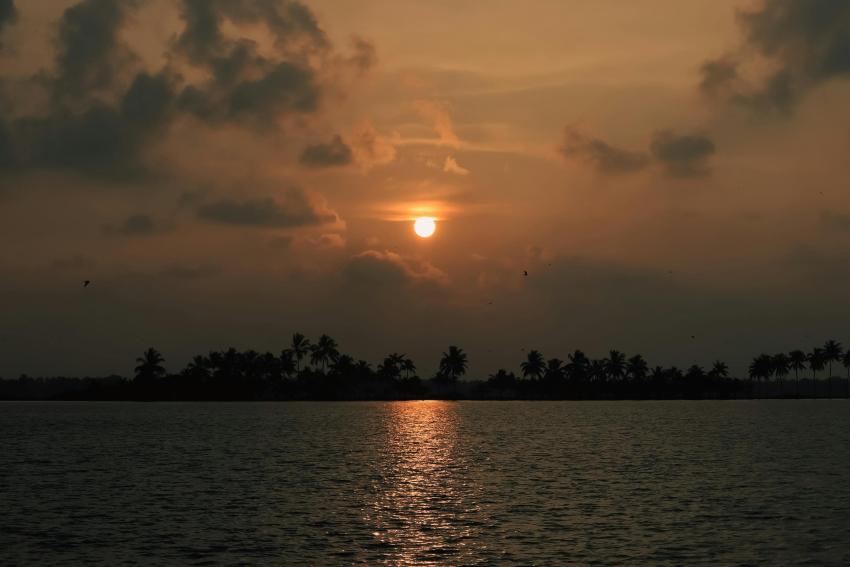
Even simple journeys feel longer than the map suggests. For honeymoon couples, that slow geography matters. You don’t “cover” Kerala quickly. You move through it, ghat roads, ferries, village lanes, forest edges, canal crossings. Days are shaped by light and weather more than itineraries. Once that logic settles in, moving across the tourist places in Kerala stops feeling like touring and starts feeling like navigating a living landscape.
Munnar: Altitude Roads and Working Landscapes
The climb into Munnar is gradual, not dramatic. From the lowlands, NH85 rises steadily through spice gardens, rubber estates, and dense forest before opening into tea country. The temperature change is noticeable before the views appear. Fog often holds the slopes until late morning.
Most practical stays sit outside the town centre, around Pallivasal and Chithirapuram, where traffic thins. Tea estate paths, Lockhart Gap, and the lower trails of Eravikulam National Park form the main movement zone. Short walks feel longer at altitude. Breathing comes slower. The weather flips quickly. From October to March, visibility stays clear. During monsoon months, landslides near Adimali and Neriamangalam can stall road access.
Alleppey Backwaters: Transport, Not Tourism
The backwaters are a working network. School boats, fishing canoes, vegetable barges, ferries, and houseboats all share the same corridors. Movement follows daylight and water depth, not schedules.
Houseboats typically start late morning, crossing open lake sections before entering village canals. In summer, low water restricts narrow routes. In the monsoon, flooding opens new channels but slows movement. After sunset, the system quiets. Lights from riverside homes replace traffic noise. This region anchors everyday Kerala sightseeing, not monuments, but the routine water life moving past slowly.
Varkala: Walkable Coastal Geography
Varkala’s cliff formation changes the entire travel pattern. Accommodation, food, and viewpoints sit on the ridge. Beaches lie below. Everything happens on foot.
Access from Thiruvananthapuram is simple by rail or road. Days unfold in loops — cliff path walks, beach descents, sunset returns. Sea conditions are unpredictable. From June to September, swimming restrictions increase due to currents. Winter months offer calmer water and clearer horizons. It suits couples who prefer walking towns over isolated resorts.
Wayanad: Forest Movement and Limited Night Travel
The approach through Lakkidi Ghat is steep and fog-prone. Visibility drops fast in the evenings. Forest density increases. Temperatures cool.
Chembra Peak provides a moderate trek. Edakkal Caves sit on exposed rock paths. Bamboo rafting at Kuruva Island moves through shaded river channels. Wildlife crossings are common at dawn and dusk. Elephant movement frequently disrupts night travel routes.
Driving after dark here is risky as fog, wildlife, and sharp bends overlap.
Kumarakom: Small Water, Slow Routes
Kumarakom sits quietly along Vembanad Lake’s eastern edge. Canoes replace large boats. Routes pass through bird zones, narrow canals, and paddy channels.
Between November and February, migratory birds dominate early mornings. Cycling tracks cut through village lanes, churches, coir workshops, and lakeside farms. Movement is local and slow.
Marari: Minimal Coastal Infrastructure
Marari offers long, open beach stretches with limited development. Access roads narrow close to the shore, and lighting drops off quickly after dusk.
Swimming depends on tide cycles and seasonal currents. From May onward, wave intensity increases. Evening shoreline walks remain the safest daily activity. Days move quietly, shaped by fishing rhythms rather than tourism schedules.
Highlights for Honeymoon Couples in Kerala
Tea estate walks in Munnar’s lower slopes
Canoe routes through the Kumarakom canals
Village water corridors in Alleppey
Cliff-path walking loops in Varkala
Forest-edge treks in Wayanad
Route Logic and Seasonal Reality
Most journeys begin at Kochi. A functional loop runs:
Kochi → Munnar → Wayanad or Thekkady → Backwaters → Coast → Thiruvananthapuram exit. This avoids long backtracking days and reduces fatigue.
October to March offers the most stable conditions. Summer brings inland heat and humidity. Monsoon months introduce ferry delays, landslides, swollen rivers and road closures. Couples choosing Kerala honeymoon tours in shoulder seasons often benefit from lower density and better route flexibility.
Terrain, Timing and Practical Movement
Kerala distances look short. Travel time isn’t. Ghat roads slow progress. Village congestion builds without warning. Ferry schedules shift daily. Hill zones require light cold weather layers. Coastal zones need sun protection and insect control. Forest trails carry leeches in wet months. Mosquito presence increases near canals and lakes. Daylight travel through forest corridors is safer than night driving.
Where Travel Junky Fits In
Travel Junky frames Kerala as a route-based journey, not a sightseeing loop. Their approach focuses on terrain sequencing, seasonal access, and realistic transit pacing, so couples experience natural transitions rather than rushed transfers.
Pro Tip
Choose fewer bases. Longer stays reduce transit strain and allow deeper local exploration without constant packing and road fatigue.
Closing
Kerala works on accumulation, not impact. Weather changes, terrain shifts, and daily rhythms shape movement more than attractions. Couples who plan around geography instead of lists experience a steadier, more grounded journey, one defined by continuity rather than highlights. Travel here becomes less about seeing places and more about learning how they move.