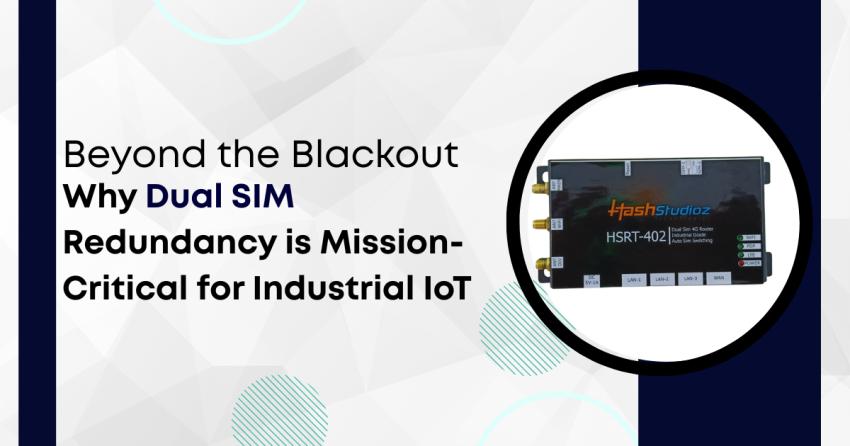
Modern industry relies on data. Machines talk to servers. Servers talk to clouds. This flow creates efficiency. It reduces waste. It optimizes output. Yet, this flow breaks easily. A single connection point poses a massive risk. Network outages occur daily. Towers lose power. Cables get cut. Signal interference happens.
For the Industrial Internet of Things (IIoT), connection loss means failure. A broken connection halts production lines. It stops critical monitoring. It creates safety hazards. Enterprises must ensure constant uptime. A Dual SIM Industrial Router provides this constant state. It acts as the backbone for reliable connectivity.
The Fragility of Single-Path Connectivity
Most basic network setups rely on a single link. The device connects to one cellular carrier. It uses one SIM card. This design works in perfect conditions. Reality rarely offers perfect conditions.
Cellular networks fluctuate. Carriers perform maintenance. Weather events damage infrastructure. Physical structures block signals. When the single link fails, the device goes offline. The system loses visibility.
Consider the cost of downtime. Industry reports indicate high figures. Gartner research estimates that IT downtime costs over $5,600 per minute. For a factory, this number climbs higher. A single lost hour causes massive financial damage. It ruins perishable goods. It halts supply chains. It misses delivery dates. The single-path approach lacks the buffer for modern requirements. It creates a single point of failure.
Understanding the Dual SIM Industrial Router
A Dual SIM Industrial Router changes the game. It features two distinct SIM slots. It houses two modems or switches between them. It connects to two different cellular carriers simultaneously or sequentially.
The router monitors the connection quality. It performs constant checks. If the primary connection drops, the router switches. It activates the secondary SIM card. This process happens in seconds. The system regains connectivity before the user notices a problem.
This device functions as a failover system. It provides a safety net. It creates a path for data to travel. It ensures that critical applications remain online. It transforms a fragile link into a robust pipeline.
How Failover Works in Practice
The failover process relies on logic. The router uses specific rules. These rules dictate the switch timing.
Ping Checks: The router sends small data packets. It sends them to a known server. It waits for a response. If the response stops, the router triggers a switch.
Signal Monitoring: The device tracks RSSI and RSRP levels. If signal strength drops below a threshold, the router initiates the change.
Time-to-Live (TTL): The router monitors connection persistence.
Data Limits: Some setups switch based on data volume. This helps manage costs for capped plans.
This logic makes the Industrial Router a smart decision-maker. It does not wait for a human to fix the problem. It fixes the problem instantly. It maintains the flow of data.
Why Redundancy is Mission-Critical
Industrial settings present harsh environments. Vibrations, heat, and electromagnetic interference exist everywhere. These factors affect network hardware.
1. Eliminating Single Points of Failure
Redundancy removes the weakest link. If Carrier A has an outage, Carrier B remains active. This applies to hardware failures too. A good router handles these issues. It isolates the fault. It maintains the operation.
2. Boosting Network Availability
Availability defines the percentage of time a system functions. A standard link might offer 99.0% uptime. This leaves 87 hours of downtime per year. A Dual SIM setup boosts this to 99.99% or higher. It reduces downtime to minutes per year. That difference dictates success.
3. Managing Variable Coverage
Remote locations pose challenges. A single tower might not serve the entire area. One carrier might have a dead zone in a specific spot. Another carrier might have strong signal there. A Dual SIM Industrial Router uses the best available signal. It bridges the gap in coverage.
Key Technical Features of Reliable Routers
Not all routers offer the same value. Industrial grade hardware requires specific traits.
Rugged Design: The device must withstand temperature extremes. It needs a metal casing. It should handle high humidity and vibration.
Watchdog Timers: The router reboots itself if it hangs. It recovers from software glitches.
VPN Support: It must support IPsec, OpenVPN, or GRE. This protects the data during the switch.
Quality of Service (QoS): The device prioritizes critical traffic. It ensures that control signals move before log files.
Remote Management: The IT team must configure the device from a central location. This reduces maintenance labor.
Real-World Applications
Many industries rely on this technology.
1. Manufacturing and Production
Smart factories track machine health. They use predictive maintenance. If the network drops, they lose the machine's status. A Dual SIM setup keeps the telemetry stream open. It ensures the plant operates safely.
2. Energy and Smart Grid
Power substations sit in remote areas. Engineers cannot travel to them easily. Connectivity must remain persistent for grid balancing. Dual SIM routers connect these remote sensors. They ensure the grid stays stable.
3. Transportation and Fleet Management
Trucks and trains move across regions. They switch cell towers constantly. A single SIM might lose signal in a valley. A Dual SIM router maintains a connection by switching carriers. It keeps the vehicle tracked at all times.
4. Oil and Gas
Drilling rigs reside in isolated environments. Communication requires satellite or cellular links. A Dual SIM router provides a backup path. It ensures operators see the sensor data. It prevents dangerous pressure build-ups.
Best Practices for Deployment
Deployment success depends on planning. Follow these steps.
Test Carrier Coverage: Before installation, check signal strength for both carriers. Use a site survey tool.
Configure Failover Rules: Set the thresholds correctly. Too sensitive? The router switches too often. Too slow? The system drops for too long.
Use Different Carriers: Do not use two SIMs from the same parent network. If Carrier A uses Tower 1, and Carrier B uses the same tower, both will fail. Use different infrastructures.
Monitor Logs: Check the router logs regularly. Identify trends. See which carrier performs better. Optimize the configuration.
Update Firmware: Manufacturers release security patches. Keep the router software current. This prevents vulnerabilities.
Security Considerations
Connectivity increases risk. Access points provide entry for attackers. Secure the router properly.
Disable Unused Ports: Close any port not in use.
Change Default Passwords: Use complex, unique credentials for admin access.
Encrypt Data: Always use VPN tunnels for traffic.
Implement Firewalls: Configure the built-in firewall rules. Block unwanted inbound traffic.
Use Static IPs: Where possible, use static IP addresses for management.
These steps create a secure perimeter. The Dual SIM Industrial Router protects the connection. It also protects the data.
Evaluating Router Performance
Metrics tell the truth about performance. IT managers must track these statistics.
Switchover Time: Measure the latency during a failover event. Lower is better.
Signal Quality: Track RSSI/RSRP trends over time.
CPU and Memory Usage: Ensure the device handles the traffic load. High usage indicates the router is struggling.
Temperature Logs: Verify the device stays within operating specs.
Uptime Percentage: Track the total uptime. Compare it to single-SIM devices.
Data allows for improvement. It shows where the network needs more attention. It validates the investment in hardware.
Future Trends in IIoT Connectivity
Technology evolves quickly. 5G changes the landscape. It offers low latency. It supports high density.
Dual SIM 5G routers will become the standard. They provide high speed. They enable real-time control. They will support private 5G networks.
Edge computing will also grow. The router will process more data locally. It will reduce the amount of data sent to the cloud. This saves bandwidth. It increases speed. It makes the network more efficient.
The importance of reliability will grow. As AI takes over control, machines will make decisions faster. They will need a constant stream of sensor data. Any interruption will be catastrophic. Redundancy will be the baseline. It will be the default expectation.
Conclusion
Connectivity drives the modern industrial world. It powers growth. It enables innovation. It maintains efficiency. Yet, connection is fragile. It breaks without warning.
The Dual SIM Industrial Router solves this problem. It brings resilience to the network. It provides a path for data when the primary link fails. It saves money by preventing downtime. It keeps the production moving.
Enterprises must prioritize this hardware. They must design their networks for stability. A Dual SIM Industrial Router is not a luxury. It is a vital component. It is the insurance that keeps the business running. It is the difference between a minor hiccup and a major crisis.