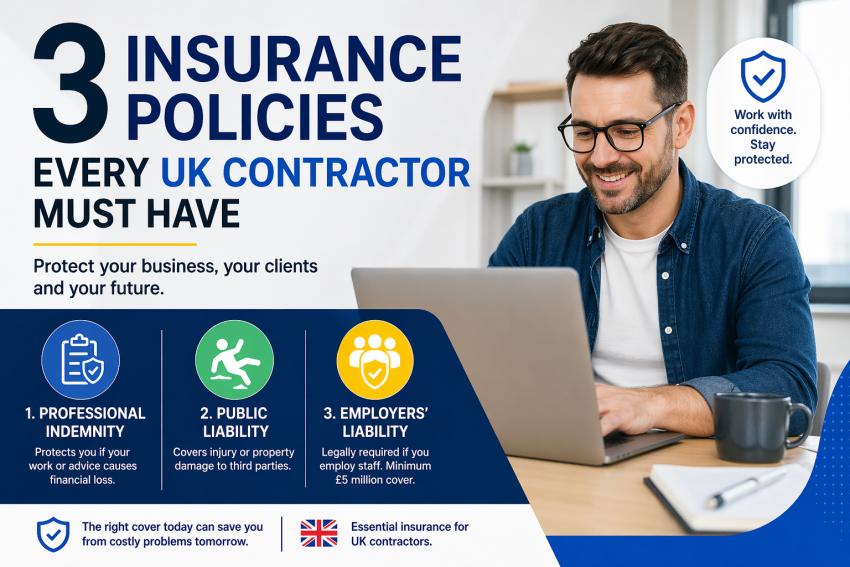
Starting a new contract is exciting. You agree on the rate, sign the paperwork, and get ready to begin. Then the client asks for proof of insurance.
Most contractors pause here.
What insurance do Contractors actually need? What is required? And what protects you if something goes wrong?
If you get this wrong, it can cost you far more than the policy itself.
This guide breaks it down in simple terms so you know exactly what matters and why.
Why insurance matters for UK contractors
As a contractor, you take full responsibility for your work. That means if something goes wrong, the financial risk sits with you.
Insurance protects you from:
- Legal claims
- Compensation costs
- Contract delays or cancellations
Even a small mistake or accident can lead to a serious claim. Some policies are also required by law or written into client contracts.
1. Professional Indemnity Insurance
This is the most important cover for most contractors.
What it covers
Professional indemnity insurance protects you if a client claims your work caused them financial loss.
This could include:
- Mistakes in your work
- Poor advice
- Missed deadlines
- Errors in design, code, or strategy
If a client takes legal action, the policy covers legal fees and compensation.
Real example
You deliver a software update that crashes a client’s system. They lose revenue and hold you responsible.
Without cover, you pay everything yourself.
Who needs it
- IT contractors
- Consultants
- Engineers
- Designers
- Anyone giving professional advice
Why clients ask for it
Many UK contracts include a clause that requires professional indemnity cover before work begins. Without it, you may lose the opportunity.
Typical cover levels
- One million pounds for lower risk roles
- Two million to five million pounds for higher value contracts
If your work affects a client’s business outcome, this cover is not optional.
2. Public Liability Insurance
This policy protects you from physical risks.
What it covers
Public liability insurance covers injury or property damage involving third parties.
This includes:
- Clients
- Visitors
- Members of the public
It pays for:
- Legal defence
- Compensation claims
- Medical costs
Real example
You visit a client’s office and accidentally damage expensive equipment. Or someone trips over your cable and gets injured.
You are responsible for the costs.
Who needs it
- Contractors who visit client sites
- Anyone working in shared or public spaces
It is not a legal requirement, but many contracts still ask for it.
Typical cover levels
- One million to two million pounds for basic cover
- Five million pounds or more for larger contracts
If you work around people or property, this cover protects you from everyday risks.
3. Employers’ Liability Insurance
This is the only one that is required by UK law in most cases.
What it covers
Employers’ liability insurance protects you if someone working for you gets injured or becomes ill because of their job.
It covers:
- Compensation claims
- Legal costs
Legal requirement
If you employ staff, you must have this insurance with at least £5 million cover.
This applies even if:
- The employee is part time
- The role is temporary
Real example
A contractor working under you suffers an injury while working on your project and files a claim.
Without this policy, you face the full cost.
If you hire anyone, this is not optional.
Minimum cover
The legal minimum is five million pounds, though many insurers offer ten million pounds as standard.
How these 3 policies work together
Each policy covers a different risk:
- Professional indemnity → protects your work
- Public liability → protects physical incidents
- Employers’ liability → protects your team
Together, they form the foundation of contractor protection.
Miss one, and you leave a gap that can cost thousands.
Optional insurance worth considering
While the three policies above form the core, some contractors choose extra protection based on their work.
IR35 insurance
Useful if you work through a limited company and want protection against HMRC enquiries.
Cyber insurance
Helpful for contractors handling sensitive data or working in tech roles.
Income protection
Supports you financially if you cannot work due to illness or injury.
These are not always required, but they can add an extra layer of security.
Common mistakes contractors make
Many contractors treat insurance as a tick box. That leads to problems later.
Watch out for these:
Buying the wrong cover level
Some contracts require £1M to £5M cover. Always check before you start.
Assuming it is not needed
Clients often ask for proof before onboarding.
Relying on umbrella cover
If you run your own limited company, you usually need your own policies.
Ignoring contract terms
Insurance requirements are often written into agreements.
How much cover do you actually need
This depends on your work and your client.
Typical ranges:
- Professional indemnity: £1M to £2M or more
- Public liability: £1M to £5M
- Employers’ liability: minimum £5M (legal requirement)
Higher risk work usually means higher cover.
Quick summary
- Professional indemnity protects your work
- Public liability protects against accidents
- Employers’ liability is legally required if you hire
Get these three right, and you build a solid foundation for your contracting career.
Getting your insurance right is not just about ticking a box. It protects your income, your reputation, and your ability to keep working without disruption. The right cover gives you confidence to take on better contracts and focus on delivering great work.
That said, insurance is only one part of running a successful contracting business. You also need the right tax setup, compliance support, and financial advice to stay on track and maximise your earnings.
If you want support built for contractors, speak to specialist contractor accountants who help you stay compliant, keep your finances in order, and make smarter decisions as your business grows.