The evolution of entertainment distribution channels has completely altered the way audiences find and attend events. Today, it takes only moments for consumers to search for, compare, and buy tickets to live events including concerts, sports, theater, and other entertainment options. The journey to the completed ticket purchase from start to finish is often an easy and seamless one — however, an extensive data tracking infrastructure supports this seamlessness that many consumers do not realize is in existence.
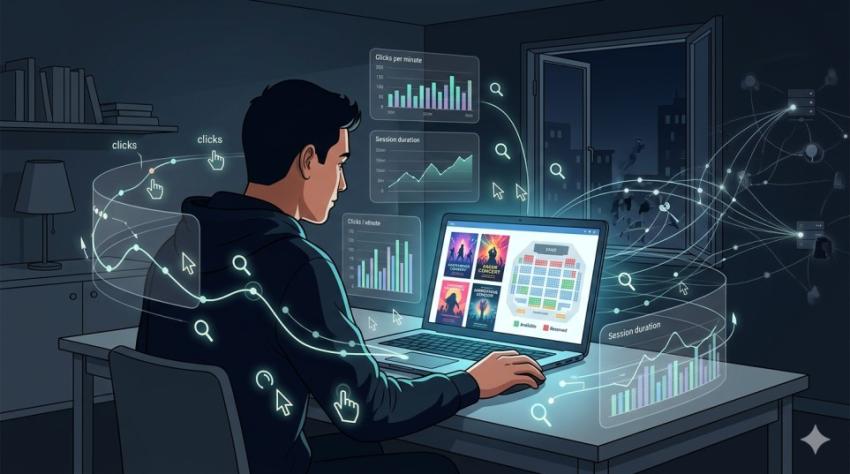
Every interaction, click, search, etc. that a user has with a ticketing platform generates data points that will eventually produce a user’s digital profile. When consumers search for events, select seats to an event, or abandon a shopping cart during the ticket checkout process these are all user actions that can be tracked by various tracking technologies including cookies, pixels, and analytics tools, etc. These tracking technologies exist in part to improve user experience, but they also potentially create important concerns surrounding data privacy.
The discussion surrounding this topic can best be illustrated by recent Ticketmaster’s privacy violation investigation. Existing Ticketmaster privacy investigations focus on what data from its users’ actions may be collected and how that collected data may be shared and retained. In many cases; consumers assume their activity when browsing for an event or checking ticket prices entails privacy; however, these actions reveal users’ preferences, interests, and behavioral trends well beyond a single ticket purchase, which can also be used for future targeting.
A major issue is the amount of data that is collected about users through their browsing activity. The data shows not only what a user is interested in attending, but also when they are most active on the Internet, how often they participate/engage with an event, and what type of content a user is most interested in. This type of data can be very useful for building an in-depth profile of each consumer based on their interactions over time.
How this information may be shared is also a concern. Many websites have integrated third-party applications (e.g., analytical tools, advertising networks, and performance-enhancing resources) that collect user information through their web browsers in order to improve their services or better understand the effectiveness of their advertisements. This is prevalent in many industries; however, many users of these types of tools are unaware of how their information will be used and/or by whom.
The investigation into Ticketmaster's collection of user data illustrates the growing complexity associated with the differing expectations users have versus the reality of data collection methods. Many people use various platforms to conduct business, believing that they will be limited to only using that specific platform. However, due to data sharing across various systems, the information collected from a user from one platform (e.g., a travel site) may be accessed by users after they have left that platform (e.g., via an e-mail to the user from another travel site).
The Issue of consent and transparency are raised by this. Privacy policies and consent banners are provided by websites to inform the user of their data collection practices; however, it is not always apparent to users what these policies mean to them resulting in the user giving their consent to data collection practices that they would have otherwise questioned.
For the user, data collection practices do not only affect targeted advertising. Data collected about the user's behaviour can lead to price changes, suggested events, and how the user will receive their information. Therefore, the user's experience with a platform will be affected by data collected about them in order to produce a more thorough understanding of the user.
The evolution of digital platforms is making the balance between privacy and personalisation much more important for the user. The user is looking for a more personalised experience yet still wants control over their own data. In order to create this balance requires better consent procedures, better communication, and better data practices.
The Ticketmaster privacy investigation reminds us of the complexities and nuances associated with our online behavior. As such, it’s important for consumers to develop an understanding of how companies collect, store and share consumer information through their online interactions to make informed decisions about participating in the digital economy – particularly within high-engagement and highly personalized sectors.