Newborn babies, especially premature babies, have difficulty regulating their own body temperature when they come into this world. Regulating temperature is vital for their development, metabolism, and health in general. This is when an infant radiant warmer comes in useful as an important medical device in hospitals and NICUs.
What is an infant radiant warmer?
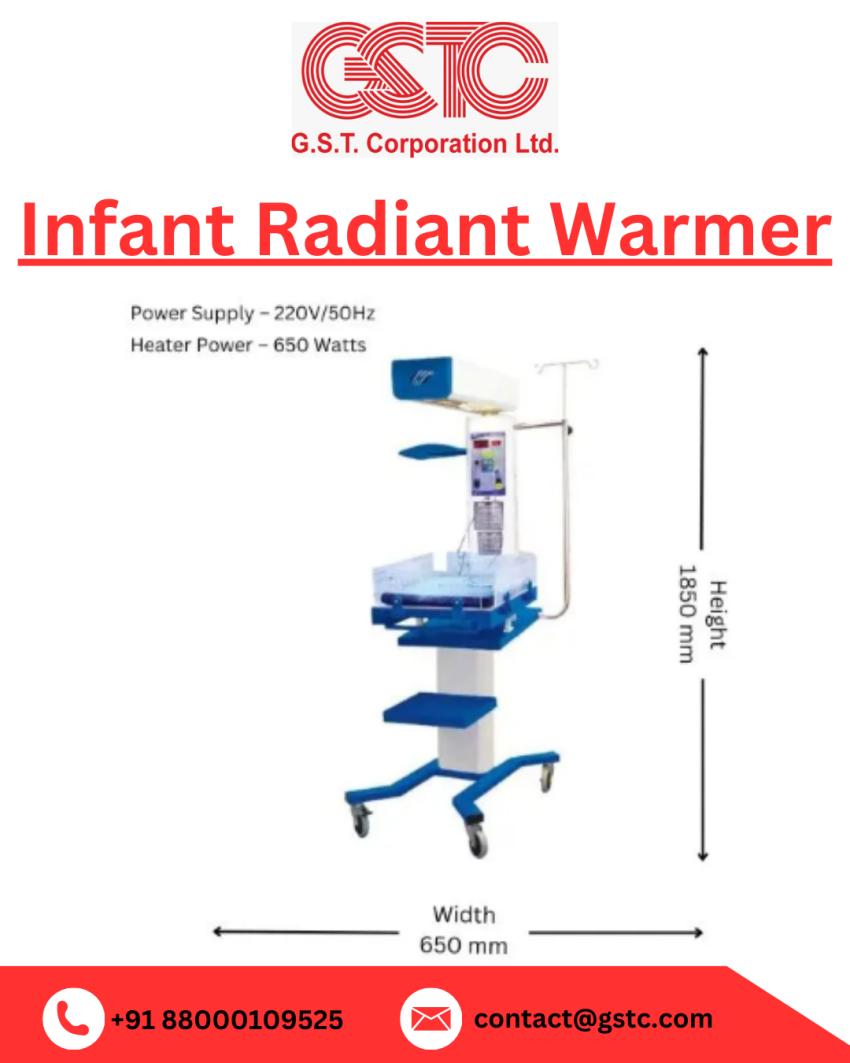
An infant radiant warmer is a medical device that offers warmth and temperature control for a newborn baby. It works by using radiant heat to control and regulate the temperature of the baby's body.
A newborn baby loses body heat easily, especially premature babies or those with low birth weights. If temperature control is not implemented, a baby may suffer from complications like hypothermia.
Radiant Warmer Uses in Healthcare
The importance of understanding how radiant warmers are used can help healthcare providers and equipment buyers make the correct decision.
1. Temperature Regulation for Newborns
The main purpose of a radiant warmer is to maintain a stable body temperature in newborns. It monitors the baby's skin temperature and maintains it at a stable level.
2. Support During Neonatal Resuscitation
Doctors make use of a radiant warmer during neonatal resuscitation immediately after birth.
3. Care for Premature Infants
Premature infants cannot regulate their body temperatures. A radiant warmer is very useful in maintaining a stable body temperature in such infants.
4. Post-Delivery Observation
Healthcare professionals monitor newborns who are placed on a radiant warmer after delivery to guarantee the stabilization of the newborns’ temperature.
5. Neonatal Intensive Care Units (NICUs)
NICUs use radiant warmers to provide a conducive environment for newborns who are critically ill.
Key Features of Infant Radiant Warmers
Modern radiant warmers are equipped with various advanced features that provide better safety and convenience.
- Microprocessor Temperature Control
Radiant warmers are equipped with microprocessor control, which automatically regulates temperature.
- Servo and Manual Modes
Radiant warmers are equipped with both manual and servo control modes. Servo control automatically regulates temperature based on the skin temperature of the infant.
- Digital Display
Radiant warmers are equipped with a large LCD or LED screen that displays the temperature and power levels of heaters.
- Safety Alarm System
Radiant warmers are equipped with a safety alarm system that sends alerts to healthcare staff in case of temperature deviation, faulty probes, system malfunction, and power failure.
- Adjustable Baby Bed
Radiant warmers are equipped with an adjustable baby bed, which facilitates easy access by doctors and nurses during examination and treatment of infants.
- Mobility and Design
Radiant warmers are equipped with castors that can be locked, allowing easy movement of the radiant warmer within delivery and NICU rooms.
Benefits of Using a Radiant Warmer
- Improved Temperature Stability
This device provides a stable temperature environment to avoid hypothermia in newborn babies.
- Better Accessibility
Radiant warmers offer full access to the newborn baby for treatment compared to incubators.
- Faster Medical Intervention
Doctors can perform medical procedures such as resuscitation, monitoring, and examination without having to move the baby.
- Enhanced Safety Features
Modern radiant warmers have safety features such as temperature control to ensure the safety of the baby.
- Efficient Neonatal Care
Radiant warmers help doctors and nurses to offer efficient medical care to newborn babies during the critical initial hours.
How Radiant Warmers Work
The principle of an infant radiant warmer is quite simple, yet effective.
The baby rests on a special bed placed underneath the radiant warmer.
An overhead heating element provides radiant heat.
A temperature probe monitors the skin temperature of the baby.
A control mechanism regulates the temperature as desired.
Conclusion
An infant radiant warmer is important for the maintenance of the body temperature of a newborn baby, and with the important uses of the radiant warmers in the delivery rooms and NICUs, they help medical professionals to deliver the best medical treatment to the patients. Hospitals all over the world have been using the products of infant radiant warmer manufacturers from India and infant radiant warmer exporters from India, such as GSTC, which is a medical equipment manufacturer and exporters from India.