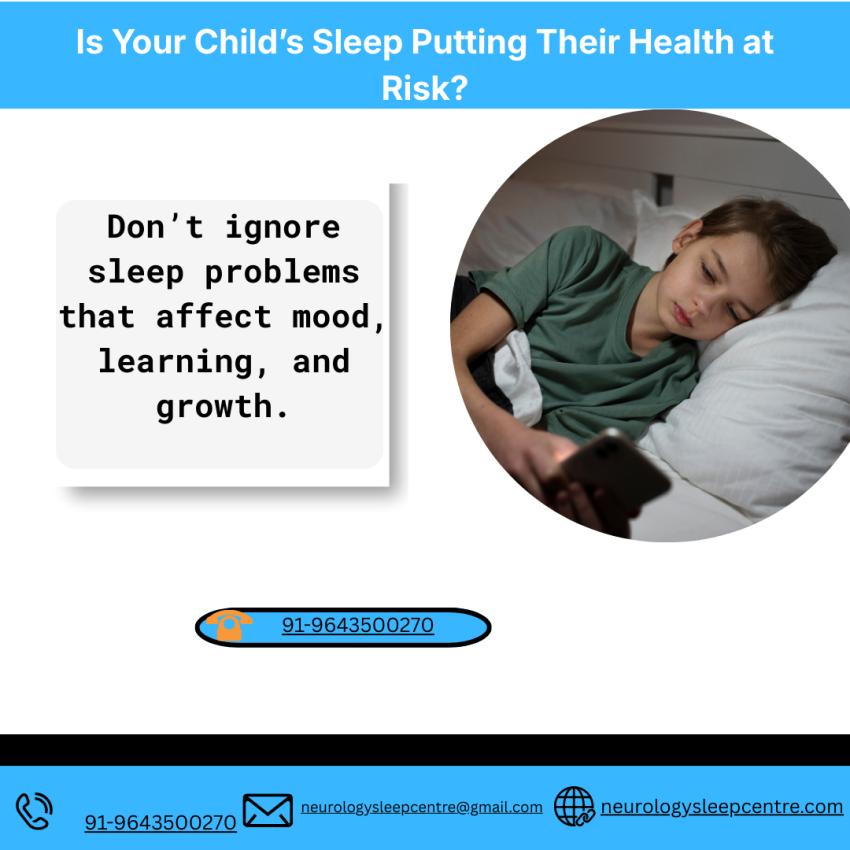
Is Your Child’s Sleep Putting Their Health at Risk?
Many parents think poor sleep is normal in children. Late nights. Frequent waking. Bedtime fights. But when sleep problems happen often, they can quietly affect a child’s health, growth, and learning.
Sleep is not just rest. It is repair time for the brain and body.
Why sleep problems in children should not be ignored
A child who does not sleep well may look active during the day, but inside, their brain is struggling. Poor sleep can affect memory, attention, mood, and immunity. Over time, it can also slow physical growth and weaken emotional control.
Common signs parents search for include:
child not sleeping at night
frequent night waking in kids
snoring in children while sleeping
daytime sleepiness in child
hyperactivity due to poor sleep
learning problems linked to sleep
Many of these are linked to sleep disorders in children, not bad habits.
Early signs many parents miss
Some children do not complain. Instead, they show it through behavior. Irritability. Poor focus. Headaches. Bedwetting. Teeth grinding. Loud snoring or mouth breathing during sleep.
These signs may point to issues like sleep apnea in children, restless sleep, circadian rhythm problems, or anxiety-related sleep disturbance.
The earlier these signs are noticed, the easier they are to treat.
How sleep affects learning, behavior, and health
A tired brain cannot process information properly. Children with untreated sleep problems may struggle in school, even if they are intelligent. Teachers may report inattention or poor performance.
Poor sleep also affects hormones. This can impact appetite, weight, and immunity. Many parents search for:
sleep problems affecting child growth
child behavior problems due to sleep
poor sleep and school performance
These are real and well-documented links.
When parents start looking for answers
At first, parents usually search online. They try home tips. Fixed routines. Less screen time. Sometimes it helps. Sometimes it does not.
If sleep issues continue for weeks or months, it is time to think deeper. A proper sleep evaluation can identify the root cause instead of guessing.
This is where expert guidance matters.
Why expert care makes a difference
Child sleep is different from adult sleep. It needs careful assessment. A trained sleep specialist or neurologist understands how brain development, breathing, and behavior interact during sleep.
Evidence-based evaluation may include sleep history, physical assessment, or a child sleep study if needed. The goal is always the least invasive and most effective solution.
Parents often search for:
child sleep specialist near me
pediatric sleep disorder treatment
sleep clinic for children
child sleep study
Clear answers reduce fear and confusion.
What parents can do today
If your child’s sleep problems are affecting daily life, do not wait. Good sleep supports better focus, stronger immunity, stable emotions, and healthy growth.
Sleep issues are not a parenting failure. They are medical concerns that deserve attention.
Helping your child sleep better today protects their health tomorrow.