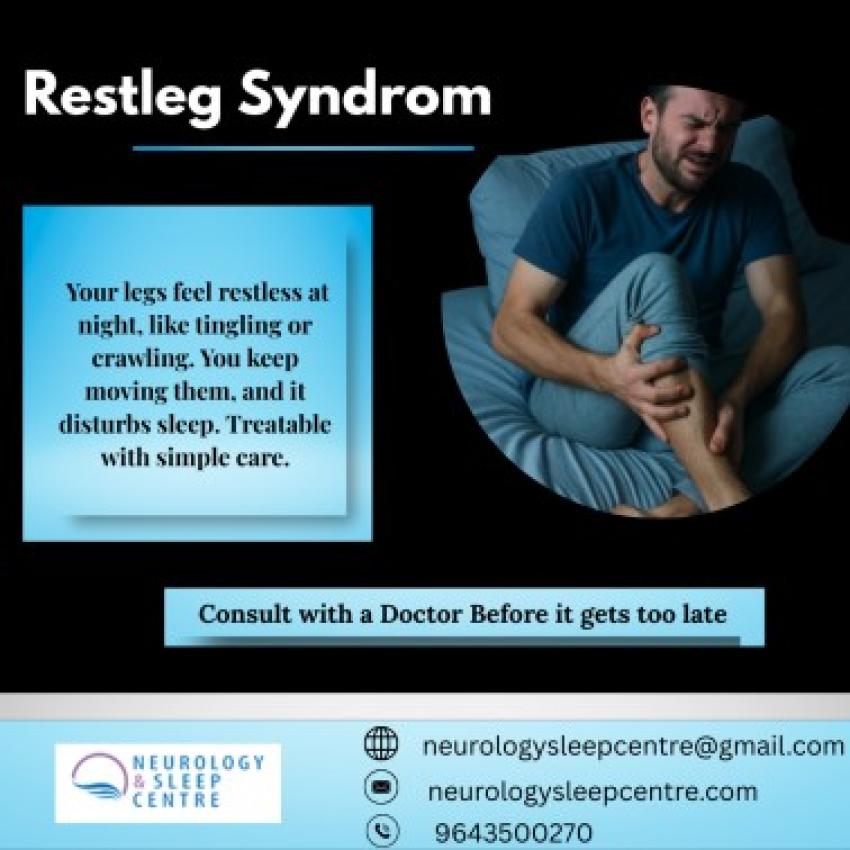
Restless Legs Syndrome feels simple to describe but difficult to live with. Your legs don’t hurt, yet they won’t stay still. They pull, crawl, tingle, or create a strange internal discomfort that only movement can calm. Many people in India think it’s “just weakness,” “poor blood flow,” or “stress.” But it’s not.
This is a real neurological condition that quietly ruins sleep.
Most people ignore the early signs. They keep shaking their legs, stretching again and again, walking around the room at night, or pressing their legs against cold surfaces. After some time, the pattern becomes clear — you can’t rest because your legs won’t let you.
RLS affects your sleep deeply. You try to fall asleep but the urge to move keeps coming back. Night after night, you wake up tired, irritated, and mentally drained. Many people in Delhi come to sleep clinics only after months or years of struggling, thinking it will “fix on its own.”
It rarely does.
Let’s break it down in a simple, human way so you can understand what’s happening in your body and how treatment works.
What Exactly Is Restless Legs Syndrome (RLS)?
RLS is a nerve-related condition. Your brain and legs are not communicating smoothly. Because of that, the legs get a strong, uncomfortable urge to move — especially at night or during rest.
It’s not something you imagine. It’s not just anxiety.
It’s a neurological disorder that needs proper evaluation.
Why RLS Happens: Common Causes
RLS has different triggers. Some are simple, some are hidden. These are the most common:
Low iron levels (one of the biggest reasons in Indians)
Nerve problems
Kidney issues
Thyroid imbalance
Certain medications
Vitamin B12 deficiency
Pregnancy
Genetic tendency (runs in families)
Sometimes the cause is not clear. But even when the cause is unknown, treatment still helps.
Common Symptoms You Should Not Ignore
People describe RLS differently, but most feel these:
Crawling or pulling sensation in legs
Tingling or electric-like feelings
Strong urge to move legs
Symptoms worse at night
Temporary relief after walking or stretching
Disturbed sleep
Daytime tiredness
If you feel these often, especially at night, it’s time to see a specialist.
Why RLS Feels Worse at Night
Your brain’s dopamine levels naturally drop in the evening. For someone with RLS, this drop becomes too sharp.
Your legs pick up this imbalance first.
That’s why night-time becomes a struggle, even if your day was fine.
RLS Treatment in Delhi — What Doctors Usually Do
Sleep specialists and neurologists in Delhi follow a simple but effective approach:
1. Checking Iron and Vitamin Levels
A blood test is usually the first step. Low iron or B12 is very common in Indian patients.
Correcting these often improves symptoms.
2. Improving Sleep Habits
Small changes like fixed sleep timing, reducing screen time, and avoiding caffeine in the evening reduce flare-ups.
3. Medications for Nerve and Dopamine Balance
If symptoms are moderate or severe, doctors may prescribe medicines that stabilize nerve signals and reduce the urge to move legs.
4. Treating the Root Cause
If RLS is due to kidney issues, thyroid problems, pregnancy, or nerve damage, treatment focuses on those conditions too.
5. Lifestyle and Behavioral Support
Warm baths, stretching, and gentle leg massage can calm symptoms.
Many patients feel immediate relief with simple daily routines.
Why You Should Not Ignore RLS
RLS doesn’t just disturb your legs — it disturbs your entire life.
Poor sleep leads to fatigue, anxiety, low mood, headaches, and even poor concentration at work.
Ignoring it only makes symptoms stronger over time.
Early treatment makes a huge difference.
For many people in Delhi, even small corrections in iron levels or routine changes bring real relief.
Who to Consult in Delhi
For RLS, the right doctor is usually a neurologist or a sleep specialist — someone who understands both nerve function and sleep disorders.
Delhi has experienced specialists who diagnose RLS accurately and create personalized treatment plans.
Final Thought
RLS is silent, but it’s not small.
If your legs are disturbing your nights, don’t wait for it to “settle on its own.”
The condition is real.
The treatment works.
And you deserve peaceful sleep again.